What Is a Side-Filter Tank and Why Lighting Needs Special Consideration
The Side-Filter Design Explained
A side-filter aquarium integrates a filtration chamber along one of the long sides of the tank, separated from the main display area by a partition. Water enters the filter chamber through slots or holes at the bottom of the partition, passes through filter media (typically a combination of mechanical and biological filtration), and is returned to the display area by a pump.
The filter chamber typically occupies 10–20% of the total tank width, leaving 80–90% as the main display volume. From above, the tank appears almost full-width, but in practice, the usable display area is narrower on the filter side.
Why Standard Overhead Lighting Creates Problems
Most aquarium lights are designed to sit across the full width of the tank and distribute light evenly across the full footprint. In a side-filter setup, this creates an immediate complication: the partition between the display area and the filter chamber, combined with the filter housing walls, creates a shadow zone along the filter-side edge of the tank.
The severity of this shadow depends on
The height of the partition: A partition that extends to the water surface creates a hard shadow line; one that allows water flow near the surface creates less obstruction
The light's mounting position and angle: A light positioned dead-centre over the tank will cast the filter-side partition into shadow; a light positioned toward the filter side may over-illuminate that edge while under-illuminating the opposite side
Whether the filter housing extends above the waterline: If filter media and equipment protrude above the water surface on the filter side, they further obstruct light reaching that area
The result, in a poorly adapted setup, is a tank where fish congregate away from the filter side (darker, more stressful for some species), plants near the filter side grow less vigorously or lean toward the light, and the tank looks visually unbalanced when viewed from the front.
Assessing Whether Your Current Light Works With Your Side-Filter Setup
Before investing in new equipment, it's worth systematically assessing how your existing light is performing. Here's a practical approach:
1: Observe fish distribution. If your fish consistently avoid the filter side of the tank and cluster toward the light source side, this is a reliable indicator that a significant shadow zone is creating an uncomfortable environment on the filter side.
2: Check plant growth direction. In a planted side-filter tank, plants near the filter side will lean toward the light if they're receiving inadequate illumination. Stem plants that should grow vertically will angle visibly toward the main light source.
3: Use a lux meter or PAR meter at different positions. Take readings at three points across the tank width: near the light-source side, in the centre, and at the filter-side edge. A difference of more than 50% between the brightest and darkest points indicates significant light unevenness that will affect both fish behaviour and plant growth.
4: Look at the tank from the front. The visual "feel" of an unevenly lit tank is usually immediately apparent - one side looks noticeably brighter or warmer than the other, the tank looks lopsided, and the overall display lacks cohesion.
Solutions for Common Lighting Problems in Side-Filter Tanks
Repositioning the Existing Light
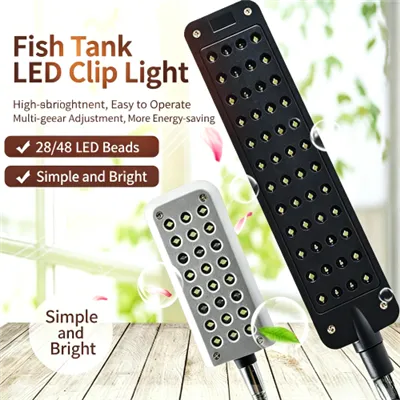
The simplest first step: move the light toward the filter side of the tank so that its output compensates for the shadow created by the filter housing. Most aquarium lights have some lateral adjustment in their mounting brackets. Moving the fixture 10–15cm toward the filter side often reduces the shadow zone significantly.
The trade-off: this can create slight over-illumination near the filter side and under-illumination at the opposite end. For most setups, though, this is less problematic than a hard shadow zone along the filter wall.
Two Smaller Lights Instead of One Large Unit
For tanks where one repositioned light still can't deliver even coverage, using two smaller LED units positioned at either end of the tank (or one near the filter side and one over the main display area) can achieve much more even distribution. This approach is particularly effective in wider tanks where a single centrally positioned fixture inherently produces brighter middle zones and dimmer edges.
Reflective Backing on the Filter-Side Wall
Adding a mirrored or white reflective film to the inside of the filter-side partition reflects light that would otherwise be absorbed by the dark plastic or glass of the partition wall. This adds light to the filter-side edge of the display without requiring additional fixtures. Aquarium-safe reflective films are available specifically for this use. This isn't a full solution to a significant shadow problem, but it's a useful complement to other approaches.
Slim-Profile LED Fixtures Designed for Edge Illumination
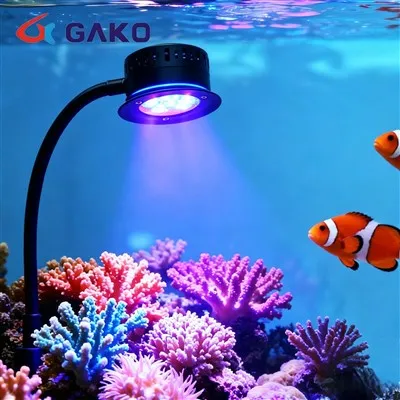
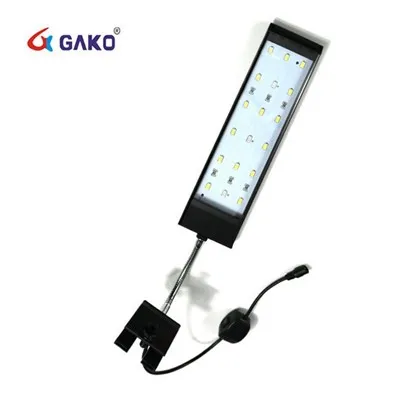
Some LED fixtures designed specifically for side-filter tanks have a narrower profile and a wider beam angle than standard units, allowing them to be mounted closer to the filter housing without the housing edge clipping the light beam. If you're purchasing a new light for a side-filter setup, look for fixtures with beam angles of 120° or wider, and avoid deep-reflector designs that concentrate output in a narrow column directly below the fixture.
Water Circulation in Side-Filter Tanks: The Role of a 12V Aquarium Pump
Lighting and water circulation interact more directly in a side-filter system than in a standard canister-filtered setup. Here's why.
Why Circulation Matters More in Side-Filter Systems
The return flow from a side-filter system enters the main display area from one direction - the filter-side return outlet. Depending on outlet position and flow rate, this can create a circulation pattern that is strong near the filter side and relatively stagnant at the far end of the tank. Dead zones at the far end of a side-filter tank are common and can cause:
Temperature stratification (the stagnant end runs cooler or warmer than the actively circulated filter side)
CO₂ depletion in a planted tank (CO₂ doesn't diffuse to the far end effectively)
Reduced oxygen availability in the dead zone (fish that prefer the far-end low-light area may also be in the lowest-oxygen area)
Waste accumulation on the substrate in the stagnant area
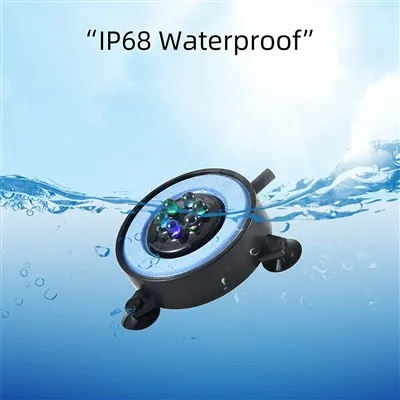
A 12V Aquarium Pump positioned at the far end of the tank - opposite the filter return - creates a supplementary circulation pattern that eliminates the dead zone. By directing flow back toward the filter side, it completes a circulation loop that distributes heat, CO₂, oxygen, and nutrients evenly across the full tank length.
Positioning the Pump to Work With the Light
In a planted side-filter tank, pump position should also be chosen to complement the lighting. A pump that creates strong surface agitation near the light source will off-gas CO₂ rapidly, reducing its availability for plants. Position the 12V Aquarium Pump to create a mid-water flow pattern - circulating water horizontally rather than creating surface turbulence - and place it at the end of the tank furthest from the main light source.
This positioning achieves two things simultaneously: it fills the dead zone circulation gap, and it distributes CO₂ produced by fish and biological activity toward the plants without excessive surface off-gassing.
DC Pump Advantages: Quiet Operation and Adjustable Flow
For side-filter tanks housing sensitive species - particularly those that prefer lower flow, such as bettas, paradise fish, long-finned varieties, or shy dwarf cichlids - the adjustable flow of a DC pump is a significant advantage. A standard AC circulation pump may produce more flow than sensitive species tolerate. A 12V Aquarium Pump with variable speed control allows you to dial in exactly the circulation needed to eliminate the dead zone without creating disruptive current throughout the tank.
The quieter operation of DC pumps is also relevant in side-filter setups: because the pump sits inside the main display area rather than in a separate filter chamber, any vibration from the pump is transmitted directly into the water and tank structure. DC brushless motor pumps produce substantially less mechanical vibration than AC equivalents, which matters for fish welfare and for preventing the resonant hum that can develop when a vibrating pump couples with the tank glass.
Photoperiod Control in Side-Filter Setups
Consistent photoperiod management matters in any aquarium, and side-filter setups have one additional reason to take it seriously: the combination of shadow zones and circulation patterns means that different areas of the tank experience quite different light environments. Fish and plants in the shadow zone near the filter need the consistency of the main photoperiod to maintain their biological rhythms - and any variation in the schedule amplifies the already uneven light conditions.
Using an Aquarium Lamp Timer to maintain a fixed daily photoperiod addresses this directly. Whether the fish are in the bright zone or the relatively dimmer filter-adjacent area, they experience the same onset and offset of the photoperiod, maintaining their circadian rhythm regardless of their tank position.
A 2021 study in Comparative Biochemistry and Physiology found that fish in tanks with spatially uneven lighting showed higher behavioural stress markers when the light schedule was also irregular - but showed near-normal behaviour when the schedule was consistent, even with the spatial unevenness unchanged. The research concluded that temporal consistency (reliable on/off timing) partially compensated for spatial light distribution problems - a finding directly relevant to the side-filter setup challenge.
ESTA's Recognition of Integrated Lighting and Circulation Management
The Entertainment Services and Technology Association (ESTA), through its standards for professional aquatic display environments, recognises the importance of coordinating lighting and circulation systems as an integrated environmental management approach. ESTA's guidance notes that even light distribution and consistent water circulation work together to produce stable display environments for both fish welfare and visual presentation - a principle that applies directly to the side-filter tank challenge of maintaining even conditions across the full display volume.
What Research Shows About Lighting Coverage and Fish Wellbeing
Research in Applied Animal Behaviour Science (2019) found that fish in tanks with significant light gradient unevenness (bright zone to dark zone ratio above 3:1) showed measurably higher stress hormone levels than fish in evenly lit tanks - even when the average light level was identical. The conclusion: even distribution matters, not just total output.
A study in Aquatic Biology (2020) found that fish in tanks with consistent photoperiod showed 28% lower plasma cortisol in the morning measurement compared to fish in tanks with irregular light schedules - confirming that temporal consistency has a direct physiological benefit independent of spatial distribution.
Published work on planted aquarium CO₂ dynamics found that circulation patterns had a significant effect on plant growth rates - tanks with dead zones showed reduced growth in the stagnant area even when bulk CO₂ concentrations were equivalent, due to diffusion limitations at plant surfaces.
12V Pump and Timer Integration in a Side-Filter Planted Tank
A hobbyist in Malaysia was running a 180-litre side-filter planted tank - a lush, heavily planted setup with stem plants, crypts, and a large Anubias collection, stocked with a community of neon tetras, harlequin rasboras, and a group of corydoras. The filter occupied approximately 15% of the total tank width on the right side.
Two persistent problems had been affecting the tank. First, stem plants on the right side of the tank (nearest the filter) were growing at a noticeably lower rate and leaning to the left - indicating insufficient light penetration on the filter side. Second, a large dead zone at the left end of the tank (opposite the filter return) was developing a persistent film of fine debris and the crypts in that area were growing slowly compared to crypts in the main circulation zone.
Sunhingstones recommended:
Repositioning the existing LED light 12cm toward the filter side, combined with a slim secondary LED strip mounted just above the filter partition to add illumination to the filter-adjacent plant area
A 12V Aquarium Pump positioned at the left end of the tank (the dead zone end), set to low flow directed across the substrate toward the filter return side
An Aquarium Lamp Timer maintaining a consistent 9-hour photoperiod at the same times daily
Results at six weeks:
Stem plant growth on the filter side had visually matched the rest of the tank - new growth was vertical rather than angling left
The debris film at the left end of the tank had cleared, and the crypts in that area were putting out new leaves consistently
Corydoras - which had previously spent most of their time in the active circulation zone near the filter - were now seen foraging across the full substrate area, including the previously stagnant left end
The hobbyist described the effect of the circulation change as "transformative" - noting that the tank felt genuinely alive across its full length rather than active in the middle and dead at the ends.
F AQ
Q: Q: Can I use any standard aquarium light with a side-filter tank?
A: A: Yes, but you'll likely need to make positioning adjustments to address the shadow zone created by the filter housing. A light with a wide beam angle (120°+) is more forgiving of off-centre positioning than a narrow-beam fixture. Assess shadow zones by observing fish distribution and plant growth direction before assuming the current position is optimal.
Q: My fish always stay away from the filter side. Is this a lighting problem?
A: It could be - shadow zones near the filter partition are a common cause of fish avoiding that area. It can also be a flow problem (too much or too little current near the filter return) or a CO₂/oxygen issue in a stagnant zone. Check all three. If repositioning the light and adding a supplementary circulation pump resolves the behaviour, lighting and circulation were the primary causes.
Q: Do I need a special pump for a side-filter tank, or will any 12V pump work?
A: Any pump with appropriate flow rate for your tank size will work. The key considerations for a side-filter supplementary circulation pump are: adjustable flow rate (so you can match the circulation to your fish's preferences), low noise (DC brushless motor designs are strongly preferable), and a compact design that can be positioned unobtrusively in the display area.
Q: How does a lamp timer help with the shadow zone problem?
A: A timer doesn't solve the spatial shadow problem, but it ensures that the fish in both the lit and shadowed areas of the tank experience consistent daily light cycles, which research shows significantly reduces stress even when spatial light distribution is uneven. Consistency of timing compensates partially for unevenness of distribution.
Q: Should I run the supplementary pump continuously or on a timer?
A: Continuously is simpler and often preferable - eliminating the dead zone requires constant circulation, not intermittent flow. If you want to reduce flow during the dark phase for very flow-sensitive species (bettas, for example), a timer with reduced nighttime output on a DC variable-speed pump is an option.
Q: Where can I find a 12V aquarium pump suitable for side-filter supplementary circulation?
A: Look for variable-speed DC pumps with published flow rate specifications. A reputable 12V Aquarium Pump manufacturer will provide output data (litres per hour at different speeds) and noise level specifications. For most 150–300 litre side-filter tanks, a pump rated at 200–600 l/h on a variable setting gives you the adjustment range to dial in exactly the circulation needed.
Side-filter tanks offer genuine advantages in equipment concealment and maintenance access, but they require a bit more thought on lighting and circulation than a standard canister-filter setup. Getting the light coverage even, eliminating the circulation dead zone with a well-positioned 12V Aquarium Pump, and maintaining a consistent photoperiod with a reliable timer - these three steps convert a potentially unbalanced setup into one that looks and functions as well as any conventional aquarium.
At Sunhingstones, we manufacture 12V Aquarium Pumps and programmable Aquarium Lamp Timers designed for exactly this kind of integrated aquarium environment management - precise, quiet, and built for long-term reliable operation.