Why Two Identical Tanks Can Look Completely Different
The short answer is that good Aquarium Lights do not just make a tank brighter, they sculpt it. Flat, even light from a cheap fixture washes everything in the same tone, so the eye has no clues about depth. The moment you introduce direction, contrast, and color, the brain starts reading near and far, raised and recessed, foreground and background. That is the whole trick of a three-dimensional scape, and it is almost entirely controlled by lighting.
So yes, the right light absolutely makes an aquascape look more three-dimensional. Let's break down exactly how.
How Light Creates Depth and Dimension
Shadows and Highlights Do the Heavy Lifting
Depth is born from contrast. When light hits the top of a rock and leaves the base in soft shadow, your eye instantly reads the rock as solid and three-dimensional. Kill the shadows with flat, even lighting and that same rock looks like a sticker. Painters have known this for centuries, and it works the same way underwater. The goal is not maximum brightness, it is controlled contrast, light where you want the eye to go and shadow where you want things to recede.
Why Color Contrast Adds Depth
Color does the same job in a different way. Warmer tones appear to come forward and cooler tones appear to fall back, which is why a scape with a warm foreground and a cooler background feels deeper than one lit in a single flat color. This is exactly where adjustable color becomes a powerful tool, and it is the reason serious aquascapers reach for fixtures that let them tune the spectrum rather than locking them into one fixed white.
How RGB Lighting Builds a 3D Effect
Tuning Warm Front and Cool Back Tones
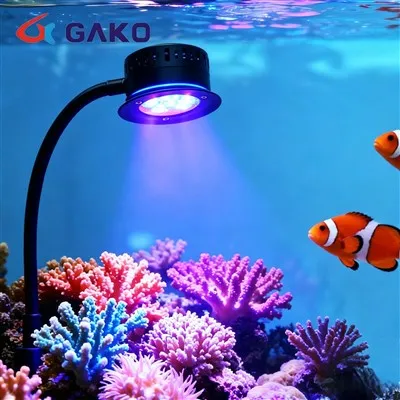
A quality RGB Clamp Aquarium Light mixes red, green, and blue diodes, which lets you dial in almost any tone you want. For a three-dimensional look, many aquascapers warm up the front of the scape slightly and keep the back cooler and bluer, which gently pushes the background away and pulls the foreground forward. You can also lift the reds to make plants and fish pop with color, since vivid, saturated color reads as closer and more alive. This kind of fine control is the single biggest reason an RGB fixture beats a basic white light for show tanks.
The Shimmer Effect from Spotlights
There is one more trick that adds instant realism: shimmer. A narrow, focused light source creates moving ripples of light on the substrate as the surface moves, the same effect you see on the bottom of a sunlit pool. That shimmer adds motion and depth that a wide, flat light simply cannot produce. Beam angle is what controls it.
|
Beam Angle |
Light Spread |
Visual Effect |
|
60° narrow |
Concentrated |
Strong shadows, shimmer, high depth |
|
90° standard |
Balanced |
Good mix of coverage and contrast |
|
120° wide |
Even |
Soft, flat, few shadows |
A narrower beam gives you drama and shimmer; a wider beam gives you even, gentle coverage. Many of the best show tanks use a narrower, more directional light precisely because it builds that three-dimensional feel.
Color Rendering and Why Vivid Looks Deeper
Understanding CRI in Simple Terms
CRI, or color rendering index, is a simple score from 0 to 100 that tells you how true colors look under a light. A low-CRI light makes reds look muddy and greens look dull, flattening the whole scape. A high-CRI light, ideally 90 or above, makes every color read clean and rich, which adds perceived depth because the eye gets more visual information to work with. When you compare a cheap fixture against a good one on the same tank, CRI is a big part of why the better light makes the scape look like it has more dimension. Always check that figure before you buy.
Aquascaping Layout That Works With Light
Foreground, Midground, and Background
Light can only sculpt a scape that is built to be sculpted. A good layout has three clear layers: a low foreground, a rising midground, and a tall background. That stepped structure gives the light surfaces to catch and shadows to cast. If everything is the same height, even the best light has nothing to work with, so build depth into the hardscape first, then let the lighting reveal it.
Creating a Focal Point with Light
Every strong scape has a focal point, often placed off-center at roughly a third of the way across, and light is how you draw the eye to it. Brighten the focal area slightly and let the edges fall softer, and the viewer's gaze lands exactly where you intend. This is the difference between flat, all-over lighting and intentional lighting, and it is far easier to achieve with a directional, tunable fixture than with a basic strip.
Real Aquascape Examples
An Iwagumi Stone Layout
In a minimalist stone layout, depth comes almost entirely from how the light rakes across the rocks. A narrower beam angled to catch the stone tops throws gentle shadows down their faces, making a handful of rocks feel like a real mountain range. Flat lighting on the same stones would look like gravel.
A Jungle-Style Planted Tank
A dense jungle scape is all about layers of plants fading into shadow. Here a warm front and cool back, easily set on a RGB Clamp Aquarium Light, makes the front plants glow while the back dissolves into mysterious depth. Running the light around seven to eight hours a day keeps the plants healthy while the color work keeps the scape dramatic.
A Nano Cube Scape
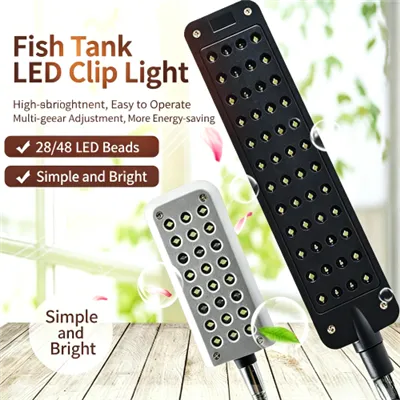
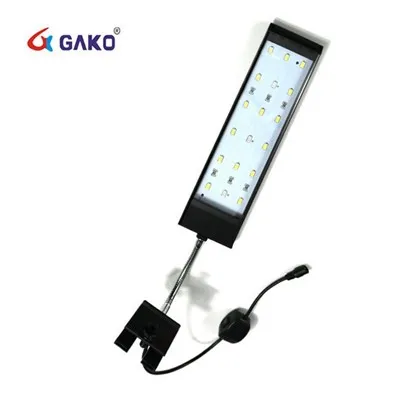
On a small cube tank, space is tight and a bulky fixture looks wrong. This is where a slim Clip-On Aquarium Light earns its place: it clamps neatly onto the rim, stays out of the way, and still delivers directional light that builds depth in a tiny scape. For nano aquascapes, the clip mount is often the cleanest, most flexible choice, and it makes repositioning the light for the perfect shadow effortless.
Materials and Build Quality That Affect the Look
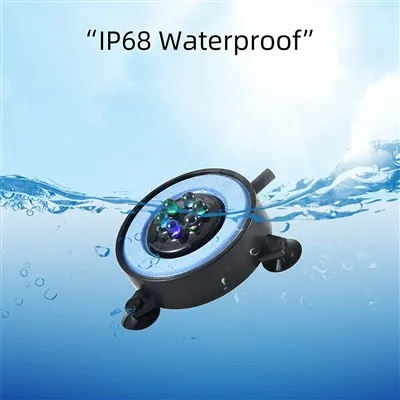
The look you get depends a lot on how the light is built, not just its color modes. A good lens shapes the beam cleanly, which is what gives you crisp shadows and shimmer rather than a muddy glow. A solid aluminum body or heat sink keeps the LEDs cool, protecting both their brightness and their rated lifespan of 30,000 to 50,000 hours. Color consistency between diodes matters too, since cheap lights drift in tone over time and ruin the careful balance you set. And because the fixture sits right over open water, a waterproof rating of IP67 or IP68 protects it from splashes and humidity. These build details are exactly what separate a fixture that makes a scape sing from one that just turns the lights on.
Safety and Compliance Standards
Any light running for hours above water needs proper certification. For European markets that means CE marking for electrical and electromagnetic safety, plus RoHS and REACH to limit hazardous materials. For North America, FCC covers emissions and UL or ETL covers electrical safety. Many quality fixtures also meet IEC 62471 for photobiological safety, confirming the brightness is safe for the eyes. Buying certified Aquarium Lights from a reputable source protects you and your customers and avoids customs headaches down the line.
Industry Trends in 2025 and 2026
Lighting for aquascaping keeps getting more creative. Fully programmable RGB fixtures now let hobbyists save scene presets, so a tank can shift its mood through the day at the touch of a button. Shimmer simulation and moving-light effects are becoming standard features rather than luxuries. App and Bluetooth control lets you tune color, intensity, and timing from your phone, and gradual sunrise-to-sunset programs give scapes a more natural, cinematic feel. For anyone chasing a three-dimensional look, a tunable, programmable light is the most useful upgrade on the market.
FAQ
Q: Do RGB lights really make aquascapes look better?
A: Yes. A RGB Clamp Aquarium Light lets you tune warm and cool tones to create depth, and lift colors so plants and fish look vivid. That color control adds perceived dimension that a fixed white light cannot match.
Q: What makes an aquascape look three-dimensional?
A: Contrast and color. Directional light creates shadows and highlights that sculpt rocks and plants, while warm front and cool back tones push the background away. A layered hardscape gives the light something to work with.
Q: Does a clip-on light work for aquascaping?
A: Absolutely, especially on nano and small tanks. A Clip-On Aquarium Light mounts cleanly on the rim, is easy to reposition for the perfect shadow, and still delivers the directional light needed for depth.
Q: How long should I run the light on a planted scape?
A: Most planted aquascapes do well on seven to eight hours a day. That keeps plants healthy while avoiding the algae that longer photoperiods invite.
Q: Where can I buy quality aquascaping lights?
A: Look for a manufacturer or factory that lists beam angle, CRI, color modes, IP rating, and CE, FCC, and RoHS certification. Established suppliers also offer wholesale pricing for stores and aquascapers buying in volume.