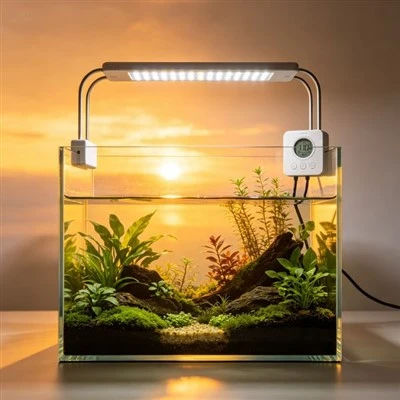
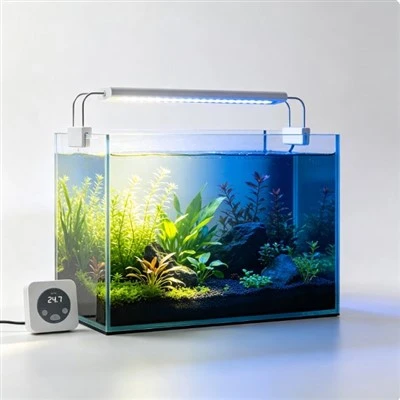
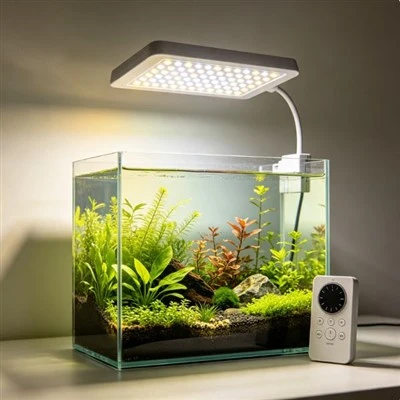
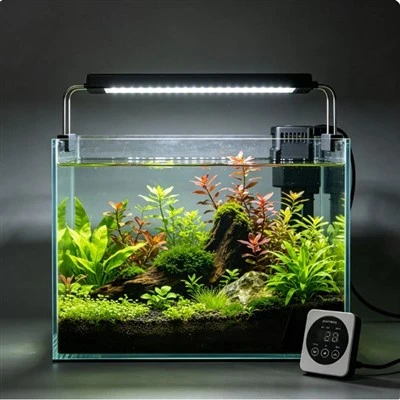
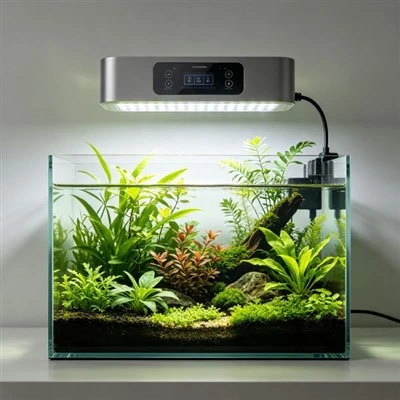
The extent of water temperature increase depends on multiple factors, typically ranging from 0.5°C to 3°C, specifically determined by:
1. Light fixture type and power: Traditional metal halide lamps generate the most heat, followed by T5HO fluorescent lamps. Modern LED lamps produce relatively the least heat, but high-power, densely packed LED arrays can still generate significant heat.
2. Mounting method: Directly covering the aquarium with a light fixture severely impedes heat dissipation, causing heat buildup. Suspended mounting allows air circulation to carry away most of the heat.
3. Light duration and environment: Extended daily operation (e.g., over 10 hours), higher ambient room temperatures, or poor ventilation all accelerate cumulative water temperature increases.
4. Tank Volume and Heat Dissipation: Smaller tanks (like nano tanks) have lower total water volume and thermal mass, making them more sensitive to lighting effects and prone to more drastic temperature fluctuations.
How to Effectively Manage and Address This?
1. Proactive Cooling Measures:
Use Professional Cooling Equipment: For temperature-sensitive saltwater coral tanks, installing a split-type water chiller is the most stable and efficient solution. For small to medium tanks, high-efficiency cooling fans accelerate surface evaporation, typically lowering temperatures by 1-3°C, offering an economical and practical option.
Optimize lighting setup: Mount lights higher to ensure adequate ventilation space above the water surface. Adjust lighting cycles to avoid peak intensity during the hottest parts of the day; use timers for segmented control.
2. Auxiliary Monitoring and Heat Dissipation:
Precise Monitoring: Use reliable electronic thermometers and observe/record water temperature changes before/after lighting activation and at different times of the day.
Improve Environmental Ventilation: Ensure air circulation in the room housing the aquarium to prevent heat buildup in enclosed spaces.
Separate Heat Sources: Relocate heat-generating components like lighting drivers to well-ventilated areas outside the aquarium.