Tiny fry are difficult to see, so beginners may respond by making the tank extremely bright. This is a normal everyday question, and it can usually be answered without turning the aquarium into a laboratory. The key is to separate what the light can control from what belongs to water quality, livestock, plants, room conditions, and maintenance.
Early life stages vary greatly among species. Light interacts with feeding method, prey visibility, shelter, temperature, and development, so species-specific guidance matters. A useful decision begins with the real tank: its length, width, water depth, lid, mounting height, inhabitants, room light, and daily routine. Product percentages and preset names only make sense inside that context.
A practical way to begin is to follow a credible protocol for the exact species. Next, use even moderate coverage that helps feeding observation. Then, maintain darkness unless the protocol states otherwise. Finally, increase or change light gradually while recording survival and behaviour. Writing these details down makes troubleshooting easier and prevents a small adjustment from becoming a completely different lighting program.
A white-bottom rearing container may improve visibility for the keeper without requiring the lamp to run at maximum. This kind of simple observation is more trustworthy than judging from one photograph or one evening. Use the same viewing position, allow the fixture to warm up, and note recent changes in feeding, cleaning, water, livestock, plants, room temperature, and daylight.
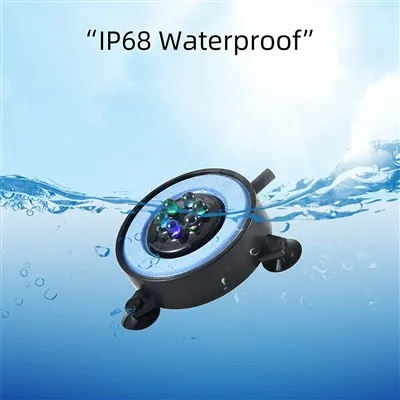
The most common mistake is easy to avoid. Do not copy a marine hatchery light colour or continuous-light schedule to every ornamental fish species. Safety comes first: keep dry-rated parts dry, disconnect power before appropriate cleaning or service, use the approved adapter and mounting system, and stop using damaged or water-affected electrical equipment until it has been assessed.
Breeding claims should identify species, life stage, intensity, spectrum, schedule, and study conditions rather than promise faster growth. For manufacturers and distributors, plain instructions are part of product quality. A customer should be able to identify the model, understand the timer, find the water-exposure boundary, order the correct spare, and know which claims describe measured product performance rather than a guaranteed biological outcome.
The everyday takeaway is straightforward: change one main thing at a time, keep a real dark period unless a species-specific protocol says otherwise, and judge the complete aquarium rather than the lamp in isolation. A good aquarium light is not the one with the most impressive label. It is the one that can be installed safely, operated consistently, cleaned realistically, and matched to the life happening below it.
The most useful first tool is not another preset but a notebook. Record the model, actual mounting position, timer, channel settings, room daylight, water depth, recent maintenance, and anything that changed before the issue appeared. In this case, pay special attention to fry tank light. Take one front photograph and one installation photograph at roughly the same time each day. The record does not need to be scientific; it only needs to be consistent enough to show whether the situation is stable, improving, or becoming worse.
Work from the aquarium outward to the controller and power source. Begin by checking that you can follow a credible protocol for the exact species. Continue only when it is safe to use even moderate coverage that helps feeding observation. Make one controlled change related to how you maintain darkness unless the protocol states otherwise, then keep the remaining settings steady while you increase or change light gradually while recording survival and behaviour. If the result is unclear, return to the last known stable condition. This method is slower than moving every slider, but it makes the outcome understandable and reduces accidental stress on livestock.
A realistic answer normally comes from several small pieces of evidence. Wattage describes electrical input, while lumens and lux are weighted for human vision. Photosynthetically active radiation and PPFD describe photons in a defined waveband and are more relevant to photosynthetic organisms, but even they do not create a universal biological target. Depth, spectrum, sensor response, water movement, placement, species, acclimation, nutrients, temperature, and husbandry still matter. That is why a number without distance, settings, method, and tank conditions should be treated as incomplete rather than automatically false or true.
The household routine is part of the lighting system. A white-bottom rearing container may improve visibility for the keeper without requiring the lamp to run at maximum. Decide who will check the timer, who may clean around the equipment, and how another family member could switch it off safely if something looks wrong. Keep the instructions beside the aquarium or in a shared phone note. A routine that is clear to one experienced owner but confusing to everyone else is fragile, especially during travel, illness, a power cut, or a busy maintenance day.
Watch the aquarium as a complete living system. Useful signs include normal feeding, resting and hiding patterns, plant posture, coral appearance where relevant, visible algae location, water temperature, and whether animals can move away from the brightest area. These observations do not diagnose disease and should not be used to promise growth, colour, or recovery. If there is rapid livestock decline, repeated electrical protection tripping, water inside a non-submersible component, smoke, burning smell, damaged insulation, or abnormal heat, stop experimenting and seek qualified technical or animal-care help as appropriate.
A credible supplier should make verification easier. Breeding claims should identify species, life stage, intensity, spectrum, schedule, and study conditions rather than promise faster growth. Ask whether published values apply to the complete fixture, which sample was tested, at what mounting distance, with which channels and power supply, and under what thermal conditions. Warranty terms should identify covered components and exclusions without hiding essential limits in vague wording. Honest communication does not mean avoiding useful claims; it means connecting each claim to the exact product, method, intended use, and evidence that supports it.
Use this guidance as a practical starting point and confirm any model-specific, electrical, regulatory, plant, coral, or animal requirement against the actual product and a reliable source.