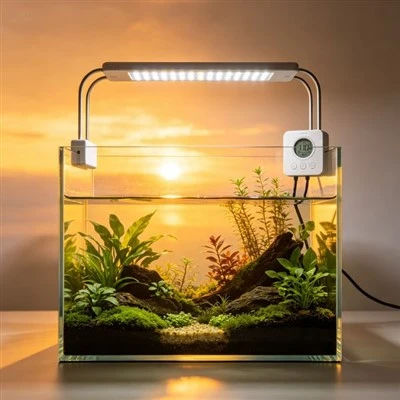
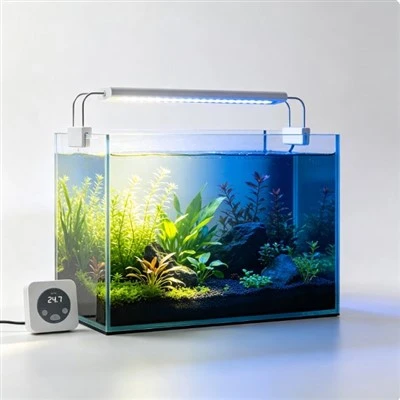
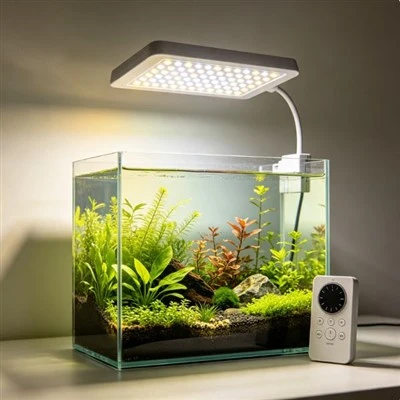
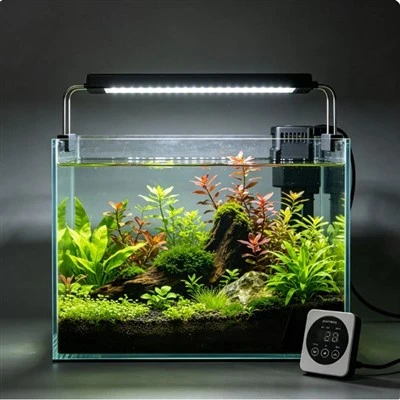
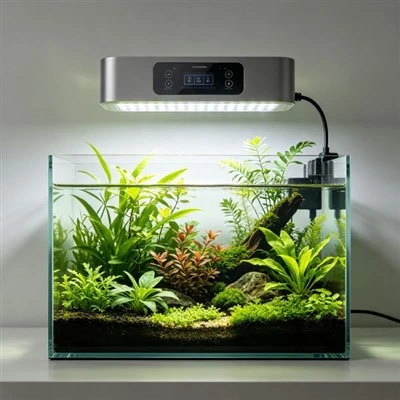
Aquarium lights are not necessarily UV lights. Whether an aquarium light produces ultraviolet radiation depends on its design, type, and intended purpose.
1. Standard Aquarium Lighting
Most standard aquarium LED lights are designed primarily for everyday illumination and aquarium display. They commonly use white LEDs to simulate natural daylight, while red and blue LEDs may be added to enhance fish coloration or support aquatic plant growth.
The main purposes of these lights include:
Providing daily illumination for the aquarium
Enhancing the natural colors of fish
Improving the overall appearance of the tank
Providing suitable light for aquatic plant photosynthesis
Standard aquarium lights generally do not produce the type or intensity of ultraviolet radiation required for effective sterilization. Therefore, they should not be considered UV sterilizers.
2. UV Aquarium Sterilizer Lights
Some aquarium equipment is specifically designed for UV sterilization and water treatment. These products typically use UV-C light to help control microorganisms such as free-floating algae and certain bacteria or parasites as water passes through the sterilization chamber.
Unlike regular aquarium lights, UV sterilizers are normally designed as separate devices rather than as the primary source of aquarium illumination.
Safety Tips for UV Aquarium Lights
UV-C light can be harmful to the eyes and skin, so UV aquarium equipment should always be used according to the manufacturer's instructions.
Avoid looking directly at an exposed UV-C light source or operating an improperly enclosed UV sterilizer. Ideally, UV-C should be contained inside a properly designed housing or sterilization chamber so that aquarium animals and people are not directly exposed.
In short, an aquarium light and a UV aquarium sterilizer serve different purposes: aquarium lights provide illumination and support the visual or planted environment, while UV sterilizers are specialized devices designed for water treatment.