The Short Answer: No, and Here's Why
Leaving Aquarium Lights on 24 hours a day is not recommended for any tank. Fish, plants, and even the beneficial life in your tank all rely on a natural cycle of day and night. Remove the darkness and you throw that rhythm out of balance. The two biggest consequences are an explosion of algae and a lot of stressed, unhealthy fish. Far from helping your tank, constant light slowly works against it. The good news is that the fix is simple and cheap, and we will get to it.
What Happens If You Leave the Light On All the Time
Algae Takes Over
Algae loves light, and it loves it most when there is too much. Give algae unlimited hours of light and it will use that energy to spread across your glass, plants, and decorations faster than you can clean it. Most persistent algae problems in home tanks trace back to too long a photoperiod, and running the light around the clock is the surest way to trigger a green takeover.
Fish Get Stressed Without Darkness
Fish do not have eyelids, and they rely on darkness to rest. Take away the night and they never truly settle, which leaves them stressed, washed out in color, and more prone to disease. A stressed fish has a weaker immune system, so constant light can quietly shorten its life. A regular dark period is not optional for healthy fish, it is essential.
Plants Need a Night Cycle Too
Here is something many owners do not realize: plants do not photosynthesize at night, and in the dark they actually consume oxygen rather than produce it. That overnight rest is a normal, healthy part of their cycle. Running the light 24 hours does not make plants grow faster, it just stresses them, feeds algae, and adds heat. Here is a quick summary of what constant light does.
|
Problem |
Cause |
Result |
|
Algae bloom |
Excessive light hours |
Green glass, coated plants |
|
Fish stress |
No dark period to rest |
Faded color, weak immunity |
|
Higher water temp |
Fixture running nonstop |
Warmer, less stable water |
|
Wasted energy |
Lights on with no benefit |
Higher electricity bill |
How Long Should Aquarium Lights Stay On
The right number of hours depends on the type of tank. Here are sensible starting points.
Fish-Only Tanks: 6 to 8 Hours
If you keep fish without live plants, you only need enough light to enjoy and observe them. Six to eight hours a day is plenty, and keeping it on the shorter side helps starve off algae. There is no benefit to running it longer.
Planted Tanks: 8 to 10 Hours
Planted tanks need more light to keep the plants healthy, usually eight to ten hours a day. If you are running carbon dioxide and brighter lighting, stay near the lower end at first and watch for algae before extending the time.
Reef Tanks: Programmed Cycles
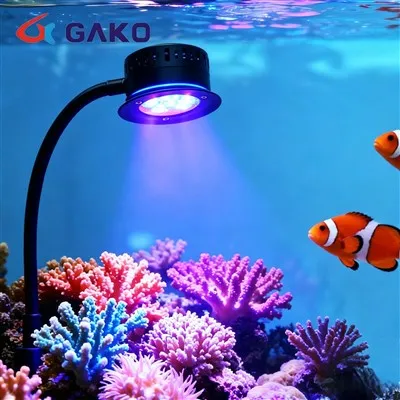
Saltwater reef tanks usually run programmed cycles, often eight to ten hours with a blue-heavy period, to suit the corals. These tanks benefit most from gradual ramps rather than a hard on-off switch.
|
Tank Type |
Daily Light Hours |
Notes |
|
Fish-only |
6 – 8 |
Focus on algae control |
|
Planted |
8 – 10 |
Match to plant demand and CO2 |
|
Reef |
8 – 10 |
Programmed, blue-rich cycle |
What About Night Lighting and Moonlight Mode
Wanting to see your tank in the evening is completely reasonable, and there is a healthy way to do it. Many modern fixtures, including good RGB Clamp Aquarium Light models, include a dim blue moonlight mode that mimics natural moonlight. A low, soft blue glow for a short evening viewing period is gentle on the fish and does not feed algae the way full daytime lighting does. The key word is dim and short, this is not the same as leaving the main light blazing all night.
The Energy and Cost Angle
There is also a simple money argument against 24-hour lighting. Electricity is measured in kilowatt-hours, so a light's running cost is its wattage multiplied by the hours it runs. Take a 20-watt fixture as an example. Run it 8 hours a day and it uses about 0.16 kilowatt-hours daily. Run it 24 hours and it uses 0.48 kilowatt-hours, three times as much, for no benefit to the tank. Over a year, that difference adds up to a noticeable amount on your bill, all of it spent growing algae and stressing fish. Cutting back to a sensible schedule saves money and improves the tank at the same time.
Real-World Scenarios
A Beginner's First Community Tank
A common story: a new owner sets up a community tank, leaves the light on all day and night so the fish are never in the dark, and within two weeks the glass is green and the fish look pale. Nothing was wrong with the equipment. Simply cutting the light to eight hours a day, on a fixed schedule, cleared the algae within a couple of weeks and the fish regained their color. It is one of the easiest fixes in the hobby.
An Office Tank Nobody Switches Off
Office and lobby tanks are notorious for this, because no single person is responsible for the light. Left on around the clock through weekends, they turn into algae factories. The solution is almost always the same and almost always easy.
The Easy FixUse a Timer
The simplest, most reliable solution is to stop switching the light by hand and let a timer do it. A timer turns the light on and off at the exact same time every day, giving your tank the consistent day-night rhythm it needs without you having to remember. Set it for eight hours, walk away, and the problem is solved permanently. Whether you run basic Aquarium Lights or a programmable fixture, pairing it with a timer is the single best habit a fishkeeper can adopt. It protects against both forgetting to turn the light off and the temptation to leave it on all night.
Materials and Heat Management
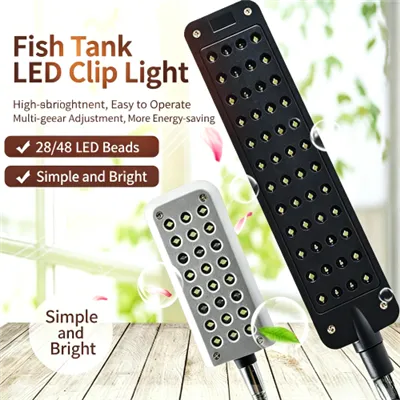
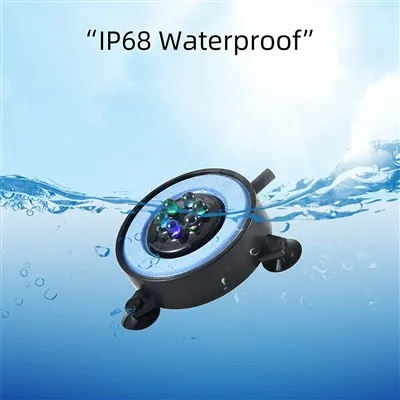
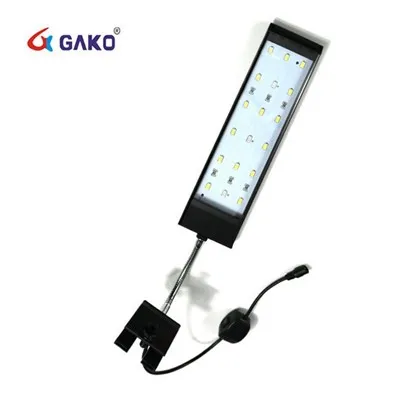
If a light is going to run for hours every day, build quality matters. Look for a fixture with a proper aluminum heat sink, which keeps the LEDs cool and protects their rated lifespan of 30,000 to 50,000 hours. A good waterproof rating, such as IP67 or IP68, handles the splashes and humidity of life above a tank. Quality diodes hold their brightness and color over time instead of fading after a few months. Even a slim Clip-On Aquarium Light on a small tank benefits from these same qualities, because heat and moisture are the two things that quietly kill cheap fixtures. Good build quality means the light lasts and runs cooler, which also helps keep your water temperature stable.
Safety and Compliance Standards
A device running long hours near water must be safe and certified. For Europe, look for CE marking covering electrical and electromagnetic safety, plus RoHS to limit hazardous substances. For North America, FCC covers emissions and UL or ETL covers electrical safety. A clear IP waterproof rating confirms the fixture is built for the wet environment, and many quality lights also meet IEC 62471 for photobiological safety. Choosing certified equipment from a reputable source protects your home and your fish during all those unattended hours.
Industry Trends in 2025 and 2026
The whole industry is moving toward smarter, automated lighting that makes the right schedule effortless. Built-in programmable timers and app control are increasingly standard, so a light can run its own healthy day-night cycle without any extra gadget. Sunrise-to-sunset simulation is spreading, ramping the light gently up and down to reduce stress on fish. And energy-efficient LEDs paired with smart scheduling cut running costs while delivering the same brightness. The clear direction is away from manual switching and toward lights that manage their own sensible routine.
F AQ
Q: Is it bad to leave aquarium lights on overnight?
A: Yes. Fish need darkness to rest, and constant light stresses them while feeding algae. A regular on-off cycle is far healthier, with a dim moonlight mode being the only suitable option for evening viewing.
Q: How many hours a day should I run my aquarium light?
A: Six to eight hours for a fish-only tank, eight to ten for a planted tank, and a programmed cycle for reef tanks. Keeping the schedule consistent matters as much as the number of hours.
Q: Will leaving the light on 24/7 cause algae?
A: Almost certainly. Excessive light hours are the most common cause of algae problems, and round-the-clock lighting is the fastest way to trigger a green takeover.
Q: What is the easiest way to control my lighting schedule?
A: A timer. It switches the light on and off at the same time every day, giving the tank a stable rhythm and removing human error from the equation.
Q: Where can I buy reliable aquarium lights with timers?
A: Look for a manufacturer or factory that lists wattage, IP rating, timer features, and CE, FCC, and RoHS certification. Established suppliers also offer wholesale pricing for shops and owners setting up multiple tanks.