That Stream of Bubbles Has a Name
When healthy plants produce so much oxygen that it forms visible bubbles on their leaves and rises to the surface, hobbyists call it pearling. It is not a gimmick or a coincidence. It is the visible proof that your plants are photosynthesizing hard and pumping oxygen into the water. So the answer to the headline question is a clear yes: aquarium lights absolutely make plants release oxygen. The light is the engine, and pearling is the exhaust you can see.
Understanding how that happens helps you set up a tank where it happens reliably.
How Light Turns Into Oxygen
Photosynthesis in Plain Language
Photosynthesis sounds complicated, but the idea is simple. A plant takes in light energy, carbon dioxide from the water, and water itself, and turns them into sugar for food. Oxygen is the leftover, released into the water as a by-product. No light, no photosynthesis, no oxygen from the plant. Turn the light up to the right level with enough carbon dioxide and nutrients, and the plant produces sugar and oxygen as fast as it can. That is the whole engine in one sentence.
What Pearling Tells You About Your Tank
Pearling is more than pretty. It is a status report. When your plants pearl steadily through the afternoon, it tells you the light is strong enough, the carbon dioxide is sufficient, and the plants are healthy and growing. If your plants never pearl, something in that chain is the limiting factor, usually light or carbon dioxide. Reading the bubbles is one of the easiest ways to judge whether your setup is working.
Which Light Spectrum Drives the Most Oxygen
Not all light is equally useful to a plant. The color, or spectrum, of the light matters as much as the brightness.
Why Red and Blue Light Matter Most
Plants contain chlorophyll, the pigment that captures light, and chlorophyll absorbs red and blue light far more strongly than green. That is actually why most plants look green to us, because they reflect the green light they cannot use as well. To drive strong photosynthesis and oxygen release, a light needs plenty of energy in the red and blue bands.
How RGB Lights Cover the Full Spectrum
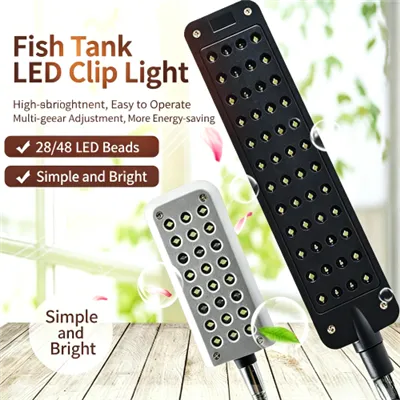
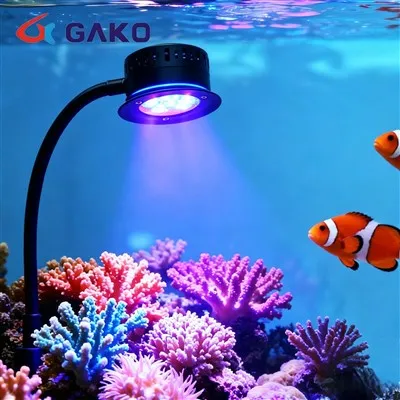
This is where a quality RGB Clamp Aquarium Light earns its place. By combining red, green, and blue diodes, it delivers a full, balanced spectrum that includes the red and blue bands plants rely on, while still making colors look vivid to your eye. The result is healthy growth, strong oxygen production, and a tank that looks stunning. Here is how the spectrum maps to plant use.
|
Wavelength |
Color |
Role in Photosynthesis |
|
400 – 450 nm |
Blue |
Strongly absorbed, drives chlorophyll and compact growth |
|
450 – 550 nm |
Green |
Weakly absorbed, mostly reflected |
|
620 – 680 nm |
Red |
Strongly absorbed, drives growth and oxygen release |
A good RGB fixture lets you balance these bands, which is why it is a favorite for planted tanks where both growth and appearance matter.
How Much Light Is Enough for Oxygen Production
Low, Medium, and High Light Compared
Low light keeps plants alive and growing slowly, with little or no visible pearling. Medium light speeds growth and may produce gentle pearling in the afternoon. High light, with PAR above roughly 50 micromoles at the substrate, drives fast growth and the steady, champagne-stream pearling that planted-tank enthusiasts chase. But here is the catch: as you raise the light, the plant's demand for carbon dioxide and nutrients rises too.
The Role of CO2 and Nutrients
This is the most common mistake in the hobby. People crank up the light expecting more oxygen and more pearling, but without enough carbon dioxide, the plant hits a wall. It cannot use the extra light, growth stalls, and algae takes the surplus energy instead. Strong light only produces strong oxygen output when carbon dioxide and nutrients keep pace. Think of it as a three-legged stool: light, carbon dioxide, and nutrients all have to be present, or the whole thing tips over.
Measuring the Oxygen Effect
You can actually see the oxygen effect in the numbers. Dissolved oxygen, measured in milligrams per litre, rises through the day as plants photosynthesize under the light, then falls overnight when the lights are off and everything in the tank, plants included, consumes oxygen instead.
|
Time |
Light State |
Dissolved O2 (mg/L) |
|
Midday |
Lights on |
8 – 10 (near saturation) |
|
Evening |
Lights just off |
7 – 8 |
|
Pre-dawn |
Lights off all night |
5 – 6 (lowest point) |
That overnight dip is normal, but it explains why a heavily planted tank can leave fish gasping at the surface before dawn if there is no extra surface movement. The plants that gave oxygen all day become oxygen consumers at night.
Real-World Scenarios
A High-Tech Planted Tank with CO2
In a high-tech tank with pressurized carbon dioxide, bright lighting, and regular fertilizing, pearling is the norm. Within an hour or two of the lights coming on, leaves bead with oxygen and the surface fizzes. Daytime dissolved oxygen often sits near saturation around 9 to 10 milligrams per litre. This is the setup where a tunable full-spectrum light truly pays off.
A Low-Tech Tank Without CO2
In a low-tech tank with no added carbon dioxide, plants still photosynthesize and still release oxygen, just more slowly. You may see occasional pearling on a sunny afternoon but not the constant stream. That is perfectly healthy. The key in a low-tech tank is to keep the light moderate so the plants are not asking for carbon dioxide that is not there, which would only invite algae.
Why Oxygen Matters for Fish and Shrimp
All that plant-made oxygen is a gift to the animals in the tank. Fish and shrimp breathe dissolved oxygen, and a well-lit planted tank can keep daytime levels high and stable, which means active, healthy livestock. But remember the overnight reversal. Because plants consume oxygen in the dark, a crowded, heavily planted tank benefits from a little extra surface agitation at night, or an air stone on a timer, to top up oxygen while the lights are off. Good lighting builds a healthier tank, but it works best alongside sensible aeration.
Materials, Efficiency, and Build Quality
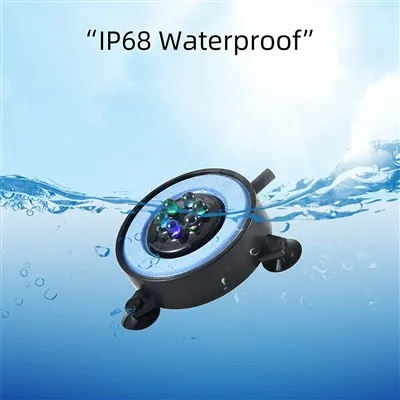
The light fixture itself decides how efficiently you turn electricity into plant-usable energy. Look for the efficiency figure, often given in micromoles per joule, since a more efficient light produces more usable PAR for the same power and heat. A solid aluminum heat sink keeps the LEDs cool, which protects both their brightness and their rated lifespan of 30,000 to 50,000 hours. A proper waterproof rating such as IP67 or IP68 matters when a fixture clamps right over open water. And quality diodes hold their output over time; cheap ones lose brightness and shift color within months, quietly weakening the oxygen-producing power of your tank. These build details are exactly what separate a serious RGB Clamp Aquarium Light from a toy.
Safety and Compliance Standards
A light running over water for hours every day must be safe and certified. For European markets that means CE marking for electrical and electromagnetic safety, plus RoHS and REACH to control hazardous materials. For North America, FCC covers emissions and UL or ETL covers electrical safety. A clear IP waterproof rating confirms the fixture is built for splashes and humidity, and many reputable lights also meet IEC 62471 for photobiological safety. These certifications are your assurance that a bright light sitting inches from water will not become a hazard.
Industry Trends in 2025 and 2026
Lighting technology is moving fast in the planted hobby. Full-spectrum lights with adjustable RGB channels are becoming standard, letting hobbyists tune the exact balance of red and blue for maximum growth and the look they want. Smart dimming and scheduling now let you ramp the light up and down, and many fixtures simulate sunrise and sunset, which gives plants and animals a gentler, more natural rhythm. Efficiency keeps improving too, so today's lights deliver more oxygen-driving PAR per watt than ever. For anyone chasing reliable pearling, a tunable full-spectrum light is the single best upgrade available.
F A Q
Q: Why do my aquarium plants release bubbles?
A: Those bubbles are oxygen produced during photosynthesis, a phenomenon called pearling. It means your plants are getting enough light and carbon dioxide to grow strongly and release oxygen into the water.
Q: Do RGB lights actually help plants grow?
A: Yes. A good RGB Clamp Aquarium Light delivers the red and blue wavelengths chlorophyll absorbs most strongly, so it drives healthy photosynthesis and oxygen production while also making the tank look vivid.
Q: How much light do I need for plants to pearl?
A: Steady pearling usually needs medium to high light, often above 50 micromoles of PAR at the substrate, plus enough carbon dioxide and nutrients to match. Light alone is not enough.
Q: Does more light always mean more oxygen?
A: No. Beyond a point, extra light does nothing unless carbon dioxide and nutrients keep pace. Push light too far without them and you simply grow algae instead of oxygen.
Q: Where can I buy a reliable full-spectrum aquarium light?
A: Look for a manufacturer or factory that publishes the spectrum, PAR output, efficiency in micromoles per joule, IP rating, and CE, FCC, and RoHS certification. Established suppliers also offer wholesale pricing for shops and serious aquascapers