Why Moss Is the Easiest Plant to Grow Wrong
Here is the strange thing about moss: it is hard to kill but easy to make ugly. Java moss will survive almost anything, yet getting it to grow into that thick, healthy green carpet you see in photos takes a little more thought. The single biggest factor is light, and specifically, too much of it.
Most moss species grow on shaded forest floors and stream banks in the wild, under filtered light. Drop them under a powerful tank light and they do not grow faster, they get stressed, and algae moves in to use the extra energy. So the first mindset shift is this: with moss, gentle and steady beats bright and intense.
How Much Light Does Aquarium Moss Actually Need
Moss is a low-light plant, full stop. It does not need the strong lighting that demanding carpet plants or red stems require. In fact, giving it that much light usually backfires.
Java Moss, Christmas Moss, and Their Low-Light Nature
The most popular aquarium mosses all prefer modest light. Java moss is the toughest and the most forgiving, which is why beginners love it. Christmas moss grows in a denser, layered shape that many aquascapers prefer, and it likes a touch more light. Flame moss, which grows upward in flame-like fronds, wants a bit more still, but even that is moderate by planted-tank standards.
Understanding PAR in Simple Terms
You will see the term PAR thrown around in planted-tank discussions. It stands for the light in the 400 to 700 nanometer range that plants actually use to grow, and it is measured in micromoles. You do not need a meter to grow moss, but knowing the rough numbers helps you avoid overdoing it.
|
Moss Type |
Light Level |
PAR (µmol) |
Notes |
|
Java Moss |
Low |
20 – 40 |
Most forgiving, beginner favorite |
|
Christmas Moss |
Low to Medium |
30 – 50 |
Denser, tidier growth |
|
Flame Moss |
Medium |
40 – 60 |
Needs a little more light |
Notice that even the brightest figure here, around 60, is low compared with the 80 to 120 that demanding plants want. Aim low with moss and you will rarely go wrong.
Why a Clip-On Light Suits Moss Tanks
Moss tanks tend to be small. Shrimp tanks, nano cubes, betta setups, desktop scapes, these are moss country, and they are exactly the tanks where a clip mounted light shines.
Small Tanks, Nano Setups, and Easy Mounting
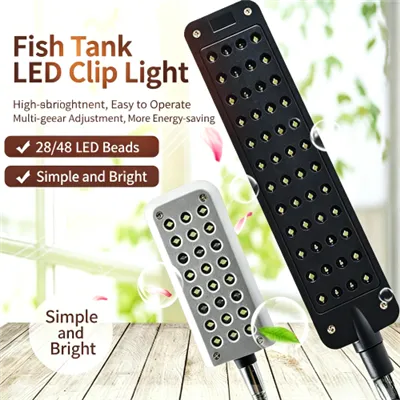
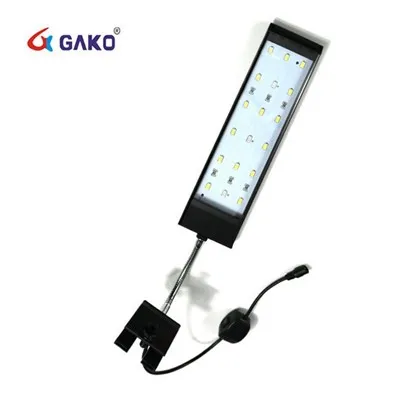
A Clip-On Aquarium Light clamps onto the rim of the tank, needs no lid or special bracket, and takes thirty seconds to install. For a 5 to 20 gallon moss tank, that simplicity is a real advantage. You can angle it, slide it along the rim, and remove it for maintenance without tools. Because these lights are usually modest in output, they also happen to match the gentle lighting moss prefers, which is a happy coincidence for beginners.
Adjusting Distance to Control Intensity
Here is a trick most people miss: you control how bright the light reaches the moss simply by raising or lowering the fixture. Light intensity falls off quickly with distance, so a lamp sitting right on the water surface delivers far more PAR to the moss than the same lamp raised ten centimeters above it. If your moss is browning at the top, lift the light or move it back before you blame the plant. A clip mount makes this kind of fine tuning easy, which is one more reason it fits moss tanks so well.
Color Temperature and Spectrum for Healthy Moss
Color temperature, measured in Kelvin, describes whether a light looks warm and yellowish or cool and bluish.
Why 6,500K to 7,000K Looks Best
For moss and most planted tanks, a daylight color around 6,500K to 7,000K is the sweet spot. It looks natural to the eye, makes greens pop, and supports healthy growth. This is the same color range as midday sunlight, which is no accident, since that is what these plants evolved under.
When Bluer Light Causes Algae
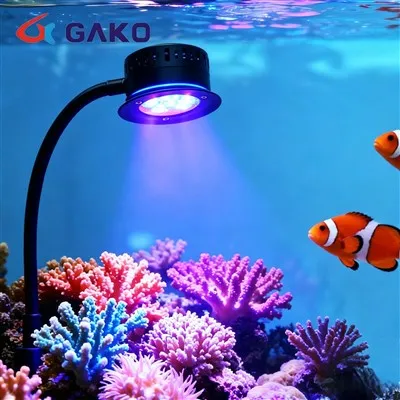
Very blue light, up around 10,000K and above, looks crisp and is popular for marine and reef tanks, but in a freshwater moss tank it can encourage algae more than it helps the moss. If you are fighting persistent algae, shifting toward a warmer daylight spectrum and dialing back intensity often calms the tank down within a couple of weeks.
Light DurationThe Photoperiod That Keeps Moss Green
How long the light stays on each day matters just as much as how bright it is. This daily window is called the photoperiod.
For a low-tech moss tank without added carbon dioxide, six to eight hours a day is plenty. Run the light much longer and you are not feeding the moss more, you are feeding the algae. As your scape matures and if you add carbon dioxide, you can stretch toward eight hours, but more is rarely better. A consistent schedule beats a long one, which is why many hobbyists pair their light with a simple timer so it switches on and off at the same time every day without fail.
Real Setup Examples
A 10-Gallon Moss Wall
Imagine a 10-gallon tank with a moss wall covering the back panel. A clip mounted LED of around 10 to 15 watts, set to seven hours a day and raised a few centimeters above the water, delivers roughly 30 PAR at the moss surface. That is gentle, even light that keeps the wall a deep, uniform green without inviting algae onto the glass.
A Shrimp Tank with Moss Carpet
In a planted shrimp tank, the moss doubles as grazing ground and shelter for baby shrimp. Here you want soft, steady light that supports the moss without stressing the shrimp. A low-output clip light on a seven hour schedule fits perfectly, and the easy mounting means you can lift it off for water changes without disturbing the colony.
Common Problems and Fixes
Moss Turning Brown
Brown patches usually mean too much light or poor water flow trapping debris in the moss. Lower the light or move it farther away, improve gentle circulation, and trim out the dead sections so fresh green growth can take over.
Algae Taking Over
Algae on or around moss is almost always a sign of excess light, too long a photoperiod, or extra nutrients with nothing to use them. Cut the daily hours, reduce intensity, and keep up with water changes. The moss will recover as the algae loses its advantage.
Moss Not Growing
If the moss simply sits there, the light may be too weak or too far away, or the water may be low in nutrients. Move the light a little closer, confirm you are running a daylight spectrum, and add a modest dose of liquid fertilizer. Moss grows slowly, so give any change two to three weeks before judging it.
Materials and Build Quality to Look For
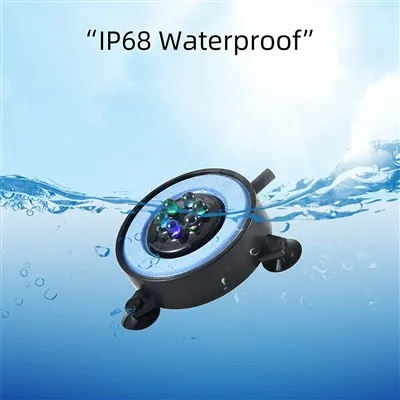
Not all clip lights are built to last in the humid, splash-prone world of an aquarium. A few details separate a good fixture from one that fails in a year. Look for an aluminum body or heat sink, which pulls heat away from the LEDs and extends their life, often to 30,000 to 50,000 hours of use. Check the waterproof rating; a sealed light rated IP67 or IP68 shrugs off splashes and condensation, which matters right above an open tank. A sturdy clamp with a protective pad protects your rim and holds the angle you set. Quality LEDs also hold their brightness and color over time rather than fading and yellowing after a few months.
Safety and Compliance Standards
Because an aquarium light lives inches above water and runs for hours every day, safety certification is not a nice-to-have, it is essential. For sale in Europe, the light needs CE marking, which covers electrical safety and electromagnetic behavior, along with RoHS to limit hazardous materials. For North America, look for FCC for emissions and UL or ETL for electrical safety. A waterproof IP rating shows it is built for the wet environment, and many quality fixtures also meet IEC 62471 for photobiological safety, confirming the LED brightness is safe for the eyes. Buying from a supplier that already holds these certifications protects both you and your customers.
Industry Trends in 2025 and 2026
Aquarium lighting keeps getting smarter and gentler. Dimmable LEDs are now common, letting you tune intensity to exactly what moss wants instead of running flat out. App and Bluetooth control is spreading, so you can schedule and adjust the light from your phone. And efficiency keeps climbing, with newer LEDs producing more usable plant light per watt, which lowers running costs and heat. For a moss tank, the most useful of these is simple dimming, since it lets one fixture serve everything from a shaded shrimp tank to a brighter aquascape.
F A Q
Q: What light is best for aquarium moss?
A: A low to medium output LED with a daylight spectrum around 6,500K works best. A Clip-On Aquarium Light is ideal for the small tanks where moss usually lives, because it is easy to mount and gentle enough not to trigger algae.
Q: How many hours should I light a moss tank?
A: Six to eight hours a day is plenty for most moss. Longer photoperiods feed algae more than the moss, so keep it consistent rather than long.
Q: Why is my moss turning brown under the light?
A: Usually too much light, too long a photoperiod, or trapped debris. Raise or move the light, shorten the hours, improve gentle flow, and trim the dead parts.
Q: Does moss need a strong planted-tank light?
A: No. Moss is a low-light plant and often grows worse under strong lighting, which encourages algae instead. Gentle, steady light gives the best results.
Q: Who should I buy a clip-on light from?
A: Choose a clip-on aquarium light manufacturer or factory that lists the wattage, color temperature, IP waterproof rating, and CE, FCC, and RoHS certification. Reliable suppliers will also offer wholesale pricing for stores and breeders buying in volume.