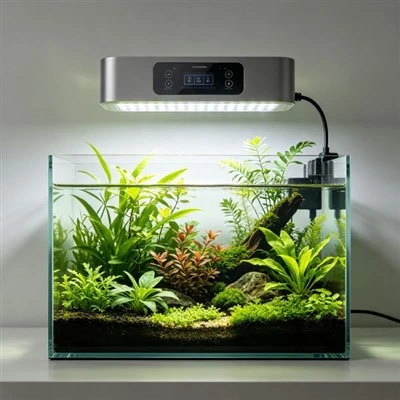
Epiphyte Plants Shaded by Wood and Stone
Epiphyte Plants Shaded by Wood and Stone begins with Anubias ferns or similar plants attached to hardscape. The relevant physical or operational link is that leaves can sit under overhangs even when the tank looks bright from above. This does not mean every visible change comes from the lamp. It means the stated link is the first cause worth checking under controlled conditions. Describe what a person can see, when it occurs, and what changed recently. Keep conclusions proportional to the evidence, especially when plants, corals, fish behaviour, electrical safety, or product performance are involved.
Geometry explains why leaves can sit under overhangs even when the tank looks bright from above. Distance changes beam spread, while lenses, diffusers, braces, lids, hardscape, and leaves change the path after light leaves the LEDs. A centre reading cannot describe a shaded edge, a cave entrance, or a high rock ledge. Sketch a side view of Anubias ferns or similar plants attached to hardscape and mark the emitting surface, waterline, important objects, and observation point. The drawing need not be artistic. Its purpose is to reveal what sits between the source and the place that matters. Here, that point helps evaluate the documented mechanism: leaves can sit under overhangs even when the tank looks bright from above.
The first observation for this case is specific: view the plant from the fixture and trace what blocks the beam. Make that observation before opening an app or moving the fixture. Note the clock time, room light, water condition, current programme, mounting position, and any recent cleaning or equipment change. A fixed photograph may support the notes when exposure and position remain constant. The objective is a reliable starting point that another person could recognise, not a dramatic before image.
Water condition can alter the result of a epiphyte plants shaded by wood and stone check. Tannins, suspended particles, microbubbles, surface film, and algae on the glass change transmission and scattering. A tank may look dimmer even though the fixture output has not changed. Note recent water changes, cleaning, additives, and unusual cloudiness before adjusting the lamp. Correct the water-quality or maintenance issue on its own merits, then reassess lighting after conditions stabilise. More output is a poor substitute for clear diagnosis. For this scenario, the key observation is to view the plant from the fixture and trace what blocks the beam.
Use this controlled check: move a small test plant to a clearer position without changing the schedule. Change no other major variable during the comparison. If measurement equipment is involved, record its model, orientation, position, and whether it is designed or corrected for underwater use. If the test depends on human viewing, use the normal seat or working position rather than an ideal angle chosen for the test. Repeat the result before accepting it as the explanation for epiphyte plants shaded by wood and stone.
Change one major variable during the first trial of epiphyte plants shaded by wood and stone. Moving the lamp while altering intensity and extending the day creates three possible causes. Choose the smallest reversible adjustment, record it, and keep feeding, maintenance, dosing, and room conditions as stable as practical. Visual glare may be assessed immediately, but plants, algae, corals, and animal routines require longer observation. If results are unclear, restore the baseline before testing the next idea instead of stacking more changes. The controlled check remains practical: move a small test plant to a clearer position without changing the schedule.
The practical response is to adjust plant placement or fixture coverage gradually. Apply it in the smallest reversible step that can answer the question. A viewing or control issue may become clear in minutes, while biological responses require appropriate time and species-specific interpretation. Avoid increasing intensity simply because the first change was subtle. Large simultaneous adjustments erase the baseline and can create a new problem that looks like confirmation of the old one.
Photographs can document epiphyte plants shaded by wood and stone when they are made consistently. Fix the camera position, lens, exposure, white balance, aquarium setting, and room light. Automatic processing can make a small change look large or hide a real change. Store one unedited image with the date and settings, then use edited pictures only for presentation. A photograph records appearance; it does not by itself prove plant growth, coral health, animal comfort, spectrum, or measured intensity. Any adjustment should support the decision to adjust plant placement or fixture coverage gradually.
One limit must remain visible throughout the process: species needs and previous growing conditions still matter. Check the manual for the exact model, and keep plugs, adapters, external connectors, vents, and mounts in their intended environment. Disconnect equipment before cleaning or mechanical inspection. When damage, liquid entry, unstable mounting, unusual odour, or severe heat is present, stop the experiment and seek manufacturer or qualified electrical support.
Define success for epiphyte plants shaded by wood and stone before moving a control. A viewing complaint is solved when the normal seat has no distracting glare. A maintenance check succeeds when the keeper can see the relevant surface clearly. A biological decision needs a longer observation tied to the actual species and system. These are different outcomes, so they should not share one vague target such as brighter or better. For this situation, write one visible result that would show the adjustment worked and one sign that would make you stop. The stated limit also applies: species needs and previous growing conditions still matter.
A short written result closes the loop. Use the title Epiphyte Plants Shaded by Wood and Stone in the log, followed by the starting condition, the controlled change, the observation period, and the outcome. State whether the result was measured, photographed, or judged by eye. If the explanation remains uncertain, restore the known stable arrangement and test another cause later. This record prevents the same question from being answered with a different guess each time it appears.
The water surface is an active optical boundary. Ripples create moving bright and dark patterns, while a still surface can show strong reflections. Covers add more surfaces and may collect condensation, dust, salt, or mineral deposits. During the epiphyte plants shaded by wood and stone check, document pump state and cover condition. Clean only by the manufacturer's method and never remove a structural brace. If a comparison requires the lid to be moved, keep the test brief and restore the normal safe arrangement afterward. This evidence belongs in the written record for Epiphyte Plants Shaded by Wood and Stone.