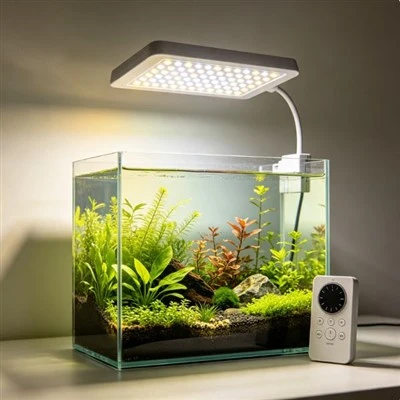
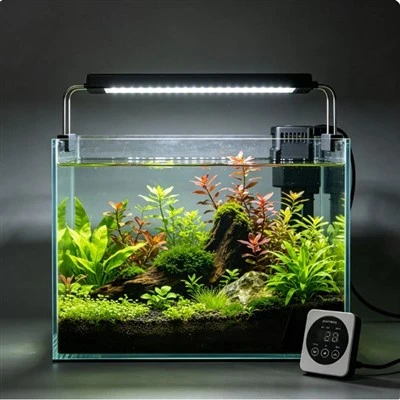
A freshly assembled circuit board can look tidy under ordinary room light and still carry residue around component leads, pads, and low-clearance parts. Some residue is expected from soldering, because flux helps remove oxides and supports a sound joint. The engineering question is what remains after the approved process and whether it is acceptable in the intended environment. Near an aquarium, humidity, condensation risk, salt-bearing contamination, electrical bias, temperature, spacing, and time can combine in ways that a quick visual inspection cannot fully predict.
Not all residue behaves alike. Flux chemistry, activation level, solids, soldering temperature, dwell time, cleaning chemistry, rinse quality, handling, and board materials influence what remains. Ionic residues can be hygroscopic or dissolve in condensed moisture and, under electrical bias, may contribute to leakage current, electrochemical migration, corrosion, or instability in high-impedance circuits. These outcomes are conditional rather than inevitable. A visible amber film is not automatically a failure, and a board with no visible residue is not automatically clean enough.
The phrase "no-clean flux" is frequently misunderstood. It generally describes a process material intended to leave residues that can be acceptable when used within validated conditions; it does not promise that every amount, profile, geometry, environment, or coating process requires no evaluation. Excess flux trapped beneath a component can differ from a thin, properly processed residue. A manufacturer must qualify the flux and soldering profile with the board design and end use rather than treating two words on a label as the cleanliness criterion.
Board geometry changes risk. Closely spaced conductors, fine-pitch packages, high-impedance sensing nodes, exposed test points, and areas beneath low-standoff components may respond differently to the same contamination. Electrical bias supplies the driving condition for some moisture-related mechanisms, while repeated wetting and drying can redistribute residues. An aquarium-light controller that is nominally enclosed still needs realistic environmental assumptions. "Sealed" should not be used as a substitute for documented ingress design or as proof that internal process cleanliness is irrelevant.
A controlled manufacturing plan specifies the solder paste and flux, storage, handling, print or application parameters, reflow or hand-soldering profile, approved cleaning process if used, drying, inspection, and a measurable acceptance method. Cleanliness may be evaluated with ionic contamination testing, localized extraction, surface insulation resistance methods, or other suitable techniques, depending on the question. Each method has limits. A single bulk result can miss a local pocket, while a visual criterion cannot quantify every electrically significant residue.
Conformal coating can add environmental protection when correctly selected and applied, but it is not a magic eraser. Coating over contamination may trap material or moisture, interfere with adhesion, or make later analysis difficult. Coverage around leads, connectors, sharp edges, and masked areas needs inspection under the method appropriate to the coating. Compatibility with the flux residue, cleaner, board, components, and cure process must be established. The design should state which areas are intentionally uncoated rather than interpreting every bare spot as the same defect.
Humidity-bias testing connects process control with use conditions. Representative boards operate under a defined electrical load while temperature and humidity follow a stated profile; engineers monitor relevant insulation, leakage, function, and visible change. Test severity and duration need a rationale, because an arbitrary extreme may create condensation or chemistry unlike normal service. Controls, repeat samples, and known contamination levels make the result interpretable. A board that passes one short chamber exposure has not thereby proven unlimited resistance to every saltwater environment.
Failure investigation begins by keeping the evidence. If a controller becomes intermittent, preserve the board state, photographs, connector condition, enclosure history, and environmental record. Washing the assembly before analysis can remove the very residue or corrosion pattern needed to locate the cause. Qualified laboratories can compare affected and unaffected areas and review process records. The user should never be told to open and rinse an electronic assembly; water and household cleaners can worsen damage, defeat protection, and create an electrical hazard.
Small production habits make a large difference. Operators need clean gloves or handling rules, controlled rework materials, maintained cleaning baths when cleaning is required, and separate tools that do not transfer unrelated chemicals. Reworked joints should receive the same acceptance logic as original soldering. Lot traceability for flux, paste, coating, and wash chemistry helps connect field patterns to changes. If a process is changed to improve throughput or appearance, cleanliness and reliability evidence should be reviewed before approval.
Reliability near an aquarium is built from a chain: suitable board spacing, controlled soldering, validated cleaning or no-clean use, compatible coating where specified, enclosure design, and realistic environmental testing. None of these alone can excuse poor control of the others. Honest product documentation does not promise that a board is safe merely because its residue is hard to see. It shows that chemistry, moisture, voltage, geometry, and time were considered together-and it keeps investigation in qualified hands when the circuit tells a different story.
Design review can lower susceptibility before process testing begins. Keep sensitive high-impedance nodes away from likely contamination paths, provide appropriate spacing, avoid unnecessary residue traps, and consider how connectors or enclosure openings can carry humid air. Test points and component outlines should allow the specified cleaning and coating process to work. If a board revision tightens spacing or changes a package, previous cleanliness evidence may no longer cover it. Reliability teams should review schematic function, layout, process chemistry, coating, and enclosure together. That joined view is more useful than declaring the PCB clean based on one passing production sample while ignoring where moisture and electrical bias meet in the real circuit.
Cleanliness limits should be linked to evidence rather than copied from an unrelated assembly. The acceptable result may depend on circuit sensitivity, extraction area, test chemistry, and environmental qualification. Reports should name the method, sample area, units, limit, and disposition so a later team can understand what "passed cleanliness" actually meant.