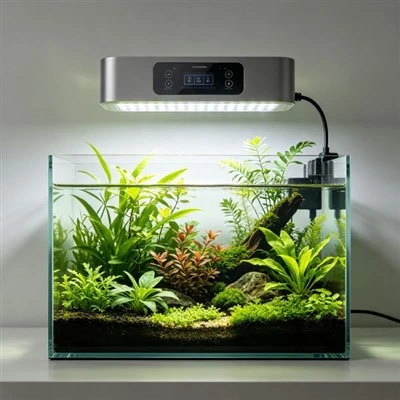
Honest Coral Progress Photos
Honest Coral Progress Photos begins with a hobbyist comparing coral colour over months. The relevant physical or operational link is that automatic white balance exposure and editing can create false differences. This does not mean every visible change comes from the lamp. It means the stated link is the first cause worth checking under controlled conditions. Describe what a person can see, when it occurs, and what changed recently. Keep conclusions proportional to the evidence, especially when plants, corals, fish behaviour, electrical safety, or product performance are involved.
Separate optical output from electrical input when assessing honest coral progress photos. Watts describe power consumed, not the spectrum or the amount of photosynthetically active radiation delivered to a particular underwater point. Lumens and lux weight light for human vision. PPFD counts photons in a defined waveband and is more relevant to photosynthesis, but even PPFD needs the sensor model, depth, orientation, and measurement conditions. Use the quantity that answers the question and avoid converting unlike numbers with a universal shortcut. Here, that point helps evaluate the documented mechanism: automatic white balance exposure and editing can create false differences.
The first observation for this case is specific: include a grey or neutral reference when practical. Make that observation before opening an app or moving the fixture. Note the clock time, room light, water condition, current programme, mounting position, and any recent cleaning or equipment change. A fixed photograph may support the notes when exposure and position remain constant. The objective is a reliable starting point that another person could recognise, not a dramatic before image.
Define success for honest coral progress photos before moving a control. A viewing complaint is solved when the normal seat has no distracting glare. A maintenance check succeeds when the keeper can see the relevant surface clearly. A biological decision needs a longer observation tied to the actual species and system. These are different outcomes, so they should not share one vague target such as brighter or better. For this situation, write one visible result that would show the adjustment worked and one sign that would make you stop. For this scenario, the key observation is to include a grey or neutral reference when practical.
Use this controlled check: lock camera position exposure and white balance. Change no other major variable during the comparison. If measurement equipment is involved, record its model, orientation, position, and whether it is designed or corrected for underwater use. If the test depends on human viewing, use the normal seat or working position rather than an ideal angle chosen for the test. Repeat the result before accepting it as the explanation for honest coral progress photos.
Spectrum affects appearance and biological use, but channel names are not measurements. Blue, red, full spectrum, moon, and UV may refer to very different emitters in different products. If wavelength matters for honest coral progress photos, use a reliable spectrum or component specification for the exact model and production version. Visible violet should not automatically be described as ultraviolet. For ordinary viewing, compare a neutral inspection setting with the decorative setting and keep camera white balance fixed when photographs are part of the record. The controlled check remains practical: lock camera position exposure and white balance.
The practical response is to store an unedited reference image with the date and light setting. Apply it in the smallest reversible step that can answer the question. A viewing or control issue may become clear in minutes, while biological responses require appropriate time and species-specific interpretation. Avoid increasing intensity simply because the first change was subtle. Large simultaneous adjustments erase the baseline and can create a new problem that looks like confirmation of the old one.
The water surface is an active optical boundary. Ripples create moving bright and dark patterns, while a still surface can show strong reflections. Covers add more surfaces and may collect condensation, dust, salt, or mineral deposits. During the honest coral progress photos check, document pump state and cover condition. Clean only by the manufacturer's method and never remove a structural brace. If a comparison requires the lid to be moved, keep the test brief and restore the normal safe arrangement afterward. Any adjustment should support the decision to store an unedited reference image with the date and light setting.
One limit must remain visible throughout the process: photographs show appearance and cannot by themselves establish growth or health. Check the manual for the exact model, and keep plugs, adapters, external connectors, vents, and mounts in their intended environment. Disconnect equipment before cleaning or mechanical inspection. When damage, liquid entry, unstable mounting, unusual odour, or severe heat is present, stop the experiment and seek manufacturer or qualified electrical support.
Claims should stay inside the evidence. A product can be described as dimmable when its controls demonstrate dimming, but smooth low-level performance should be tested. Moisture protection requires the exact rating and configuration. Energy savings require a defined comparison. Plant or coral outcomes require conditions and observation, not a spectrum graphic alone. When writing about honest coral progress photos, state what was measured, what was merely observed, and what remains dependent on the aquarium. Accurate limits make advice more useful, not less. The stated limit also applies: photographs show appearance and cannot by themselves establish growth or health.
A short written result closes the loop. Use the title Honest Coral Progress Photos in the log, followed by the starting condition, the controlled change, the observation period, and the outcome. State whether the result was measured, photographed, or judged by eye. If the explanation remains uncertain, restore the known stable arrangement and test another cause later. This record prevents the same question from being answered with a different guess each time it appears.
Thermal conditions matter because an LED product is a system of emitters, optics, driver electronics, housing, and controls. The U.S. Department of Energy notes that operating temperature affects LED output, colour, and reliability. Do not block passive vents or wrap a working fixture to protect it from dust or spray. In a hobbyist comparing coral colour over months, check whether room temperature, enclosure, mounting clearance, or nearby equipment has changed. A housing that feels warmer than expected deserves comparison with the manual and supplier guidance, not improvised cooling. This evidence belongs in the written record for Honest Coral Progress Photos.