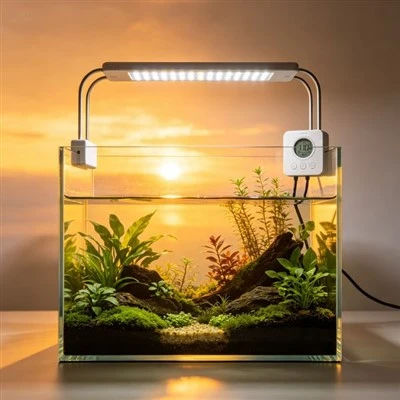
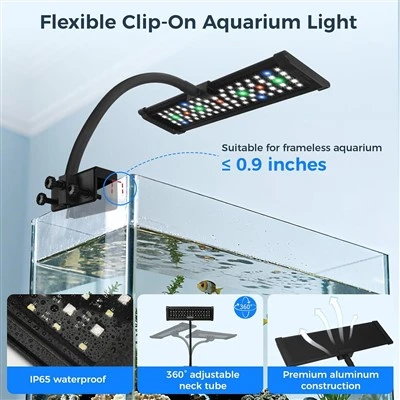
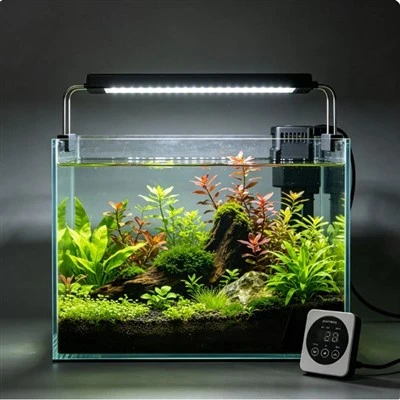
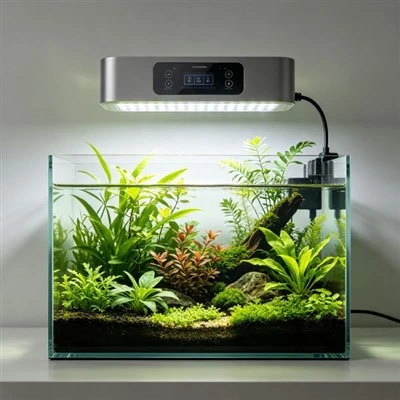
1.Basic rules of how aquatic plants use photosynthesisPhotosynthesis in aquatic plants is the process by which they use light energy to change carbon dioxide and water into organic molecules (like glucose) and oxygen. For photosynthesis to work well, aquatic plants need chlorophyll to collect light energy. The intensity, quality (wavelength), and length of time the light is present all have a big effect on how well it works. A light source in an aquarium provides aquatic plants the light energy they need to do photosynthesis.
2. What aquarium lights doThe basic job of aquarium lights is to create a beneficial lighting environment, mimic sunlight, and help aquatic plants photosynthesise. Aquarium lights help aquatic plants flourish in the following ways:
3. Provide enough light to the room.The amount of light directly impacts how quickly aquatic plants can photosynthesise. Aquatic plants can do photosynthesis well and make enough oxygen and organic matter when the light is strong enough. If there isn't enough light, aquatic plants won't grow as well, and they may become yellow, die, or grow slowly. Aquarium lights help aquatic plants photosynthesise more efficiently by giving them the right amount of light.
二, Change the colour temperature (wavelength) of the lightThe colour temperature (or wavelength) of aquarium lights is also crucial for aquatic plants to photosynthesize. Different wavelengths of light affect how aquatic plants photosynthesise in different ways, including how well they can take in chlorophyll. For the most part, blue and red light are the most important for aquatic plants to photosynthesise.Blue light (approximately 400–500 nanometers): Blue light is one of the best wavelengths for photosynthesis since it helps aquatic plants take in chlorophyll. Blue light has a big effect on how aquatic plants grow. It is especially vital for helping plant cells divide and grow taller.Red light (approximately 600–700 nanometers): Red light is also critical for aquatic plants' photosynthesis since it helps them take in carbon and do photosynthesis more efficiently. Red light can help water plants bloom and reproduce.So, most current aquarium lights employ full-spectrum bulbs or LED lights that mix blue and red light to make sure that aquatic plants get the right amount of light and thrive well.
三, Provide the appropriate amount of light..The light cycle also changes how aquatic plants photosynthesise. Aquatic plants get about 12 hours of light a day in their native habitat, which helps them develop and photosynthesise normally. The lighting cycle for aquarium lights also needs to be set right, usually between 8 and 12 hours of light every day.Too much light: If the plants are exposed to light for too long, they will get more light energy, but the excess can also cause algae to grow too quickly, which can make the water quality worse.Short light exposure: If the plants don't get enough light, they don't photosynthesise well, which can impede their growth or kill them.By limiting the amount of time the aquarium lights are on, you can stop too much algae from growing while still letting aquatic plants photosynthesize.Choosing the Right Lights for Your AquariumChoosing the right aquarium lights is very important for helping aquatic plants photosynthesise. When picking the lights for your aquarium, you should think about the following
1. Type of lampFluorescent lamps: Many aquariums utilize regular fluorescent lamps to give the plants a fairly even light that is beneficial for their growth.LED lights: LED lights are now the most common type of aquarium lighting since they save energy, last a long time, and give off a lot of light. Most modern LED lights let you change the colour temperature and wavelength, which lets you manage the amount of red and blue light quite precisely. This feature helps aquatic plants do photosynthesis better.
2. The range and colour temperatureIf you want your aquatic plants to develop, you should use aquarium lights that have a comprehensive spectrum, which includes blue and red light. These light tubes mimic the way sunlight spreads out across the spectrum, which can help water plants photosynthesise better.
3. Consider both the amount of light produced and the area it illuminates.Pick lighting fixtures that give off the right amount of light for the size of the aquarium and the types of aquatic plants you have. You need to choose lighting fixtures with higher light intensity if the aquarium is big or has a lot of fast-growing aquatic plants. If the aquarium is small or has a lot of slow-growing plants, you can choose moderate or weak light sources.