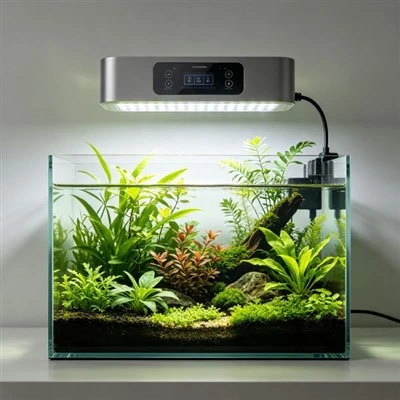
A new light looks clear when it leaves the factory, but weeks of warm operation reveal a faint film on the inside of its optical cover. Cleaning the outside changes nothing. One possible cause is condensable material released from something inside the enclosure, although "possible" is the important word. Haze can also come from moisture, contamination introduced during assembly, surface damage, or another mechanism. An investigation should identify the deposit before a team blames a favorite adhesive, asks the owner to open the product, or redesigns the entire seal.
Many manufactured materials contain small molecules that can migrate or volatilize under certain conditions. Adhesives, silicones, plastics, coatings, inks, cleaning residues, lubricants, and potting compounds are potential contributors, depending on their formulation and processing. Heat can increase release, and a sealed volume gives vapour fewer places to escape. If compounds reach a cooler optical surface and condense or react there, transmission and appearance may change. The mechanism is not guaranteed merely because an enclosure is warm; chemistry, amount, time, airflow, surface temperature, and material history all matter.
Cure state is often as important as the material name. A product used at the correct mix ratio and allowed to cure under specified conditions may behave differently from the same chemistry applied too thickly, exposed to an incompatible cleaner, or enclosed too soon. Storage age and humidity can affect some processes. Therefore a bill of materials alone cannot prove low fogging risk. Work instructions should define mixing, dispensing, cure time, temperature, ventilation, cleaning, and the permitted interval before final closure.
The complete assembly provides interactions that a simple material coupon may miss. A small adhesive mass can appear harmless at room temperature yet contribute to haze after repeated warm operation in a restricted volume. Another material may emit something that reacts with a coating rather than forming a deposit by itself. Compatibility aging should use representative quantities, geometry, operating temperatures, thermal cycles, optical surfaces, and sealed volume. Control samples help distinguish a test-chamber film from a product-generated deposit.
Temperature mapping adds valuable evidence. The emitting material may sit near a hot driver or LED board, while condensation appears on a cooler window. Recording only the room temperature hides that gradient. Engineers should document component and optical-surface temperatures by a validated method, along with fixture setting, orientation, stabilization, aging duration, and cycle history. Accelerated testing can be useful, but excessive temperature may create chemistry or deformation that would not occur in intended service, so the acceleration model and limits need justification.
When haze appears, preserve evidence. Photograph it under repeatable lighting, record when and where it formed, retain an unopened control unit, and avoid wiping the internal surface before samples are considered. Suitable analytical work may help identify organic or inorganic components of the deposit, though results still need interpretation against the assembly materials. Comparing affected and unaffected lots, cure records, cleaning records, and supplier changes often narrows the cause more effectively than smelling parts or relying on visual colour alone.
Owners have a simpler and safer role. Clean only accessible external surfaces by the method in the instructions, confirm that the apparent film is not on the outside, and provide photos, model identification, installation orientation, usage history, and observed timing to support. A sealed aquarium light should not be opened at home to polish the lens. Opening can expose electrical parts, damage seals, introduce fingerprints or dust, and destroy evidence needed to determine whether the original haze was internal.
Material selection should use declarations and application-specific evidence rather than broad labels such as "low VOC," "aquarium safe," or "industrial grade." A claim developed for room-air emissions may not predict condensation on a precision optic inside a small warm cavity. Suppliers can provide composition limits, cure instructions, and compatible-substrate data, but the fixture manufacturer still needs to validate the complete system. Any material change-including a cleaner, tape, ink, gasket, or protective film-should enter change control when it can share the internal atmosphere.
Product design can make the risk easier to manage. Low-emission materials, adequate controlled cure, clean handling, minimized unnecessary chemical mass, suitable barriers, and an assembly-aging screen may all contribute. Venting can reduce trapped volatiles in some designs but may conflict with environmental protection, so it cannot be added casually. Optical surfaces should be protected from handling, and inspection lighting should reveal early film without creating a subjective pass rule. Traceability connects a later complaint to actual lots and process conditions.
Internal fogging is a system problem, not a character flaw assigned to one material family. Heat, surface temperatures, sealed volume, formulation, cure, cleaning, and time determine what the user eventually sees. A disciplined response preserves the evidence, tests representative assemblies, analyses deposits when justified, and changes only what the results support. The clearest product claim is not that fogging is impossible; it is that materials and processes were controlled and evaluated under stated conditions, with a service path that never asks the customer to break the seal.
Field timing can guide the test plan. Haze that appears only during cool-down may involve condensation behaviour different from a film that remains after the unit returns to room temperature. A pattern concentrated above one material, around a vent path, or on the coolest region can suggest where to sample, although location alone does not prove the source. Record whether appearance changes with temperature and whether optical output or distribution is measurably affected under a valid method. Service decisions should distinguish cosmetic appearance from a performance or safety condition without dismissing either. Replacement instructions and returned-unit packaging should preserve the internal state so transport or cleaning does not erase the evidence.
Optical measurement can quantify whether a film changes transmission, colour, or distribution, but the test needs an unaffected reference and controlled settings. A visually noticeable haze may have a small measured effect, while a thin selective deposit could affect wavelengths unevenly. Report appearance and measured performance as separate observations.