After a thunderstorm, it is natural to ask why a plug-in surge strip did not save every connected device. The expectation often comes from the word "protection," which sounds absolute in ordinary conversation. In electrical engineering, a surge protective device is selected and tested for defined transient conditions. It may divert or limit part of a brief overvoltage, but it cannot make the installation immune to every lightning event, utility fault, wiring defect, or sustained abnormal voltage. Useful protection begins with understanding that boundary, not with promising that one accessory can defeat nature.
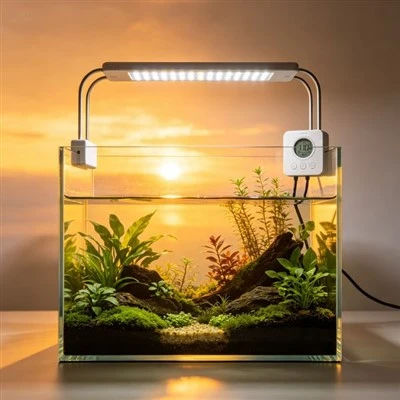
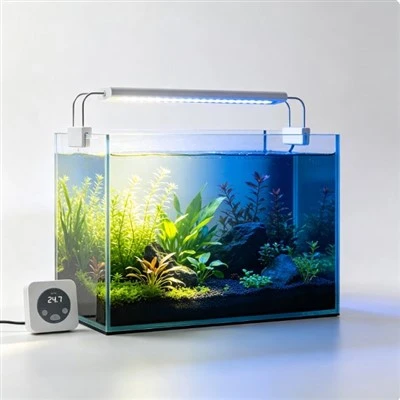
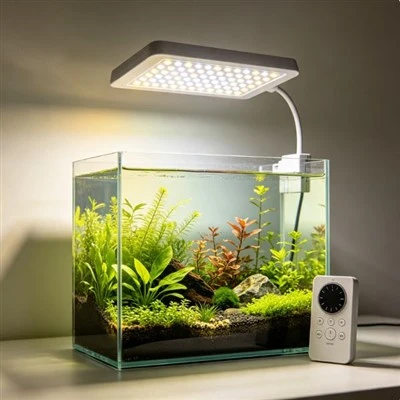
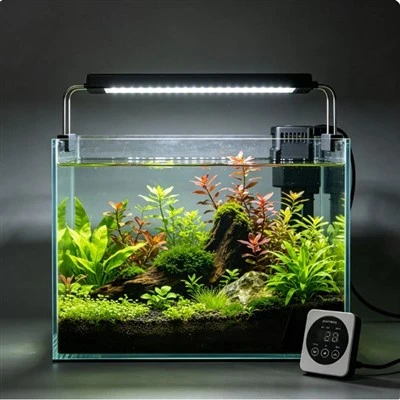
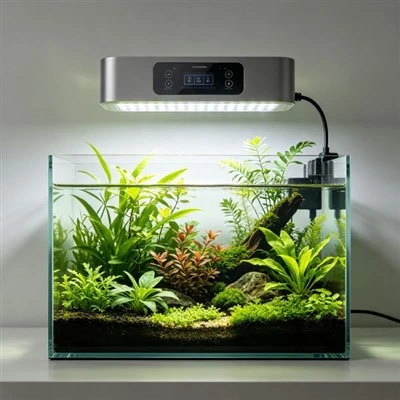
Aquarium lighting adds a practical reason to take the subject seriously. The installation may include an electronic driver, controller, network bridge, timer, and other life-support equipment on nearby outlets. Water also makes careless handling especially hazardous. The first layer is a correctly installed electrical system that follows local rules, includes the required protective measures, and uses the manufacturer's specified supply and earthing arrangement. A plug-in protector is not a repair for a missing protective earth, damaged receptacle, loose wiring, or an overloaded extension arrangement.
Different surge devices are intended for different positions and duties. Protection may be installed at a service entrance, distribution panel, receptacle, plug strip, or inside equipment, with coordination determined by the electrical design. Ratings describe particular test conditions and should be interpreted through the product documentation and applicable standard. A household label cannot be assumed to mean the same thing as a panel-mounted device specification. Voltage system, device type, installation point, grounding system, conductor routing, upstream protection, and local code all affect whether a device is appropriate.
Protective components can also age or be damaged by repeated events. Some products include a status indicator, alarm, or replaceable module, but the meaning is specific to that model. A green lamp might indicate that a protective component is available, that power is present, or a combination of conditions; its interpretation belongs in the manual. The absence of an alarm does not prove that no transient occurred. Owners should follow the stated replacement rule and should not open a mains device to inspect internal components.
Consider a familiar living-room setup. An aquarium light, filter, and controller are connected to a listed strip chosen for the local supply. One evening its protection indicator changes state. The sensible response is to read that product's instructions, disconnect equipment when conditions are safe, and replace or service the device as directed. It is not sensible to tape over the indicator because the outlets still deliver power. Some protectors may continue functioning as ordinary power distribution after a protective element is no longer active, which is exactly why the manual's indicator definition matters.
Storm behaviour demands a separate caution. Do not reach behind an aquarium, handle plugs, or alter wiring during dangerous weather. If a lightning threat requires a household safety response, personal safety and official local guidance take priority over saving equipment. Unplugging in advance may reduce some exposure only when the manufacturer permits it and it can be done safely before the storm; it is not a guarantee against a direct or nearby strike. No plug-in product should be advertised as making an aquarium "lightning-proof."
Not every disturbance is a short surge. A sustained overvoltage, undervoltage, repeated interruption, neutral fault, or poor connection may require a different protective strategy and professional diagnosis. If breakers operate repeatedly, receptacles become hot, lights flicker with other household loads, or a burning smell appears, stop using the affected equipment and obtain qualified help. Repeatedly resetting protection without finding the cause converts a warning into a routine. A surge strip should never be used to rationalize symptoms that point to faulty wiring or damaged equipment.
Good product guidance names the rated input conditions, compatible power supply, required installation orientation if any, environmental limitations, indicator meanings, and replacement instructions. It also states what the protection does not cover. Terms such as surge suppression, overvoltage protection, and lightning protection should not be used interchangeably without technical support. If protection is built into an aquarium light or adapter, the manufacturer should connect each claim to a documented design or test rather than implying unlimited energy-handling capability.
For shops and aquarium facilities, planning should cover more than buying strips. Record which loads are essential, how circuits are divided, where protective devices are installed, how status is inspected, and who is authorized to replace or test equipment. A qualified designer can consider coordinated protection, grounding, cable routing, switching, and backup needs as parts of one system. Periodic visual checks can find damaged cords or expired indicators, but they do not replace electrical inspection or prove the internal condition of every device.
Surge protection is valuable precisely when its claim is kept realistic. Choose equipment for the correct electrical system, install it as directed, keep grounding and wiring sound, act on status indications, and involve a qualified electrician when the installation or repeated failures are uncertain. Then describe the remaining risk honestly. A protector can reduce exposure to specified transients; it cannot promise that every aquarium light will survive every event. Clear limits turn "protection" from a comforting label into a useful, maintainable part of electrical safety.
A maintenance record makes finite protection manageable. Note the exact device, installation date, indicator state, documented inspection interval, replacement event, and any known electrical incident. This does not predict remaining life, but it prevents a protector from becoming an anonymous strip that stays in service indefinitely. In commercial displays, assign the inspection to a named role and keep spare approved devices available. Replacement ratings must match the intended supply and installation; copying only the number of outlets is insufficient. Where a manufacturer cites a test standard or protective rating, request the applicable declaration or report and confirm that it covers the actual model. Evidence should support the limited transient claim, while routine wiring safety remains a separate responsibility.