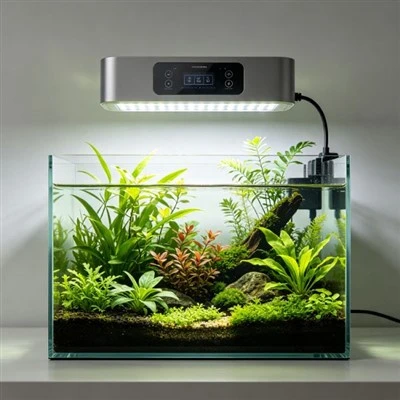
1. Providing Energy for Photosynthesis (Essential for Survival)
This is the most fundamental and crucial function of coral lights.
The Symbiotic Relationship Between Coral and Zooxanthellae: Coral itself is an animal, but its tissues host tens of thousands of microscopic algae-zooxanthellae.
Energy Factory: Through photosynthesis, zooxanthellae convert light energy into chemical energy (carbohydrates, sugars, etc.), supplying the majority (up to 90%) to the coral host as its primary energy source.
Without sufficient light intensity and appropriate spectrum, zooxanthellae cannot perform efficient photosynthesis. Deprived of energy, the coral gradually wastes away, bleaches (expels the zooxanthellae), and eventually dies.
2. Promoting Coral Growth and Health
Only after receiving adequate energy can the coral utilize surplus energy for:
Skeletal Calcification: Corals absorb calcium and carbonate ions from seawater to form calcium carbonate skeletons. This process demands substantial energy, and ample light is essential for efficient calcification.
Tissue Growth: The physical growth and reproduction of coral polyps also rely on energy produced through photosynthesis.
3. Enhancing Coral Coloration
This is key to creating vibrant aquariums. Coral coloration is primarily determined by two factors:
- Symbiont base color: Symbionts themselves are yellowish-brown or brown. High symbiont density causes brownish coral appearance.
Fluorescent and pigment proteins: To defend against harmful radiation like intense UV rays, corals produce various fluorescent proteins (which glow under specific light) and pigment proteins for "sun protection." These proteins exhibit vivid colors like blue, purple, pink, red, and green.
The Role of Coral Lighting: Modern high-end coral lighting systems precisely control the light spectrum (particularly blue-violet light and the UV-A band) and light intensity to:
Stimulate corals to produce more fluorescent/pigment proteins, enhancing their color vibrancy.
Control zooxanthellae density. Through appropriate lighting strategies, zooxanthellae density can be maintained at a low level, allowing the underlying coral's own vivid colors to emerge rather than being obscured by brown zooxanthellae. This is known as "sun-out coloration."