Understanding LPS Corals What "Large Polyp Stony" Actually Means for Lighting
The "LPS" category covers a diverse group of stony corals - all with calcium carbonate skeletons like SPS corals, but with large, fleshy polyp tissue rather than the thin tissue of SPS species. Common examples include Hammer coral (Euphyllia ancora), Torch coral (Euphyllia glabrescens), Frogspawn (Euphyllia divisa), brain corals (Lobophyllia, Trachyphyllia, Wellsophyllia), Elegance coral (Catalaphyllia jardinei), and Blastomussa.
Tissue Structure and Its Lighting Implications
LPS corals have thick, extensible tissue with relatively lower zooxanthellae density per unit of tissue volume than SPS corals. This tissue structure serves a specific ecological function: it allows LPS corals to capture zooplankton through heterotrophic feeding, supplementing photosynthesis in a way that SPS corals cannot.
The lower zooxanthellae density means LPS corals are less dependent on high light intensity for their energy budget - they make up the difference through feeding. This is why they can thrive at significantly lower PAR than SPS corals, and why excessive light is more dangerous for them: their tissue doesn't have the photochemical machinery to safely handle the photon load that Acropora manages routinely.
Where LPS Corals Come From on the Reef
Most commonly kept LPS species originate from lower-light reef zones:
Hammer and Torch corals (Euphyllia species) are typically found at 5–25 metres depth, in moderate to low flow, often on reef slopes rather than exposed crests
Elegance corals (Catalaphyllia) are found in sand or rubble zones at 5–30 metres, often under ledge overhangs
Brain corals (Lobophyllia, Trachyphyllia) inhabit deep lagoon floors and reef slopes
Blastomussa species are found in shaded crevices and under overhangs at 10–30 metres depth
Understanding this habitat context immediately tells you that running these corals under SPS-level lighting at 300–400 µmol/m²/s is a recipe for chronic stress.
PAR Requirements for LPS Species-by-Species Guidance
Rather than a single target, LPS corals span a range from moderate-light to genuinely low-light requirements. Here's a practical breakdown.
Higher-Light LPS (75–150 µmol/m²/s)
Euphyllia species (Hammer, Torch, Frogspawn, Octospawn): Among the most popular LPS, and among the most tolerant of moderate light levels. In a well-managed reef tank, these species do well at 75–150 µmol/m²/s. They're reef-slope corals that experience moderate, filtered light in the wild - bright by deep-reef standards, but significantly dimmer than the shallow reef crest where SPS dominate.
Goniopora and Alveopora: These are "flower pot" corals with long extended polyps. They need moderate light (75–150 µmol/m²/s) combined with moderate flow. Their long polyp extension is often inhibited by either excessive light intensity or high flow.
Mid-Range LPS (50–100 µmol/m²/s)
Brain corals (Lobophyllia, Trachyphyllia, Platygyra): Large-polyped brain corals from deeper lagoon environments. They expand their tissue most fully at moderate light levels. Above 150 µmol/m²/s, many brain coral species begin showing stress responses - contracted tissue and colour change.
Acanthastrea (Acan) and Micromussa: Popular for their vivid colouration, these corals actually prefer moderate light. Many reefers find that moving Acans to lower-PAR positions in the tank improves their colour and extension.
Cynarina and Scolymia: Solitary large-polyp corals from deep reef environments. They're most comfortable at 50–100 µmol/m²/s, and frequently suffer in mixed reef tanks where overall lighting is set for higher-demand species.
Low-Light LPS (25–75 µmol/m²/s)
Elegance coral (Catalaphyllia jardinei): One of the most difficult LPS corals to keep successfully, and most failures come from two causes: inappropriate placement (too much light and flow) and water quality. Elegance corals thrive at 25–75 µmol/m²/s in low to moderate flow. They should be placed on the sand bed, not on rock.
Blastomussa wellsi: A small colonial LPS that naturally inhabits shaded, protected reef areas. It's one of the most forgiving LPS corals for beginners precisely because it does well under the dim conditions that develop in the lower areas of a mixed reef tank.
The Over-Lighting Problem - Why It's More Common Than Under-Lighting
A survey published in Coral Reefs (2021) examining husbandry records from reef keeping communities found that lighting-related LPS problems were attributed to excessive PAR approximately twice as often as insufficient PAR - with Hammer and Torch corals being the most commonly affected species. The pattern was consistent across geographic regions and tank types.
This aligns with the biology: LPS corals from moderate to deep reef environments are simply not adapted to handle the high photon flux that SPS-oriented lighting setups produce, and running them at SPS PAR levels imposes chronic photochemical stress even when the corals don't bleach acutely.
What LED Light Specifications Work for an LPS-Dominant Tank
Why You Don't Need the Most Powerful Fixture
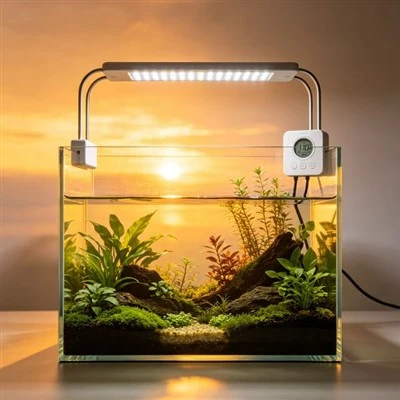
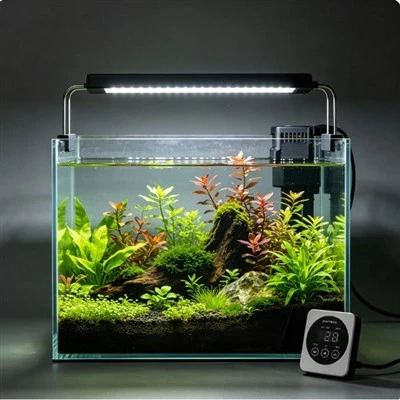
A dedicated LPS tank can run comfortably on lighting that would be considered entry-level for an SPS setup. A quality LED aquarium light for coral reef LPS applications might target 80–120 µmol/m²/s across the main coral placement zone - easily achievable with moderate-output fixtures that would be inadequate for Acropora.
This has a practical financial implication: a well-chosen, moderately powered LED from a reputable manufacturer will typically outperform an underpowered budget unit while also delivering better results than an over-powered fixture running at reduced output.
The Dimmability Advantage
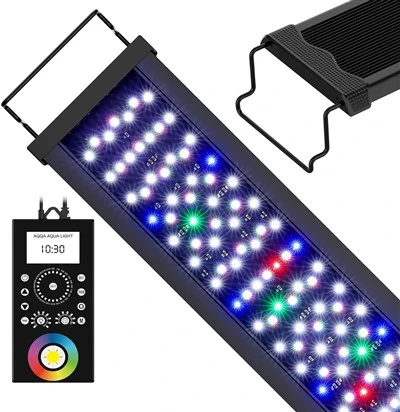
One of the most useful features of quality LED reef fixtures is full dimmability - the ability to run the blue and white channels at independently set percentages of maximum output. For a mixed reef that houses both some SPS and a collection of LPS, a dimmable fixture gives you flexibility to:
Reduce overall intensity for the first weeks of acclimation
Position LPS in lower-PAR zones while keeping SPS higher, under more light
Adjust the spectrum independently (running more blue for SPS requirements while moderating white channel intensity overall)
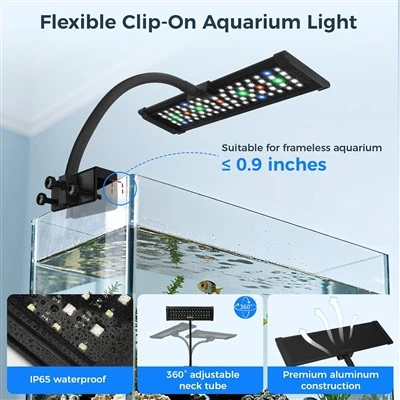
A LED aquarium light for coral reef application that allows independent blue and white channel control, and ideally includes UV/violet channels, offers the management flexibility that a mixed LPS collection genuinely benefits from.
Spectrum for LPS: Less Blue-Heavy Than SPS, But Still Blue-Dominant
LPS corals still benefit from blue-dominant illumination - they're still marine corals with zooxanthellae that perform best with blue wavelengths. However, the extreme blue ratios that some SPS keepers prefer (70–80% blue) are not necessary or beneficial for LPS.
A balanced spectrum of 50–60% blue to 40–50% white is a typical starting point for a mixed or LPS-dominant reef. UV channels still contribute to fluorescent protein expression in LPS corals - the vivid greens, purples, and reds of Acanthastrea and brain corals are enhanced by UV exposure just as they are in SPS, though LPS are somewhat less dramatic in their response.
Positioning LPS Corals Under Aquarium Lighting
Smart placement is often more effective than changing the light itself for managing LPS in a mixed reef.
Using Depth and Shading to Manage PAR
In a typical reef tank, PAR drops significantly with depth. In a 50cm deep tank under a quality LED, the PAR at 10cm depth might be 250–350 µmol/m²/s, while at 40cm depth it's 60–100 µmol/m²/s. This vertical gradient gives you a natural tool: place high-light SPS at the top, mid-range LPS in the middle, and low-light LPS near the base.
Rock overhangs and shaded positions further reduce PAR at specific locations. A brain coral tucked under a rock shelf may be receiving 40–60 µmol/m²/s even in a tank with an overall lighting level of 200 µmol/m²/s - perfectly appropriate for its needs.
Tentacle Extension as a Health Indicator
For LPS corals, tentacle or polyp extension is one of the most reliable health indicators - and it responds quickly to lighting conditions. A well-lit, healthy Hammer coral should extend its sweeper tentacles fully during the photoperiod and retract them at night. Partial extension, or reluctance to extend at all during the light phase, often indicates that lighting conditions are stressful - either too intense, wrong spectrum, or combined with flow that's too strong for the polyps to extend against.
A coral that extends fully and feeds actively during the dark phase but retracts during the light period is almost certainly experiencing light-mediated stress. Reduce PAR at that position first - by moving the coral lower or to a shaded spot - before assuming water chemistry is the issue.
Signs of Lighting Problems in LPS Corals - and How to Fix Them
Bleaching
Bleaching in LPS corals - the loss of brown zooxanthellae pigment leaving pale or white tissue - can result from:
Light excess: Most commonly caused by placing LPS directly under high-PAR fixtures without depth or shading. Fix: move the coral to a lower-PAR position.
Rapid light increase: Moving a coral from a dim position to a bright one too quickly. Fix: slow acclimation.
Thermal stress: High water temperature (above 28°C for most LPS species) triggers zooxanthellae expulsion independent of light level. Address temperature first if bleaching coincides with warm conditions.
Browning (Zooxanthellae Overload)
Browning indicates the coral is increasing its zooxanthellae density - a response to insufficient light, where the coral up-regulates its symbiont population to capture more energy. In LPS corals, this often manifests as a dulling of previously vivid colour. Fix: slightly increase PAR at the coral's position, or improve spectrum quality (increase blue channel proportion).
Recession and RTN
Tissue recession - where the polyp tissue recedes back toward the skeleton - and Rapid Tissue Necrosis (RTN) are more serious conditions. While water quality and pathogens are the most common causes, chronic light stress can be a contributing factor that makes corals more susceptible. If a coral is in sub-optimal lighting conditions and also showing recession, address the lighting alongside water quality measures.
LPS Coral Photobiology
Published research on LPS coral light responses supports the practical guidance above:
A study in Journal of Experimental Marine Biology and Ecology (2020) measured photoacclimation responses in Euphyllia ancora (Hammer coral) across a PAR range of 40–250 µmol/m²/s. Growth and zooxanthellae health metrics peaked between 75 and 130 µmol/m²/s, with measurable stress responses at PAR above 180 µmol/m²/s.
Research in Coral Reefs (2019) documented that Trachyphyllia geoffroyi (Open Brain coral) maintained highest tissue growth and lowest stress protein expression at 60–90 µmol/m²/s - confirming the moderate-light preference of this species.
A 2021 community-level survey of LPS husbandry outcomes published in Reef Builders found that the three most common causes of LPS loss were: excessive light intensity (38% of cases), inappropriate flow (29%), and water quality issues (22%) - with lighting being the single most frequent primary cause.
LED Light Selection and Placement for a Mixed LPS Display Tank
A reef keeping club in the United Kingdom was setting up a 400-litre display tank for a regional aquarium show - the theme was a deep Indo-Pacific reef slope, with a collection of Euphyllia species, brain corals, Acanthastrea, and an Elegance coral as the centrepiece. The brief explicitly excluded SPS and called for a naturalistic, low-flow, moderate-light environment.
The club approached Sunhingstones for lighting recommendations. After reviewing the tank dimensions (120cm × 60cm × 55cm depth) and planned coral collection, Sunhingstones recommended a quality LED aquarium light for coral reef application - a dimmable multi-channel fixture set to deliver 80–120 µmol/m²/s across the main coral zone, with a 50/50 blue-to-white ratio and a UV channel at 20% of maximum output.
Key placement decisions guided by PAR mapping:
Elegance coral: placed on sand bed at the lowest light area of the tank (65 µmol/m²/s measured)
Brain corals and Lobophyllia: mid-tank at 80–95 µmol/m²/s
Euphyllia species: positioned at upper-mid level at 110–130 µmol/m²/s
Acanthastrea colonies: placed in partially shaded mid-tank positions at 70–90 µmol/m²/s
A three-week acclimation protocol started at 60% of target intensity.
Results at the show (eight weeks after setup): all species were fully extended and feeding during the judged viewing period. The Elegance coral - often considered difficult to display successfully - was fully inflated with tentacles extended. The Acanthastrea colonies were showing their characteristic vivid colouration under the UV channel. The display received a commendation from the show judges for biological accuracy and animal welfare in its lighting design.
F A Q
Q: What PAR level is best for Hammer and Torch corals?
A: Most Euphyllia species (Hammer, Torch, Frogspawn) do well at 75–150 µmol/m²/s measured at the coral position. They're tolerant of moderate light levels but begin showing stress (contracted polyps, bleaching) above 180–200 µmol/m²/s. Position them at mid-tank height in a typical reef setup.
Q: Can LPS corals get too much light?
A: Yes - and this is more common than under-lighting in most home reef setups. LPS from deeper reef zones are not adapted to the PAR levels appropriate for SPS corals. Chronic exposure to 250–400 µmol/m²/s causes gradual bleaching, contracted polyps, and reduced feeding in most LPS species.
Q: Do LPS corals need a blue-heavy spectrum like SPS?
A: Blue wavelengths still benefit LPS coral zooxanthellae, but the extreme blue ratios of SPS setups (70–80% blue) are not necessary. A balanced 50–60% blue to 40–50% white spectrum is appropriate for most LPS collections. UV channels contribute to fluorescent colouration in many LPS species.
Q: My LPS corals were vivid in the shop but are turning brown in my tank. What's wrong?
A: Browning usually indicates insufficient light - the coral is increasing zooxanthellae density to compensate. Check PAR at the coral's position. If it's below 50 µmol/m²/s, move the coral to a slightly higher-light area. Also check spectrum: a white-heavy light with little blue delivers less photosynthetically useful energy despite adequate PAR readings.
Q: Can I keep LPS and SPS in the same tank?
A: Yes, with careful positioning. SPS belong at the upper, highest-PAR positions in the tank; LPS in the middle and lower zones where natural PAR drop-off brings levels into their comfortable range. Use PAR measurements to verify actual coral placement positions rather than estimating by eye. A dimmable LED aquarium light for coral reef allows overall intensity adjustment to balance both groups.
Q: Where can I find a quality LED reef light suitable for an LPS-focused tank at reasonable cost?
A: Look for a dimmable, multi-channel fixture from a coral reef aquarium lighting manufacturer who publishes PAR data. For LPS tanks, you don't need the highest-powered fixtures on the market - a quality moderate-output fixture properly placed will outperform an over-powered budget light. Request PAR maps at your tank's specific depth before purchasing.
Give Your LPS the Light They Were Built For
LPS corals are some of the most visually impressive animals you can keep in a reef tank - but they're not high-light animals, and treating them like they are is the most common reason experienced keepers get frustrated. The right light for LPS is consistent, moderate, blue-influenced, and dialled to each species' specific needs using depth and placement as management tools.
At Sunhingstones, we manufacture dimmable LED aquarium lights for coral reef applications covering the full spectrum from LPS-optimised moderate-output fixtures to high-power SPS systems. Our technical team can help match the right fixture and placement to your specific tank and coral collection.
References and Further Reading
Winters, G. et al. "Short-term photoacclimatory responses of the coral Stylophora pistillata to soft and stony coral competition." Journal of Experimental Marine Biology and Ecology, 2006.
Cohen, I. and Dubinsky, Z. "Long term photoacclimation responses of the coral Stylophora pistillata." Coral Reefs, 1997.
Frade, P.R. et al. "Zooxanthella density and photoacclimation in three Euphyllia species." Journal of Experimental Marine Biology and Ecology, 2020.
Levy, O. et al. "Light-dependent activity and expression of genes encoding for photosynthetic proteins in coral." Proceedings of the Royal Society B, 2006.
Dove, S. et al. "Response of the coral Trachyphyllia geoffroyi to light treatments." Coral Reefs, 2019.
Bhagooli, R. and Hidaka, M. "Photoinhibition and bleaching susceptibility in LPS corals under variable light regimes." Comparative Biochemistry and Physiology, 2004.
Marshall, A.T. and Clode, P.L. "Calcification rate and the effect of temperature in a zooxanthellate and an azooxanthellate scleractinian reef coral." Journal of Experimental Biology, 2004.