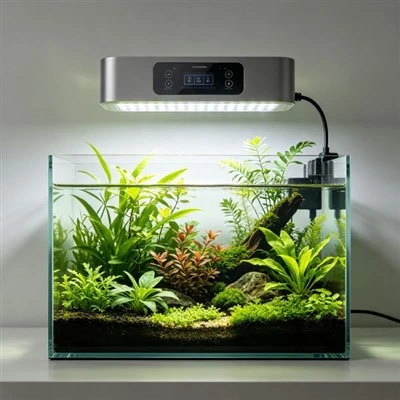
Bubble-Nest Builders: Keeping the Surface Visible without Constant Disturbance
A patch of bubbles beneath a floating leaf can prompt frequent checking. Owners of bubble-nest-building fish may lift the lid, move plants, shine a light from above, or keep the display illuminated late so the surface remains visible. The nest can be interesting and relevant to species behavior, but its presence is not a universal certificate of health, breeding readiness, water quality, or successful reproduction. Species, sex, maturity, temperature, air above the water, surface movement, cover, social conditions, and disturbance can all matter. Lighting should support brief observation while the broader husbandry remains appropriate.
Confirm what is being seen before reorganizing the tank. Filter foam, protein, air-stone bubbles, and trapped debris can also collect at quiet edges. Note whether the structure is maintained by a fish, where it sits relative to floating cover, and how it changes during normal activity. Identify the species and consult dependable care information. Do not introduce a mate, alter temperature, or begin a breeding setup solely because bubbles appeared. Reproduction planning carries welfare, separation, feeding, and space requirements that exceed any lighting decision.
Surface flow has an obvious physical role. Strong movement may disperse bubbles, while a quiet protected patch allows them to remain together. That does not mean circulation or filtration should be reduced below what the aquarium needs. Map the outlet, air source, floating plants, lid gaps, and nest location, then verify that life-support equipment is functioning. If a flow adjustment is appropriate for the species and system, make it safely and observe water conditions. A preserved nest is not evidence that oxygenation, filtration, or temperature is adequate.
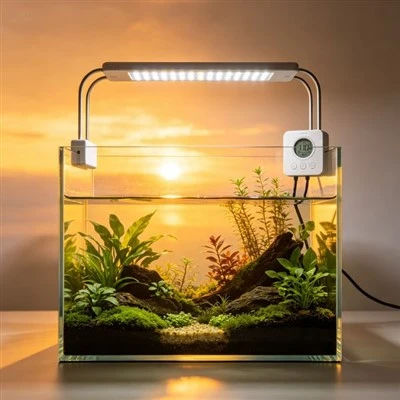
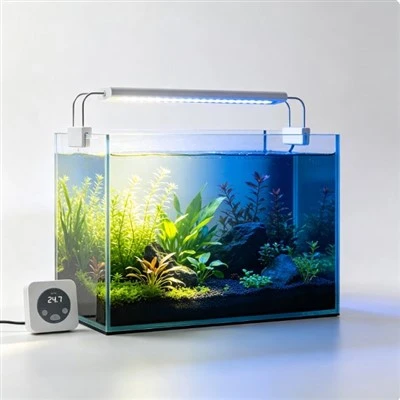
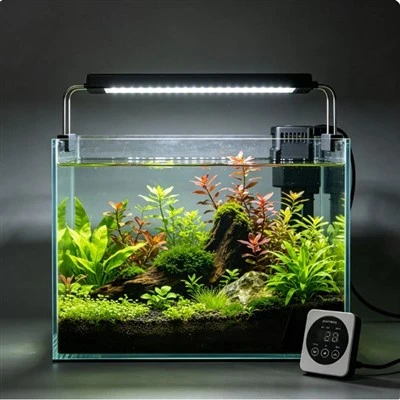
Observation works best from a consistent angle that does not require opening the enclosure repeatedly. A side view slightly below the surface often shows bubble structure against a darker background. Briefly using a neutral channel during the normal daytime period can reveal food, debris, or injury without extending the day. If glare blocks the view, adjust room blinds or the viewer's position first. Only reposition the aquarium fixture within its approved mounting range, and keep required clearance, cooling, lid access, and electrical separation intact.
Imagine a covered aquarium on a bedside table. Each evening the owner switches the room off, turns the aquarium lamp back on, and removes the lid to photograph a nest. The fish then responds to the hand, air movement, and abrupt light transition, while the surface conditions change during every check. A better routine is one photograph from the side near the end of the normal daytime program, with the lid left as designed. The record becomes more comparable, and the observer no longer confuses reaction to inspection with the undisturbed pattern.
Floating cover can provide a sheltered surface, but it also changes light distribution and access. Choose plants or other materials that are safe and suitable for the species, and prevent them from blocking necessary gas exchange, feeding observation, or equipment operation. Remove decaying material through normal maintenance rather than clearing the entire nest area for visibility. If the fish uses one corner repeatedly, preserve that information on a sketch. Do not assume it chose the brightest or darkest point without also considering flow and cover.
Keep a short log with the normal lighting schedule, room activity, feeding, water temperature, test results, flow changes, lid opening, and the nest's approximate location and size. The purpose is not to measure every bubble. It is to see whether apparent changes follow maintenance, a moved outlet, removed cover, or repeated disturbance. If the fish shows abnormal breathing, injury, appetite change, or other concerning signs, assess water quality and husbandry promptly and obtain qualified help. Nest presence does not cancel warning signs.
The dark period should remain part of a care-appropriate routine. Leaving the display light on overnight to monitor a nest can disrupt the established cycle and provides little information when nobody is watching. If the fixture has a very dim mode, do not assume it is biologically equivalent to darkness; use it only within reliable species and product guidance. A timer and smooth transition can make the daily program repeatable, but no color channel should be advertised as causing nest construction or guaranteeing spawning.
Feeding near the nest also needs proportion rather than avoidance or excess. Follow the species' normal nutrition plan, observe whether food reaches the intended fish, and remove leftovers as appropriate without deliberately breaking the surface structure. If access is awkward, choose a delivery point that keeps hands and tools out of the nest area while preserving fair feeding. Do not add food to "reward" building or reduce essential maintenance indefinitely. Water quality and routine care continue to matter even when the owner hopes to preserve a visually impressive nest.
If eggs or fry are confirmed, the task changes from casual observation to species-specific reproductive care. Requirements can include separation decisions, suitable foods, protected filtration, and plans for growing animals, none of which can be inferred from the nest alone. Obtain reliable guidance before moving adults, altering the cover, or changing equipment. A lamp that made the bubbles easy to see has not established that the aquarium is prepared for offspring. Responsible planning includes capacity, welfare, and lawful rehoming rather than relying on a preset labeled for breeding.
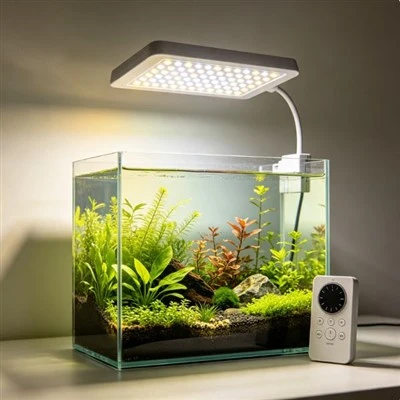
Equipment choices can make restrained observation easier. Fine dimming, a stable clock, low-glare optics, and a mounting system that preserves lid access are practical features. Documented controls matter more than a named "breeding" preset with no defined output. Product instructions should state environmental limits for the fixture, connector, controller, and power supply separately. Even a well-chosen light cannot replace a secure cover, appropriate temperature, compatible stocking, suitable food, and a plan for any offspring.
The nest deserves attention without becoming the reason for constant intervention. Identify the species, keep life support and surface conditions appropriate, observe from a stable side angle, and record changes during the normal light period. Reduce needless lid opening and avoid manipulating the nest unless reliable care guidance calls for it. This approach allows the owner to notice meaningful changes while respecting the aquarium's routine. The light makes the surface visible; it does not control the complex biological outcome occurring there.