Why Light Consistency Matters More Than Just Convenience
Fish and aquatic plants respond to light on a predictable daily rhythm, similar to how they'd experience day and night in the wild. This regular light-and-dark cycle, called a photoperiod, plays a role in normal behavior, feeding patterns, and even reproductive cues for a lot of species. Irregular lighting, sometimes on for six hours, sometimes for fourteen, doesn't give fish or plants a stable rhythm to settle into.
Algae growth is the other big factor. Algae generally thrives on excess or inconsistent light exposure, and a tank that occasionally gets left lit for far longer than usual is handing algae exactly the kind of extended light window it needs to take hold. A steady, predictable photoperiod, typically somewhere in the range of 8-10 hours a day for most freshwater community tanks, is one of the simplest ways to keep algae growth in check without changing anything else about the tank.
Can a 150W High Power Coral Reef Aquarium Light Run on a Timer
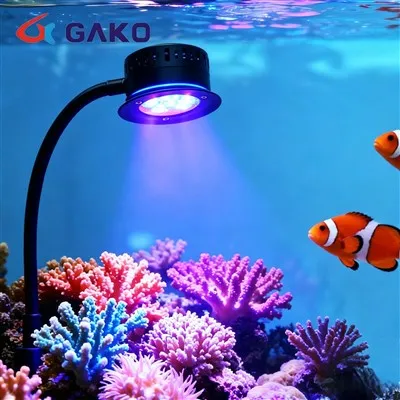
Yes, and for a fixture like this, a timer isn't just convenient, it's genuinely useful. A 150W High Power Coral Reef Aquarium Light is a serious piece of equipment, and running it manually invites exactly the kind of inconsistency that causes problems in a reef or heavily planted setup, where light-dependent corals and plants are especially sensitive to irregular exposure.
A few practical things worth checking before connecting a high-wattage fixture like this to a timer:
Confirm the timer's rated load capacity. A basic timer designed for small lamps may not be rated to handle the current draw of a high-power fixture safely, so checking the timer's maximum wattage rating against your light's actual power draw matters here.
Check whether the fixture has a built-in ramp-up/ramp-down feature. Many higher-end reef lights simulate a gradual sunrise and sunset rather than switching instantly from off to full brightness. If a timer simply cuts power abruptly instead of triggering this built-in transition, you lose that gentler lighting effect.
Consider a smart plug instead of a basic mechanical timer if your fixture doesn't have its own onboard scheduling, since many smart plugs offer more precise, adjustable scheduling than an old-style mechanical dial timer.
Clip-On Aquarium Light and Timer Pairing, A Simpler Match
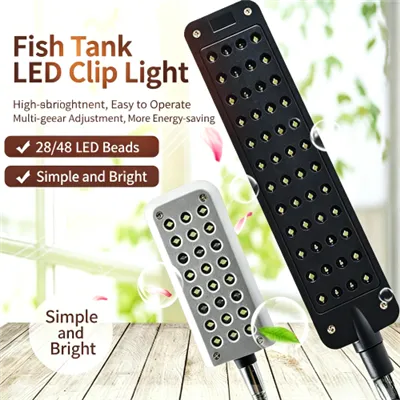
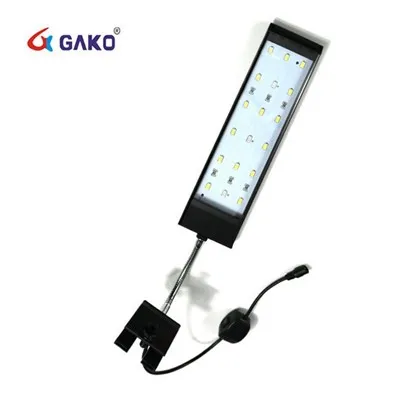
A Clip-On Aquarium Light is generally a much easier fit for a basic timer, mainly because its lower power draw rarely comes close to straining a standard timer's rated capacity, and it typically doesn't include the kind of complex ramp-up lighting curve that a timer might interrupt awkwardly.
This pairing works particularly well for anyone managing several smaller tanks at once, breeding setups, quarantine tanks, or a row of nano tanks, since a handful of inexpensive timers can keep every tank on its own consistent schedule without needing to remember each one individually.
Mechanical Timer vs Smart Plug, Which One Actually Fits Your Setup
|
Feature |
Mechanical Timer |
Smart Plug/App-Based Timer |
|
Setup Difficulty |
Very simple, physical dial |
Requires app setup and Wi-Fi |
|
Scheduling Precision |
Fixed intervals, usually 15-30 min increments |
Precise, often to the minute |
|
Multiple Schedule Changes |
Manual, requires physically resetting pins |
Easy, adjustable remotely anytime |
|
Best Suited For |
Simple fixtures, budget setups |
High-power fixtures, multi-tank management, fixtures needing fine-tuned timing |
|
Relative Cost |
Lower |
Moderate, but often reusable across many devices |
Common Mistakes When Using a Timer With Aquarium Lighting
Connecting a high-wattage light to a timer without checking its rated load. As covered above, this is a real safety consideration, not just a performance detail.
Assuming frequent on/off cycling damages LED lights. This is a common concern, but it's largely outdated thinking carried over from older lighting technology. Quality LED aquarium fixtures are generally built to handle daily on/off cycling without any meaningful reduction in lifespan.
Setting a timer once and never checking it again. Basic mechanical timers can drift slightly over time or get bumped out of position, so a periodic check keeps the schedule actually accurate rather than assumed accurate.
Ignoring a fixture's built-in scheduling features in favor of an external timer. If your light already includes onboard programmable settings, a separate timer may be redundant or could interfere with built-in ramp effects.
How to Set Up an Aquarium Light Timer the Right Way
Getting the schedule right the first time saves a lot of trial and error later. A few practical steps worth following:
Decide on a target photoperiod first. Most freshwater community tanks do well around 8-10 hours, while reef and heavily planted tanks may run slightly longer depending on species needs, generally in the 8-12 hour range.
Match your light's "on" period to a time you're actually around to notice the tank. Scheduling the light to turn on in the early evening, rather than at 6am while everyone's asleep or at work, means you actually get to enjoy the display during peak viewing hours.
Check the timer's rated wattage against your fixture's power draw before plugging in. This single step prevents the most common safety issue people run into with higher-power fixtures.
Test the schedule for a few days before finalizing it. Confirm the light is actually turning on and off exactly when expected, since even a small clock drift compounds into a noticeably inconsistent schedule over a couple of weeks.
Revisit the schedule seasonally if needed. Some breeders and reef keepers intentionally adjust photoperiod length gradually across the year to mimic natural seasonal changes, which requires periodically updating the timer rather than setting it once permanently.
FAQ
Q: Can aquarium lights be used with a timer?
A: Yes, in almost all cases. The main things to confirm are the timer's rated wattage capacity for higher-power fixtures, and whether your light has built-in scheduling features that a basic timer might interrupt or duplicate unnecessarily.
Q: Does a timer damage LED aquarium lights over time?
A: No, not meaningfully. Quality LED fixtures are generally designed to handle regular daily on/off cycling without a significant impact on their overall lifespan, unlike some older lighting technologies where frequent cycling was more of a genuine concern.
Q: What's the best light schedule for a freshwater aquarium?
A: Many freshwater community tanks do well on roughly 8-10 hours of light per day, though this can vary depending on the specific fish and plants being kept.
Q: Should I use a mechanical timer or a smart plug for my aquarium light?
A: For simple, lower-power fixtures like a clip-on light, a basic mechanical timer is usually sufficient. For high-power fixtures or setups needing precise, adjustable scheduling, a smart plug generally offers more flexibility.
Q: Can a 150W coral reef light be connected to a standard timer?
A: Only if the timer's rated load capacity is sufficient for that wattage. It's worth checking the timer's maximum rating against the fixture's actual power draw before connecting them.
Q: Why does my tank get more algae when the light schedule is inconsistent?
A: Algae generally thrives on excess or irregular light exposure, and an inconsistent schedule, sometimes running much longer than usual, gives algae extra opportunity to establish and spread.
Final ThoughtsA Timer Solves a Problem Most Tanks Actually Have
The real issue was never whether aquarium lights can be used with a timer, they almost always can. It's that manual lighting schedules are far easier to disrupt than most people expect, and that inconsistency quietly causes more algae and stress-related issues than a lot of hobbyists realize.
If you're not sure whether your specific fixture, high-power or clip-on, pairs well with a particular timer or smart plug, it's worth reaching out to an Aquarium Lights supplier directly and asking about your exact model's power rating and any built-in scheduling features, rather than guessing and risking either a safety issue or a lighting schedule that doesn't actually behave the way you expect.