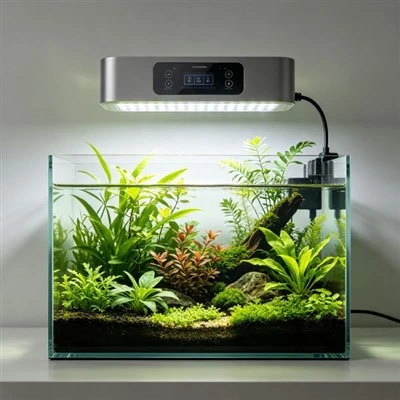
What Light Actually Does in a Shrimp Tank
Light in a shrimp tank isn't just for viewing. It drives the growth of live plants, algae, and biofilm, the thin layer of beneficial microorganisms that forms on surfaces like driftwood, rocks, and plant leaves. Biofilm and algae aren't just tolerated in a well-run shrimp tank, they're often a primary food source, and shrimp spend a large portion of their day grazing on these surfaces.
Light also has an indirect effect worth taking seriously: it contributes to water temperature. Higher-output fixtures running for extended periods can measurably raise water temperature in a tank, particularly a smaller one with limited water volume to buffer that heat. Many popular shrimp species, crystal red shrimp and similar Caridina types especially, are noticeably sensitive to elevated temperatures, and even a small, sustained increase can add stress on top of whatever lighting-related stress is already present.
This temperature sensitivity is worth putting some real numbers to. Many Caridina shrimp species, including crystal red and crystal black varieties, generally do best in a relatively cool range, often cited somewhere around 68-74°F (20-23°C), noticeably lower than the temperature many community fish tanks are kept at. A high-output fixture running for eight or more hours a day over a small, uninsulated tank can push water temperature up by a few degrees compared to ambient room temperature alone, and for a species already living close to the upper edge of its comfortable range, that additional heat load isn't trivial. This is a big part of why gentler lighting isn't just about avoiding visual stress, it's also a practical way to avoid compounding a heat problem the tank may not obviously show until shrimp start declining for reasons that don't show up on a water test.
Why Most Shrimp Tanks Don't Need a 150W High Power Coral Reef Aquarium Light
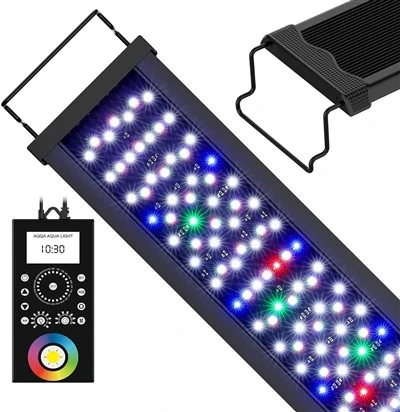
This is worth being direct about. A 150W High Power Coral Reef Aquarium Light is built for driving coral photosynthesis or supporting dense, light-hungry aquatic plant growth, output levels that go well beyond what a typical shrimp tank actually needs.
For a standard shrimp tank focused on the shrimp themselves rather than an elaborate planted layout, this level of intensity commonly does more harm than good: it raises the risk of unwanted algae blooms overwhelming the tank's balance, adds unnecessary heat load, and can push naturally shy, light-averse shrimp into hiding almost permanently. There's one legitimate exception worth naming clearly: a heavily planted, high-tech shrimp tank specifically built around demanding carpet plants or CO2-injected aquascaping does genuinely need strong light to sustain that plant growth, and in that specific case, a high-output fixture like this earns its place. For the far more common simple or moderately planted shrimp setup, it's usually more light than the situation calls for
Clip-On Aquarium Light, A Better Match for Most Shrimp Setups
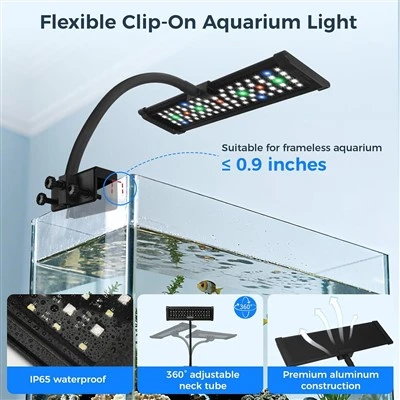
A Clip-On Aquarium Light tends to suit the majority of dedicated shrimp tanks considerably better. Its more modest output reduces both the heat and stress concerns discussed above, while still providing enough light to support moderate plant growth, biofilm development, and the general viewing enjoyment most keepers actually want.
The compact, flexible mounting of a clip-on fixture also fits well with how a lot of serious shrimp keepers actually operate, running several smaller tanks side by side to separate color varieties or breeding groups, rather than one large display tank. Being able to adjust or reposition lighting independently across each small tank, without a dedicated overhead rig for every one, is a genuinely practical advantage in this kind of multi-tank setup.
Comparison Table, Matching Light to Shrimp Tank Purpose
|
Tank Purpose |
Recommended Light Type |
Intensity Direction |
|
Simple shrimp-only tank |
Soft, low-intensity light |
Low |
|
Moderately planted shrimp tank |
Gentle to moderate plant-capable light |
Low to moderate |
|
High-tech, CO2-injected planted shrimp aquascape |
Strong, plant-demanding light such as a 150W coral reef light |
High |
Does Lighting Affect Shrimp Coloration
This comes up a lot, and it deserves an honest answer rather than a marketing one. Shrimp coloration is driven primarily by genetics, diet, and water parameters, not lighting intensity itself. Lighting's real influence here is more indirect: shrimp under chronic stress, including stress from lighting that's too bright or too harsh for their comfort, commonly display duller, washed-out coloration as a visible stress response, while calm, unstressed shrimp in a well-matched environment generally show their natural coloration more consistently. In other words, the right lighting doesn't "enhance" color directly so much as it removes a stress factor that would otherwise suppress it.
Common Mistakes When Lighting a Shrimp Tank
Copying the main display tank's lighting setup without adjustment. As shown throughout this article, a high-output fixture built for reef or heavy planted display is usually more than a standard shrimp tank needs.
Ignoring the indirect heat effect of stronger lighting. Extended high-output lighting can raise water temperature enough to matter for temperature-sensitive shrimp species, even without anyone directly heating the tank.
Assuming brighter automatically means healthier or more colorful shrimp. As covered above, coloration depends primarily on genetics and stress levels, not raw light intensity.
Overlooking algae balance. Excess light relative to the tank's plant load and shrimp grazing capacity can tip a tank from healthy biofilm growth into a genuine algae problem.
A Few Practical Steps Before Setting Up Shrimp Tank Lighting
Identify what kind of shrimp tank this actually is. A simple shrimp-only setup, a moderately planted tank, or a full high-tech CO2 aquascape all call for genuinely different lighting approaches.
Check your species' preferred temperature range before choosing fixture output. Cooler-water species like crystal shrimp benefit from lighting choices that don't add unnecessary heat load on top of ambient room temperature.
Start on the gentler side and adjust upward only if needed. It's easier to notice and correct under-lit plants than it is to walk back a stressed, hiding shrimp colony.
Watch shrimp behavior in the days after any lighting change. Persistent hiding, unusual paleness, or reduced activity are reasonable signs the current light is more intense than the tank's inhabitants are comfortable with.
FAQ
Q: Does light stress out shrimp?
A: It can, particularly light that's more intense than the shrimp are naturally comfortable with. Shy, light-averse behavior, like hiding constantly, is a common response to lighting that's too strong for the setup.
Q: What's the best light for a shrimp tank?
A: For most simple to moderately planted shrimp tanks, a gentler fixture like a clip-on light is generally sufficient. Only heavily planted, high-tech shrimp aquascapes typically need a stronger, plant-demanding light source.
Q: Is a 150W coral reef light too strong for a shrimp tank?
A: For a standard shrimp tank, generally yes. This intensity level suits high-tech, CO2-injected planted shrimp aquascapes specifically, rather than a typical simpler shrimp setup.
Q: Does lighting affect shrimp color?
A: Not directly. Coloration comes mainly from genetics, diet, and water parameters, though lighting-related stress can cause visible dulling, meaning appropriately gentle lighting supports shrimp showing their natural color rather than actively enhancing it.
Q: Can too much light cause algae problems in a shrimp tank?
A: Yes. Excess light relative to a tank's plant load and grazing shrimp population is a common contributor to algae overgrowth, which can throw off the tank's overall balance.
Q: Why do my shrimp hide all the time under my current light?
A: Persistent hiding often points to lighting that's more intense than the shrimp find comfortable, particularly if the fixture was originally sized for a different type of tank, such as a reef or heavily planted display.
Final Thoughts: Match the Light to the Shrimp, Not the Display Tank Next to It
The real question in shrimp tank lighting isn't "how bright can I go." It's whether the lighting matches what the shrimp themselves, and whatever plants or biofilm are supporting them, actually need. For the majority of shrimp tanks, that means gentler, more modest lighting than a display-focused reef or planted tank would use, with high-output fixtures reserved specifically for genuinely demanding, high-tech planted setups.
If you're not sure which lighting approach fits your specific shrimp species and tank setup, it's worth reaching out to an Aquarium Lights supplier directly and describing your actual tank goals, rather than defaulting to whatever fixture is already on hand from an unrelated display tank.