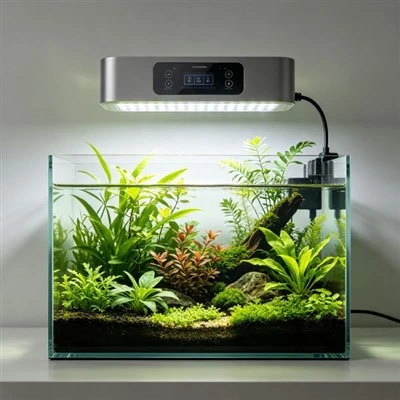
Why This Question Comes Up So Often Among Turtle Owners
Glass and plastic block the majority of UVB rays. Many homes also lack consistent outdoor basking opportunities. As a result, owners turn to tank lighting hoping it can stand in for the sun.
A Real Scenario - What Happens When a Turtle Doesn't Get Enough UVB
A young red-eared slider kept under a bright white LED for several months may still eat and swim normally at first. Then the shell starts to feel slightly soft at the edges, growth becomes uneven, and the turtle spends less time basking. Calcium from the diet is no longer absorbed efficiently because vitamin D3 synthesis has stalled. In more advanced cases, metabolic bone disease sets in. Catching the problem early and adding appropriate UVB usually leads to steady improvement; waiting too long can leave permanent shell and bone damage.
How Turtles Actually Produce Vitamin D3 - The Basic Science
Turtles convert a cholesterol precursor in their skin into vitamin D3 when exposed to the right ultraviolet wavelengths. Without that step, dietary calcium is poorly utilized.
UVB Wavelengths and the Skin Synthesis Process
The critical range sits between roughly 290 and 320 nm. Within that band, the skin produces previtamin D3, which then converts to usable vitamin D3.
|
Factor |
Typical Range / Value |
Practical Note for Turtles |
|
Effective UVB wavelengths |
290–320 nm |
Peak synthesis near 295–300 nm |
|
Recommended daily exposure |
10–12 hours |
Matches a natural day length for most species |
|
Target UV Index at basking spot |
2.0–4.5 (species-dependent) |
Water turtles often do well in the lower-to-mid range |
|
Distance effect |
Intensity drops quickly |
Always follow the bulb maker's stated distance |
Different species have slightly different tolerances, but the underlying need for UVB remains consistent across common pet turtles.
Not All Aquarium Lights Are Built the Same - What to Check Before You Buy
Brightness and color temperature tell you almost nothing about UVB output. Many attractive LED bars sold for planted tanks emit virtually none.
UVB Output, Wattage, and Distance - Why Specs Matter More Than Brightness
Look for actual UVB measurements (usually given in µW/cm² at a specific distance) rather than lumens or Kelvin ratings. Higher wattage does not automatically equal more useful UVB. Distance is equally important: a bulb that delivers adequate output at 15 cm may be almost useless at 30 cm. Stick to the manufacturer's recommended mounting range and verify the numbers when possible.
Regular Aquarium Light vs Dedicated UVB/Basking Light - A Direct Comparison
The two categories serve different jobs. Confusing them is one of the most common setup mistakes.
Which One Actually Supports D3 Synthesis
|
Feature |
Typical Aquarium Light (LED / plant light) |
Dedicated UVB or Basking Light |
|
UVB output |
None or negligible |
Intentionally emits 290–320 nm |
|
Main purpose |
Visibility, plant growth, appearance |
Vitamin D3 synthesis (and often heat) |
|
Supports D3 production |
No |
Yes, when correctly placed |
|
Heat contribution |
Minimal |
Often significant |
|
Replacement concern |
Mainly visible light or diode failure |
UVB output declines months before the bulb looks dim |
Only lights specifically designed and tested for UVB output can meaningfully support vitamin D3 synthesis. A standard aquarium light cannot replace either sunlight or a proper UVB source.
Setting Up Your Light Correctly for D3 Production
Even a good UVB bulb fails if it is mounted too far away, blocked by a lid, or left running on an irregular schedule.
Why an Aquarium Light Timer Matters for Consistent UVB Exposure
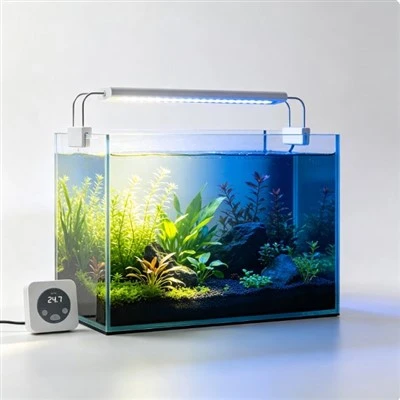
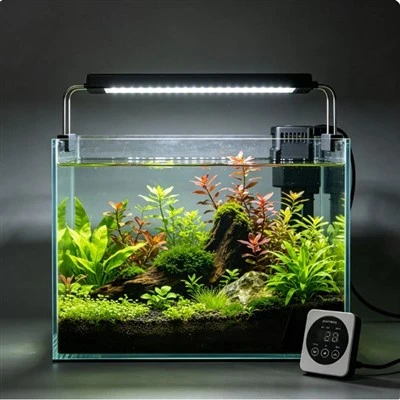
Turtles respond best to a stable day-night cycle. An aquarium light timer keeps the UVB source on for a steady 10–12 hours and off at night. Inconsistent timing reduces the effectiveness of D3 production and can disrupt normal behavior. Timers also prevent the bulb from being left on continuously, which shortens its useful life.
Mounting Options - Using an Aquarium Bracket Light for Proper Distance and Angle
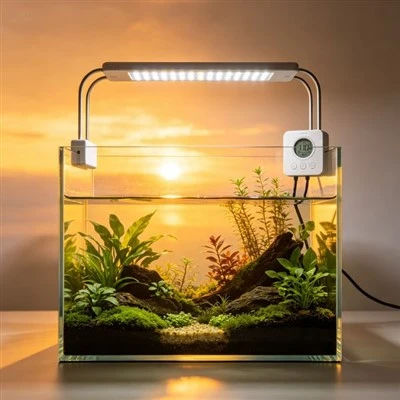
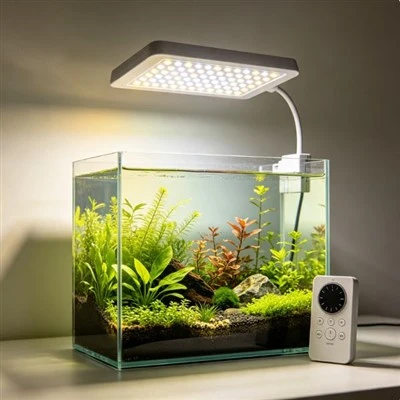
An aquarium bracket light gives you control over height and angle so the UVB reaches the dry basking platform at the correct distance. Fixed canopy lights often sit too high or are partially blocked. Adjustable brackets or stands make it easier to maintain the recommended gap and keep the light focused where the turtle actually rests.
Signs Your Turtle Isn't Getting Enough UVB or D3
Early clues include a shell that feels slightly soft or develops uneven growth, reduced basking, lower appetite, and mild lethargy. Later signs can include swollen limbs or eyes, difficulty climbing, and clear deformities. Improvement is usually gradual once proper UVB and diet are in place, provided the deficiency has not progressed too far.
Do Aquarium Bubble Lights or Decorative Lighting Help at All
Aquarium bubble lights and similar decorative fixtures add movement and visual interest, but they produce no meaningful UVB. They can sit alongside a functional UVB system without harm, yet they should never be counted on for vitamin D3 synthesis or calcium metabolism.
Industry Trends - What's Changing in Reptile and Aquatic Lighting
More manufacturers now offer fixtures that combine full-spectrum visible light with measurable UVB output, aimed at mixed aquatic-reptile setups. LED-based UVB options are entering the market, though linear fluorescents and mercury vapor bulbs still dominate for proven, consistent output. Keepers are also demanding clearer published irradiance data instead of vague marketing claims.
Regulations and Standards Worth Knowing About UVB Lighting Products
Electrical safety and photobiological standards apply in many regions, but UVB performance labeling is not uniformly required. Reputable brands that target the reptile market usually publish test figures; generic aquarium lights often do not.
Bulb Lifespan, UVB Degradation, and Replacement Guidelines
UVB output declines long before the bulb stops looking bright. Most linear fluorescent UVB tubes need replacement every 6–12 months. Mercury vapor bulbs are often rated for about 12 months of useful UVB. Mark the installation date and replace on schedule rather than waiting for visible failure.
How to Choose the Right Lighting Setup for Your Turtle Tank - A Practical Checklist
Confirm the light is rated for UVB in the 290–320 nm range and provides published output figures.
Match the expected UV Index or µW/cm² to your species and the actual basking distance.
Provide a dry basking area directly under the UVB source.
Run the light 10–12 hours daily with an aquarium light timer.
Use an aquarium bracket light or adjustable mount to keep the correct distance and angle.
Decide whether you need a combined heat + UVB bulb or separate sources.
Plan bulb replacement according to UVB degradation timelines, not just visible light.
Treat decorative and bubble lights as aesthetic only.
Check electrical and safety certifications if you are buying for resale or multiple tanks.
Sourcing Reliable Aquarium Lighting for Retail or Bulk Orders
When lighting affects animal health, consistency matters more than price alone.
What to Ask a Manufacturer Before a Wholesale Order
Ask an aquarium light manufacturer or aquarium light factory for measured UVB output at stated distances, expected degradation over time, and batch-to-batch consistency data. Clarify whether the products are positioned and tested for reptile or turtle use rather than general aquarium decoration. For wholesale aquarium lights, request warranty terms that address UVB performance, not only electrical function. Clear technical documentation reduces the risk of supplying lights that look bright but fail to support vitamin D3 synthesis.
F A Q
Q: Does my turtle need a UVB light?
A: Yes, if it lives primarily indoors. Regular unfiltered sunlight can meet the need, but most indoor setups require a dedicated UVB source.
Q: Can aquarium light replace sunlight for turtles?
A: Ordinary aquarium lights cannot. Only those that emit adequate UVB in the correct wavelengths can partially substitute for sunlight.
Q: How long should turtle light be on?
A: Ten to twelve hours per day works for most species. Use a timer to keep the schedule consistent.
Q: What is the best light for turtle tank?
A: A UVB source proven for reptiles (linear fluorescent or mercury vapor), paired with appropriate heat and positioned at the correct distance over a dry basking spot. General LED lighting can handle visibility and plants separately.
Q: Do I still need UVB if I give vitamin supplements?
A: Supplements help, but they do not fully replace the benefits of proper UVB exposure for most keepers.
Q: How often should I replace a UVB bulb?
A: Every 6–12 months for most fluorescent tubes, and according to the manufacturer's guidance for mercury vapor bulbs-even if the bulb still produces visible light.
Q: Can I run a regular LED aquarium light together with a UVB bulb?
A: Yes. Many successful setups use a full-spectrum or plant LED for general illumination and a separate UVB source for vitamin D3 production.
Q: Are aquarium bubble lights useful for turtles?
A: Only for decoration and water movement. They provide no meaningful UVB or contribution to vitamin D3 synthesis.