Why Flat, Even Lighting Kills Depth Perception
Depth perception in any lit scene relies heavily on contrast, the interplay between bright highlights and soft shadows that tells your eye "this object is closer" or "this one recedes into the background." A single, broad, evenly diffused light source washes that contrast out. Everything gets lit from the same angle at the same intensity, shadows soften to almost nothing, and the whole scene reads as flatter than it actually is, even if the physical layout underneath has real height and structure.
This isn't unique to aquariums. Photographers and stage lighting designers have leaned on this exact principle for decades, using directional, layered light specifically because flat, uniform lighting flattens a three-dimensional subject into something that looks noticeably less dimensional on camera or on stage. A fish tank behaves the same way under the wrong light.
The Shimmer Effect What Makes Water Actually Look Like Water
Ask any serious aquascaper what separates a tank that looks alive from one that just looks lit, and "shimmer" comes up constantly. Shimmer happens when light from a concentrated point source passes through a moving water surface and gets refracted unevenly, creating those shifting, rippling patterns of light and shadow across the substrate and decorations, similar to the dancing light you'd see on the bottom of a swimming pool on a sunny day.
The mechanics behind it are pretty specific. Shimmer requires two things working together: a point-style light source, rather than a broad, evenly diffused panel, and some surface agitation on the water itself, even gentle movement from a filter outlet or wave maker is usually enough. Aquascaping hobbyists who've spent time comparing fixtures consistently report that lights built around fewer, more concentrated emission points produce noticeably more shimmer than fixtures with dozens of small, evenly spread LEDs, since those broader arrays behave more like a diffused flood light than a single strong point source. Some hobbyists even go the opposite direction after installing a shimmer-heavy fixture, since the constant movement can feel visually busy to certain eyes, which says something about just how strong the effect can be when the setup leans hard into it.
Comparison TableLighting Style and Its Effect on Visual Depth
|
Lighting Style |
Shadow/Contrast Level |
Shimmer Effect |
Typical Visual Result |
|
Broad, diffused flood light |
Low |
Minimal to none |
Even, bright, but visually flat |
|
Concentrated point-source/spotlight |
High |
Strong, especially with surface movement |
Dynamic, layered, more three-dimensional |
|
Multiple small lights, layered by zone |
Variable by zone |
Moderate to strong depending on fixture type |
Distinct foreground/midground/background depth |
How 150W High Power Coral Reef Aquarium Light Uses Intensity and Angle for Depth
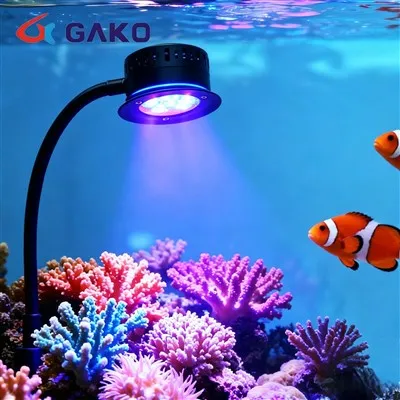
Reef tanks are a great example of where light intensity and direction genuinely do heavy lifting for visual depth, not just coral health. A 150W High Power Coral Reef Aquarium Light running at real intensity creates strong contrast between elevated rockwork catching direct light and the shaded pockets and crevices beneath it, exactly the kind of light-and-shadow interplay that reads as depth to the eye.
This matters even more with the classic reef aquascaping approach many hobbyists use, building rockwork like a pyramid, lower pieces toward the front and taller structures toward the back. That height difference only actually reads as depth if the lighting angle and intensity are strong enough to create visible shadow and highlight contrast across the different elevations. Flatten the lighting out, and that carefully built height difference gets visually erased, even though the physical structure underneath hasn't changed at all.
Layering Light Like You'd Layer the Aquascape Itself
Professional aquascapers generally don't think about lighting as "one fixture covering the whole tank evenly." They think about it more like a lighting designer blocking out a stage, deliberately varying intensity across the foreground, midground, and background to reinforce the sense of distance the physical layout is already trying to create.
A tank lit at a single, uniform intensity front to back tends to compress that sense of distance, everything reads as sitting on roughly the same visual plane. Splitting the lighting across a couple of smaller, positioned fixtures rather than relying on one large uniform source makes it much easier to build in that intensity gradient, brighter toward the front where detail matters most, slightly dimmer toward the back where you want the eye to perceive recession rather than flat brightness.
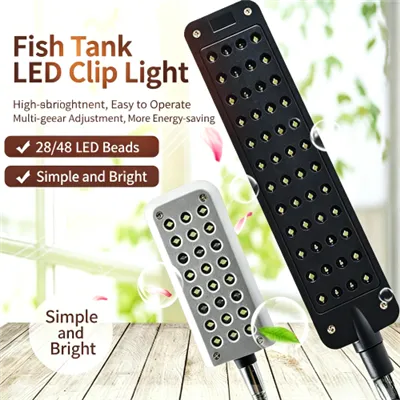
Clip-On Aquarium LightA Flexible Tool for Fine-Tuning Depth and Highlights
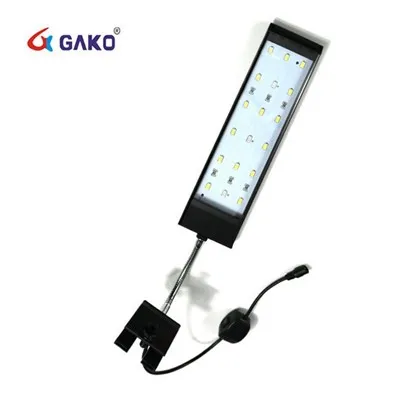
This is exactly where a Clip-On Aquarium Light earns its place in a serious aquascaper's toolkit, and it's not just a budget option for small tanks. Because it mounts flexibly and can be repositioned easily, it works well as a targeted accent light, aimed specifically at a standout piece, a striking piece of driftwood, a particularly vivid patch of red plants, a coral colony you want to pull focus toward, rather than trying to light the entire tank from one fixed position.
This kind of localized highlighting is a technique you'll see constantly in competitive aquascaping displays and high-end retail tanks, where a single well-placed accent light does more to create a visual focal point than simply cranking up the brightness on the tank's main fixture ever could.
Real ExampleA GAKO Case Study on Reworking a Display Tank's Lighting
We've worked with retail and public display clients through GAKO whose show tanks were originally lit with a single broad flood-style fixture covering the entire display. The aquascaping itself had real height and layout variation, but the tank consistently read as flat and uninteresting to passersby. After introducing angle-adjustable, more concentrated lighting for the main structure, paired with a Clip-On Aquarium Light used specifically to accent the tank's centerpiece feature, the display's visual depth improved noticeably, and customer engagement with the tank increased as a result.
(Note: this case is illustrative. Please share the actual client background and specific details so this section can be updated with accurate information before publishing.)
A Note on Industry Standards and Recognition
Within the aquascaping and reef-keeping community, there's a well-established understanding that lighting technique, not just fixture wattage, plays a major role in how professionally a tank presents, with competitive aquascaping circles consistently emphasizing light placement and contrast as core design tools rather than an afterthought.
(Note: I don't currently have verified details on what ESTA specifically refers to in this context or its direct connection to your product line. Please share the specific details so this section can be written accurately.)
Common Mistakes That Make Aquascapes Look Flat
A handful of lighting habits are responsible for most "why does my tank look flat" complaints:
Relying on a single large flood-style fixture for the entire tank. This produces even, shadow-free lighting that visually compresses depth, even over a well-built layout.
Ignoring the shimmer effect entirely. Skipping a point-source light and pairing it with some surface movement means missing one of the easiest, most visually convincing depth cues available.
Building real height variation into the aquascape, then lighting it uniformly. The physical structure is there, but flat lighting erases the shadow contrast that would actually let people perceive it.
Treating the whole tank as one lighting zone. No distinction between foreground, midground, and background intensity flattens the sense of distance the layout is trying to create.
How to Light Your Tank for Maximum Visual Depth
A few practical adjustments make a real difference:
Favor point-source or spotlight-style fixtures over broad flood panels if shimmer and contrast matter to you, since concentrated emission points produce noticeably more shimmer than diffused arrays.
Introduce some gentle surface agitation, through a filter outlet or small wave maker, since shimmer depends on both a point light source and water movement working together.
Vary lighting intensity across the tank's depth, brighter toward the front, slightly softer toward the back, rather than one flat, even setting throughout.
Use a small, repositionable fixture like a Clip-On Aquarium Light to accent a specific focal feature rather than relying entirely on your main light to do everything.
Match your lighting angle to your aquascape's actual height differences, since a pyramid-style layout only reads as three-dimensional if the light creates visible shadow across the different elevations.
FAQ
Q: Does aquarium light angle really affect how a tank looks?
A: Yes, significantly. Light angle determines where shadows fall and how strongly elevated features contrast against lower areas, which is a major part of how the eye perceives depth in an aquascape.
Q: What is the "shimmer effect" in aquarium lighting?
A: Shimmer is the rippling pattern of light and shadow created when light from a concentrated point source passes through a moving water surface and gets refracted unevenly, similar to sunlight dancing on the bottom of a pool.
Q: Is a spotlight-style light better than a flood light for aquascaping?
A: For visual depth and shimmer specifically, generally yes. Concentrated point-source fixtures produce stronger shadow contrast and shimmer than broad, diffused flood lights, which tend to flatten the scene by lighting everything evenly.
Q: Can I use multiple small lights instead of one big light for better depth?
A: Yes, and this is actually a common professional approach. Splitting lighting across a few positioned fixtures makes it easier to build an intensity gradient across the tank's foreground, midground, and background than relying on a single uniform source.
Q: Does a coral reef tank need different lighting than a planted tank for visual effect?
A: The underlying principles of shadow, contrast, and shimmer apply to both, but reef tanks generally use higher intensity fixtures, which can create particularly strong depth contrast across elevated rockwork structures when angled correctly.
Q: How does a Clip-On Aquarium Light help with aquascape highlights?
A: Its flexible, repositionable mounting makes it useful as a targeted accent light, aimed at a specific standout feature rather than lighting the whole tank evenly, which helps create a visual focal point.
Q: Why does my tank look flat even with a good aquascape layout?
A: This usually comes down to lighting, not the layout itself. Broad, evenly diffused lighting erases the shadow contrast and shimmer that would otherwise let the eye perceive the height and structure already built into the aquascape.
Q: What's the best way to light a layered aquascape with foreground, midground, and background?
A: Vary the intensity across those zones rather than lighting the whole tank at one flat setting, generally brighter toward the front where detail matters most and softer toward the back to reinforce the sense of distance.
Final Thoughts Depth Comes From How the Light Falls, Not Just How Bright It Is
A more three-dimensional-looking tank isn't really about buying a bigger, brighter fixture. It comes down to how the light falls, whether it's concentrated enough to create real shadow and shimmer, and whether it's distributed across the tank in a way that reinforces the depth your aquascape is already trying to show. A well-placed 150W High Power Coral Reef Aquarium Light paired with a Clip-On Aquarium Light for accent highlights can do more for how a tank reads visually than doubling the wattage on a single flat fixture ever will.
If your current setup feels flatter than you'd like, it's worth reaching out to an Aquarium Lights supplier for guidance matched to your specific aquascape style, rather than assuming the fix is simply more light.