The Honest Answer Every Turtle Owner Needs
Here it is straight: a standard RGB Clamp Aquarium Light or any normal display light will make your turtle tank look vivid, support live plants, and provide visible light that keeps your turtle active and feeding well. But it does not, by itself, protect the shell. A healthy turtle shell depends on three things working together, ultraviolet UVB light, proper basking heat, and a calcium-rich diet, and the display light is only one helpful piece of a bigger system. The good news is that once you know the full recipe, keeping a turtle's shell healthy is completely achievable.
What Actually Keeps a Turtle Shell Healthy
UVB and Vitamin D3
A turtle needs UVB light to make vitamin D3 in its skin, and vitamin D3 is what lets it absorb calcium from food. No UVB means no proper calcium absorption, which leads to soft, deformed shells over time. This is the single most important factor in shell health, and it requires a dedicated UVB lamp, not a regular aquarium light.
Calcium and Diet
All the UVB in the world does nothing without calcium to absorb. Turtles need a calcium-rich diet, often supplemented with a cuttlebone or calcium block, plus the right calcium-to-phosphorus balance in their food. UVB and calcium are partners; you need both for a strong shell.
Basking Heat
Turtles are cold-blooded and bask to warm up, and that warmth drives their metabolism, digestion, and immune health. A basking heat lamp creates a warm dry spot where the turtle climbs out, dries off, and soaks up heat alongside UVB. Without a proper basking area, even good UVB and diet fall short.
When these three causes are missing, owners see problems like soft shell, pyramiding, and shell rot. Get all three right and the shell stays smooth, hard, and healthy.
Where Aquarium Display Lights Fit In
Viewing, Plants, and Natural UVA
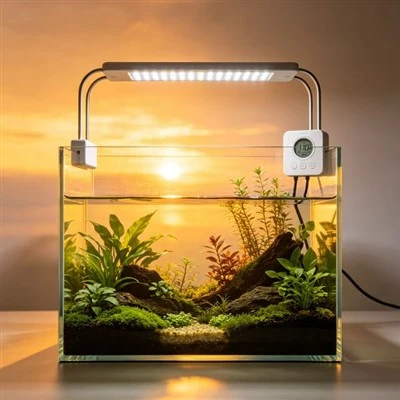
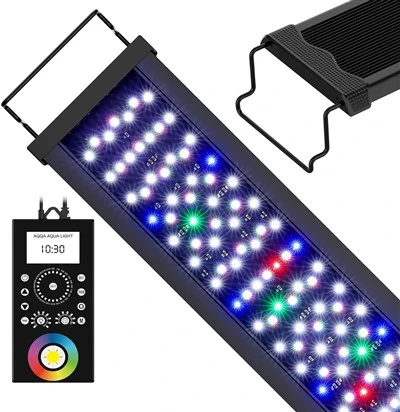
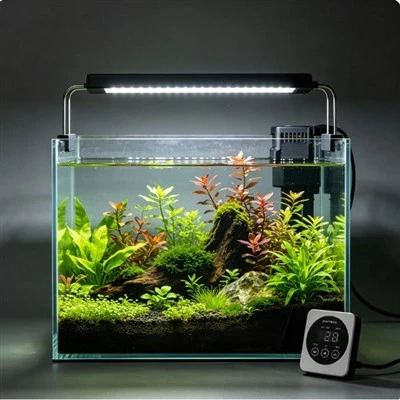
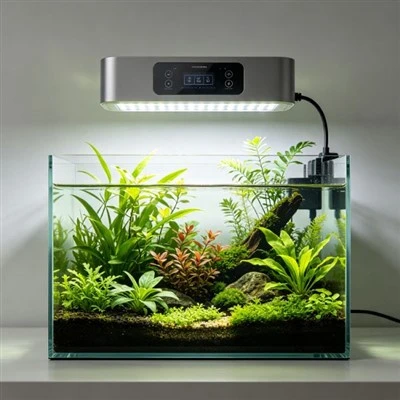
So what does your display light do for the turtleQuite a lot, just not for the shell directly. A vivid RGB Clamp Aquarium Light lights up the tank so you can enjoy your turtle, supports any live plants, and provides bright visible light, including UVA, that turtles can see and that supports natural behavior, activity, and appetite. A turtle in a well-lit, natural-feeling tank tends to be more active and eat better, which indirectly supports overall health. So the display light genuinely matters; it just is not the part that hardens the shell.
Why Display Light Alone Won't Protect the Shell
The reason is simple: ordinary LED aquarium lights do not produce meaningful UVB, and UVB is what drives the vitamin D3 and calcium pathway that builds shell. If you rely only on a display light, even a bright and beautiful one, your turtle slowly develops shell problems no matter how nice the tank looks. That is why honest turtle care always pairs the display light with dedicated UVB and heat.
Building the Right Lighting Trio
A healthy turtle tank runs three lights, each with its own job. Here is how they divide the work.
|
Light |
Purpose |
Notes |
|
UVB lamp |
Shell health, prevents bone disease |
Essential, replace on schedule |
|
Basking heat lamp |
Warmth and basking |
Creates a warm dry spot |
|
Display / RGB LED |
Viewing, UVA, plant growth |
Makes the tank look great |
Set all three over the basking area so your turtle gets light, UVB, and heat in the same spot where it suns itself. Miss any one and the system is incomplete.
Getting the Numbers Right
Turtles thrive when the conditions sit in the right ranges, so it helps to aim for specific targets rather than guessing. The basking spot should be warm enough to encourage real basking, the water comfortable, and the UVB fresh. Here are sensible reference figures for a common pet turtle.
|
Parameter |
Recommended Range |
|
Basking spot temperature |
32 – 36°C (90 – 95°F) |
|
Water temperature |
24 – 28°C (75 – 82°F) |
|
UVB lamp replacement |
Every 6 – 12 months |
|
Daily light period |
10 – 12 hours |
Note that the UVB lamp must be replaced on schedule even if it still lights up, because its ultraviolet output fades while the visible light continues. An old UVB lamp is one of the most common hidden causes of shell trouble.
Common Shell Problems and Their Causes
Soft Shell
A soft or flexible shell usually means a lack of UVB, calcium, or both, so the turtle cannot build hard shell material. The fix is to add or refresh a proper UVB lamp, improve the calcium in the diet, and ensure good basking. Caught early, soft shell often reverses.
Pyramiding
Pyramiding is when the shell scutes grow into raised pyramid shapes instead of staying smooth. It is generally linked to diet and husbandry issues, including too much protein and not enough proper basking, UVB, and hydration. Correcting the overall setup prevents it from worsening.
Shell Rot
Shell rot is an infection that shows as soft, discolored, or pitted patches, often from poor water quality or a turtle that cannot dry off properly. A good basking area where the turtle fully dries, plus clean water, is the key to preventing it. Severe cases need a vet.
Real Setup Examples
A Red-Eared Slider Tank
A red-eared slider, one of the most popular pet turtles, does well in a spacious tank with a basking dock lit by all three lights. A UVB lamp over the dock protects the shell, a heat lamp keeps the basking spot around 32 to 35 degrees Celsius, and a display light keeps the tank bright and natural-looking. Run on a 10 to 12 hour day, this setup keeps the slider active, well-fed, and growing a smooth, hard shell.
A Musk Turtle Setup
Musk turtles are smaller and more aquatic but still need to bask and still need UVB for shell health. A compact setup with a modest basking area, a correctly placed UVB lamp, and a tidy display light works well. Even though musk turtles bask less than sliders, skipping the UVB still risks shell problems, so all three lights remain important.
Materials and Build Quality
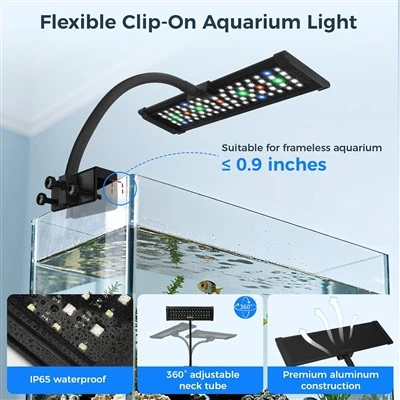
Turtle tanks are warm, humid, and splashy, which is hard on equipment, so build quality matters. Display fixtures should have a solid aluminum heat sink and a waterproof rating of IP67 or IP68, with a rated lifespan of 30,000 to 50,000 hours. Housings should resist corrosion from constant moisture and splashing. UVB lamps and basking lamps should come from reputable makers with honest output figures and clear replacement guidance. A well-built Clip-On Aquarium Light or display fixture mounted securely over the basking area will hold up to the demanding conditions of a turtle habitat far better than a cheap one.
Safety and Compliance Standards
Every light in a turtle setup must be safe and certified. For Europe, look for CE marking covering electrical and electromagnetic safety, plus RoHS to limit hazardous substances. For North America, FCC covers emissions and UL or ETL covers electrical safety. Display lights over water should carry a clear IP waterproof rating, and quality fixtures meet IEC 62471 for photobiological safety. UVB lamps in particular should be used at the correct distance and never aimed at eyes, since ultraviolet is powerful. Certified equipment from a reputable source keeps both your turtle and your home safe.
Industry Trends in 2025 and 2026
Turtle and reptile lighting is becoming more integrated and easier to get right. Combination fixtures that bundle UVB, heat, and LED display lighting into one unit are spreading, simplifying setups and reducing mistakes. Some new UVB products now include indicators that signal when output is fading, solving the old problem of invisible decline. And efficient, tunable LED display lights let owners enjoy vivid color and natural day cycles alongside the health lighting. The trend is toward complete, well-matched systems that protect the animal and look beautiful at the same time.
FAQ
Q: Does a turtle need a special light for its shell?
A: Yes. Shell health depends on UVB light, which a normal aquarium light does not provide. You need a dedicated UVB lamp, plus basking heat and a calcium-rich diet, to keep the shell strong.
Q: Can a regular aquarium light keep my turtle's shell healthy?
A: Not on its own. A display light like an RGB Clamp Aquarium Light makes the tank look great and keeps your turtle active, but it does not produce the UVB the shell needs. Pair it with a UVB lamp and a heat lamp.
Q: What causes a soft turtle shell?
A: Usually a lack of UVB, calcium, or both, which stops the turtle from building hard shell material. Adding proper UVB, improving the calcium in the diet, and ensuring good basking usually corrects it if caught early.
Q: How often should I replace the UVB lamp?
A: Every 6 to 12 months, even if it still lights up, because the ultraviolet output fades while the visible light continues. An old UVB lamp is a common hidden cause of shell problems.
Q: Where can I buy reliable turtle tank lighting?
A: Look for a manufacturer or factory that lists spectrum, output, IP rating, and CE, FCC, and RoHS certification, with honest UVB guidance. Established suppliers also offer wholesale pricing for stores and breeders.