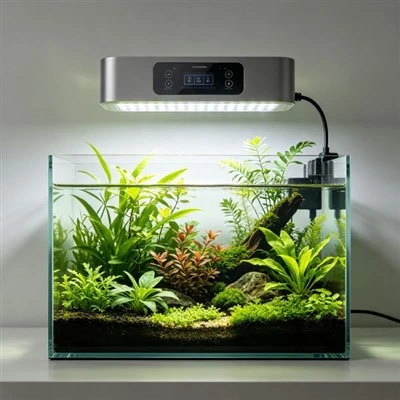
Does an Aquarium Need a Full-Spectrum Light?
Whether an aquarium needs a full-spectrum light depends on the type of aquarium, the fish and plants being kept, tank depth, lighting requirements, and budget.
Advantages of Full-Spectrum Aquarium Lights
1. Provides a More Balanced Spectrum
A full-spectrum aquarium light is designed to provide a broad range of visible wavelengths, creating an appearance closer to natural daylight. This can improve the overall appearance of fish, aquatic plants, rocks, and decorations.
It is worth noting that "full spectrum" does not necessarily mean the light includes UV or infrared wavelengths. For aquarium products, the term commonly refers to broad coverage across the visible spectrum.
2. Improves Fish Color Presentation
A balanced spectrum can improve color rendering and make the natural colors of ornamental fish appear more vivid. Different combinations of white, red, blue, and green LEDs can highlight different colors without relying on a single wavelength.
3. Supports Aquatic Plant Photosynthesis
For planted aquariums, full-spectrum LED lighting can provide useful wavelengths within the photosynthetically active radiation (PAR) range of approximately 400–700 nm.
However, spectrum is only one factor affecting plant growth. Light intensity, photoperiod, CO₂ availability, nutrients, and plant species are also important.
Not Every Aquarium Needs Full-Spectrum Lighting
For a simple fish-only aquarium, an expensive full-spectrum planted tank light may not be necessary. A good-quality white LED aquarium light may already provide sufficient illumination and natural color rendering.
For low-light planted tanks, moderate-output LED lighting can often meet the needs of plants such as Anubias, Java fern, and mosses.
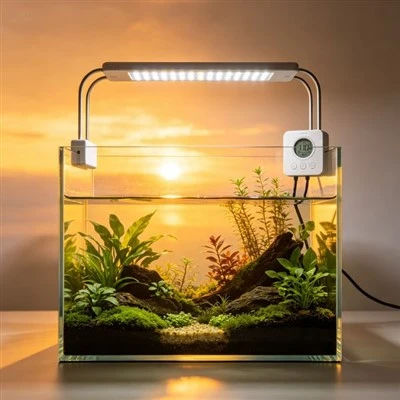
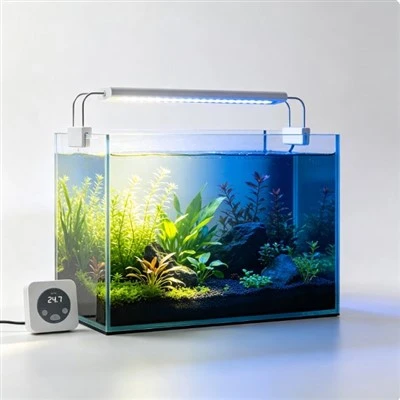
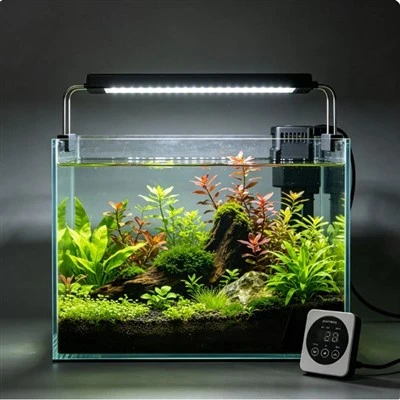
For more demanding planted tanks and aquascapes, adjustable full-spectrum RGB or WRGB lighting can provide greater control over spectrum, intensity, and visual appearance.
Consider Your Budget
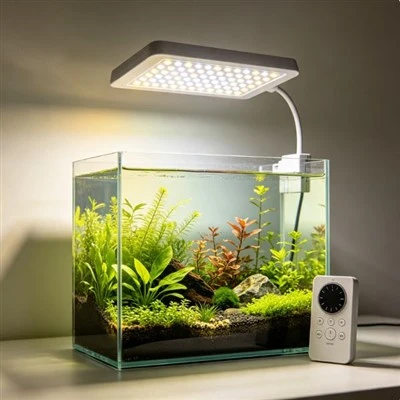
Full-spectrum aquarium lights with features such as dimming, timers, sunrise/sunset simulation, multiple channels, and app control can cost more than basic aquarium lights.
Rather than simply choosing the most expensive fixture, it is better to select a light according to the actual requirements of the aquarium.
Conclusion
A full-spectrum aquarium light is beneficial but not essential for every aquarium.
For fish-only tanks, basic LED lighting may be sufficient. For planted tanks, especially aquariums containing demanding aquatic plants, a well-designed full-spectrum LED light can provide better spectrum control and support plant growth.
When choosing an aquarium light, consider tank size and depth, PAR/light intensity, spectrum, aquatic plants, fish species, lighting duration, controllability, and budget rather than relying on the "full-spectrum" label alone.