I've been in the aquarium lighting business for over 15 years, traveling between public aquariums, exhibition halls, and commercial facilities. One memory that always sticks with me is the first time I walked into a newly opened public display where the lighting was completely wrong. The fish looked pale and washed out under harsh, inconsistent illumination. Water plants in the freshwater sections appeared dull with noticeable color shifts in photos. Visitors snapped a few quick pictures and moved on. The staff was already complaining about high energy bills and frequent lamp replacements.
That day taught me something I've seen proven time and again: a well-chosen aquarium LED light system doesn't just make the tanks look better - it completely transforms the entire visitor experience. In this article, I'll share the practical lessons I've picked up from real projects, the common pitfalls I've watched clients fall into, and the questions I hear most often from facility managers. If you're responsible for a public aquarium or large exhibit, this is written for you.
Why Public Aquarium Lighting Choices Are Nothing Like Home Fish Tanks
After supplying lighting for hundreds of setups, I can tell you that public aquariums operate on an entirely different level from home hobbyist tanks. At home, people focus on weekend enjoyment and occasional adjustments. In a commercial environment, the lighting has to perform perfectly day after day for thousands of visitors.
Facility managers worry about guest traffic flow - how the tanks look from multiple viewing angles and under varying ambient light conditions throughout the day. They need rock-solid long-term stability because downtime for maintenance affects opening hours and revenue. Synchronization across multiple tanks is critical; nothing looks worse than one exhibit in bright midday mode while the neighboring tank is already dimming for evening. Maintenance costs and accessibility also become major factors - you can't have staff climbing ladders during peak hours.
I've sat in meetings where directors emphasized energy efficiency targets and total cost of ownership over five years, not just the initial purchase price. This is where a proper commercial aquarium LED light makes all the difference. Budget fixtures that work in a living room simply don't hold up under these demands. The right systems deliver consistent performance, remote control capabilities, and durability that protects your budget and reputation.
What Kind of Aquarium LED Light Can Support a Public Display
When I help clients select aquarium LED light solutions for large installations, we always start with the real-world requirements rather than flashy specifications. Color Rendering Index (CRI) is one of the first things I look at. You want 90+ CRI so that fish colors pop naturally and corals or plants look accurate under both exhibit lighting and visitor photography.
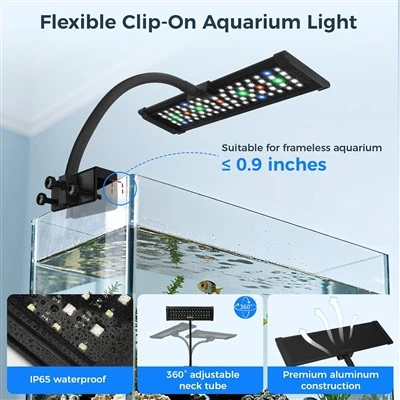
Color temperature zoning is equally important. Being able to independently control cool white, actinic blue, and red channels lets you create realistic daily cycles that reduce animal stress and promote natural behaviors. Waterproof rating matters tremendously in humid, splash-prone environments - I rarely recommend anything below IP67 for public applications.
Group control systems and programmable controllers are essential for larger facilities. I've seen projects where individual fixtures performed adequately but couldn't be synchronized, creating visual chaos across the exhibit. Modern aquarium LED light solutions solve this with centralized management that lets staff make adjustments from a tablet or computer.
Finally, I always discuss light decay curves and longevity. Quality commercial fixtures maintain strong output well beyond 50,000 hours. Cheaper alternatives often show noticeable dimming within the first year or two, forcing earlier replacements and higher long-term costs. LED lighting for large aquariums needs to be engineered specifically for these heavy-duty conditions rather than adapted from residential use.
The Specific Demands of Planted Aquarium Light in Public Exhibits
Water plants bring incredible visual appeal and educational value to public displays, but they require a dedicated planted aquarium light strategy that goes beyond generic illumination. PAR (Photosynthetically Active Radiation) values become critical - for densely planted large tanks, you often need 100–250+ PAR at substrate level depending on the species mix and tank depth.
Light duration curves and spectrum ratios also play a huge role. Red and blue wavelengths drive photosynthesis, but you still need balanced full-spectrum output so that visitors see rich, natural greens rather than artificial-looking tones. I remember one client working on a large Dutch-style water plant exhibit. They initially used an incorrect spectrum that favored the wrong wavelengths. Within weeks they had a serious algae bloom problem that lasted almost two months and affected the entire display's appearance.
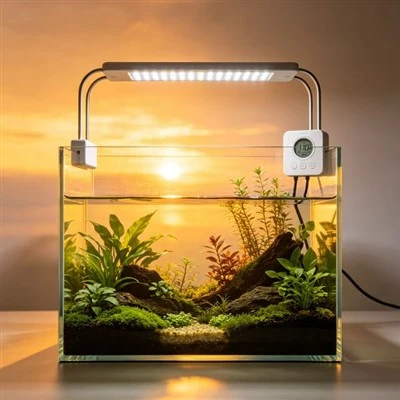
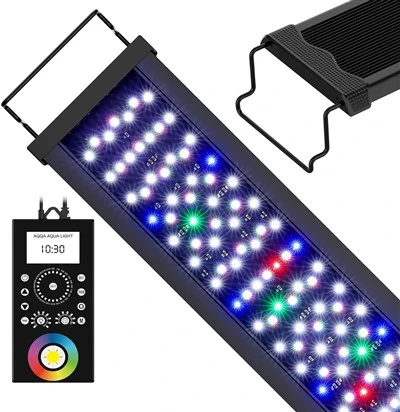
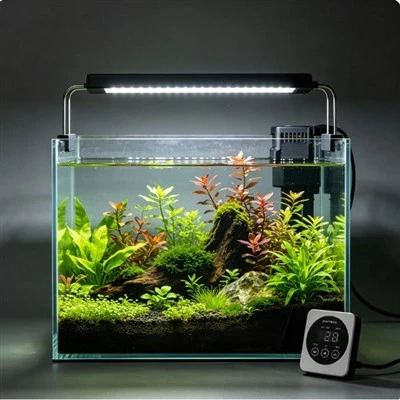
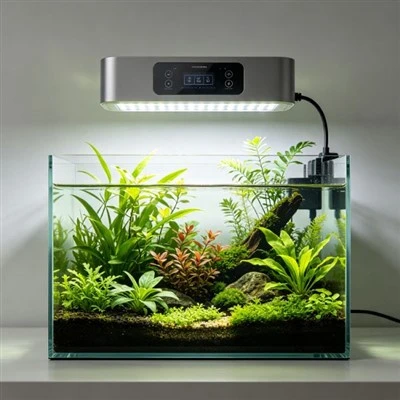
We diagnosed the issue during a site visit and switched them to a better programmable planted aquarium light setup with gradual sunrise and sunset transitions. The algae issues resolved, plant growth became lush and healthy, and visitor feedback improved noticeably. For projects like this, we later often recommend the Fish Tank-Designed LED Aquarium light with WRGB four-color spectrum. The combination provides balanced support for plant coloration and growth while the aluminum alloy housing handles prolonged operation without overheating.
Proper planted aquarium light choices make the difference between struggling plants that require constant intervention and thriving displays that become signature features of the entire aquarium.
A Real Project Case Study from the Field
A few years ago I worked with a regional public aquarium renovating their main freshwater gallery. They had a combination of community fish tanks and a prominent planted display area. The existing metal halide lighting was creating hot spots, driving up electricity costs, and requiring frequent expensive bulb changes.
After measuring PAR levels and observing visitor flow, we designed a hybrid system using commercial-grade aquarium LED light fixtures. The planted sections received dedicated planted aquarium light channels with custom daily curves, while the fish-only tanks used simpler but synchronized schedules. Installation happened in careful phases during closed hours to minimize disruption.
Eight months after commissioning, the results were clear. Plant growth was dense and vibrant with excellent coloration. Fish showed improved activity and natural behaviors. The maintenance team reported almost zero issues with the new lights. Most importantly, visitor feedback and social media photos from that gallery increased significantly. The aquarium staff told me dwell time in the space went up, which translated to better engagement with the educational materials. These are the kinds of outcomes I've seen repeatedly when the lighting is done right.
Common Mistakes I See Facilities Make with Aquarium LED Light
Over the years I've watched the same errors repeat across different projects. The most common is focusing only on wattage numbers instead of spectrum quality and PAR delivery. A high-wattage fixture with poor distribution can create shadows and hot spots while wasting energy.
Another frequent issue is choosing the cheapest option without checking certifications. For public venues, CE and RoHS compliance aren't optional - they're essential for safety compliance and long-term reliability. I've had to help clients replace entire installations because they initially went with non-certified aquarium LED light products that failed prematurely or raised regulatory concerns.
Finally, many buyers underestimate ongoing maintenance and energy costs. A slightly higher upfront investment in quality commercial lighting almost always pays for itself through lower electricity bills, reduced replacement frequency, and fewer operational headaches.
FAQ
What's the difference between a regular aquarium LED light and one built for public displays? Regular home-use lights are designed for smaller volumes and lighter duty cycles. Public-grade aquarium LED light systems emphasize durability, higher output consistency, advanced group control, better thermal management, and longer operational lifespans suitable for 12–18 hour daily use.
How many hours a day should a planted aquarium light run in a commercial setting? Most planted exhibits perform well with 10–14 hours of illumination, including gradual ramp-up and ramp-down periods that mimic natural daylight. The exact schedule should be fine-tuned based on plant species, tank depth, and CO2 supplementation if used.
Can one LED system handle both display tanks and planted tanks with different needs? Yes. Modern multi-channel systems allow independent programming of spectrum and timing for different zones from the same controller. This flexibility is particularly valuable in mixed exhibits.
Is a WRGB LED aquarium light better than a standard white/blue light for planted tanks? In most cases, yes - especially for public displays. WRGB four-color combinations provide more balanced red, blue, and green output that supports stronger plant coloration and growth while maintaining appealing visuals for visitors. The additional channels also offer finer control over daily cycles.
What certifications should I check before buying aquarium LED lighting for a public venue? Always verify CE and RoHS compliance. These certifications indicate the manufacturer meets important safety and environmental standards appropriate for public facilities.
How long do commercial-grade aquarium LED lights typically last? Quality commercial units commonly maintain strong performance for 50,000+ hours. With proper installation and ventilation, many facilities get 5–8 years of heavy daily use before considering any significant upgrades or replacements.
About the Author
With more than 15 years focused exclusively on aquarium and exhibit lighting, I've had the privilege of working with public aquariums, science centers, zoo exhibits, and commercial chains across different regions. My team specializes in matching the right aquarium LED light and planted aquarium light solutions to each facility's specific needs. We only partner with manufacturers who maintain strict CE and RoHS standards because I've seen firsthand how quality components protect both the animals and the bottom line.
Ready to Transform Your Public Aquarium Displays?
If you're currently evaluating lighting options, I always tell clients to first clarify three things: your primary species and plant requirements, daily operational hours, and long-term maintenance capabilities. Getting these fundamentals right prevents most of the expensive mistakes I've seen over the years.
Want to see practical examples of planted aquarium light setups that have worked well in similar environments? Feel free to explore the Fish Tank-Designed LED Aquarium light options we regularly recommend for water plant displays. The WRGB spectrum and robust build have solved problems for many of my clients.
If you have specific tank dimensions, current challenges, or photos of your existing setup, reach out. I'm happy to share honest recommendations based on real project experience - no pressure, just practical advice from someone who's been doing this for a long time. Let's work together to create displays that both your visitors and your aquatic life will appreciate every single day.