

An aquarium light does much more than illuminate a fish tank. The right lighting can improve the appearance of fish, plants, and aquascaping, while unsuitable lighting may cause glare, unnatural colors, inconvenient operation, or unnecessary energy consumption.
When comparing aquarium lights, buyers should consider the following factors.
1. Choose the Light According to the Aquarium Type
Different aquariums have different lighting requirements.
For a standard fish tank, the main priorities are even illumination and natural fish coloration. Extremely high brightness is not always necessary. Balanced, comfortable lighting usually provides a better viewing experience.
Planted tanks require additional consideration of plant species, aquarium depth, planting density, and daily lighting duration. Because different aquatic plants have different lighting needs, the light should be selected according to the actual setup.
For large or deep aquariums, buyers should consider coverage, light distribution, installation stability, and fixture length. Wattage alone cannot determine the actual lighting performance.
2. Full Spectrum Is More Than Having More LEDs
A full-spectrum aquarium light usually combines white LEDs with RGB or other colored LEDs to improve the visual appearance of fish, plants, and decorations.
A balanced spectrum should provide:
White light for general illumination and visual clarity;
Red, green, and blue light for enhanced coloration;
A well-designed LED arrangement that reduces uneven color and visible light spots.
Buyers should not focus only on the number of available colors. They should also check whether each color channel can be adjusted independently, whether brightness changes smoothly, and whether the final lighting effect looks natural.
An RGBW aquarium light allows users to customize the spectrum according to different fish, plants, and viewing preferences. However, color adjustment mainly improves visual presentation and cannot replace proper water quality management or suitable aquarium care.
3. Smart Timers Reduce Daily Maintenance
Traditional aquarium lights usually offer only basic on-and-off operation. This can be inconvenient for office workers, frequent travelers, and customers managing multiple aquariums.
A programmable aquarium light may allow users to set:
Local time;
Lighting duration;
Automatic on and off times;
Brightness for different periods;
RGBW color combinations;
Saved lighting programs.
Once configured, the light can automatically repeat the selected program. This reduces daily manual operation and helps maintain a more consistent lighting schedule.
4. Housing Material Affects Long-Term Stability
LED aquarium lights produce heat during operation. If heat accumulates inside the fixture, it may affect the LEDs, circuits, and electronic components.
An aluminum housing can conduct and release heat more effectively. When selecting a light, buyers should inspect the housing structure, construction quality, and operating temperature during extended use.
Because aquarium lights are frequently exposed to humidity and water vapor, moisture protection is also important. Epoxy resin, silicone, and similar protective treatments may reduce the effect of moisture on LEDs and internal circuits.
However, moisture-resistant, splash-resistant, and submersible are not equivalent descriptions. Unless specifically certified for underwater use, the fixture, controller, and power supply should never be submerged.
5. Do Not Judge Brightness by Wattage Alone
Wattage indicates power consumption, but it does not fully represent brightness or lighting quality. LED efficiency, driver design, heat dissipation, optical structure, and LED arrangement can all affect performance.
When choosing an aquarium light, compare:
Recommended tank length;
Lighting coverage;
Illumination uniformity;
LED specifications and arrangement;
Brightness adjustment range;
Timer and control functions;
Housing and heat-dissipation design;
Adjustable mounting range.
Conclusion
The best aquarium light is not necessarily the model with the most functions. Its spectrum, brightness, dimensions, and control system should match the aquarium in which it will be used.
For a standard fish tank, choose an LED aquarium light with natural coloration and simple controls. For a planted or aquascaped tank, an RGBW full-spectrum light with dimming and programmable timing may provide greater flexibility. For customers managing several aquariums, automatic programs and saved settings can significantly reduce daily work.
The right aquarium light makes fish look more vibrant, aquascaping appear clearer, and the entire tank more attractive.
How to Choose an Aquarium Light—A Complete Guide to Brightness, Spectrum, and Controls
Popular Products
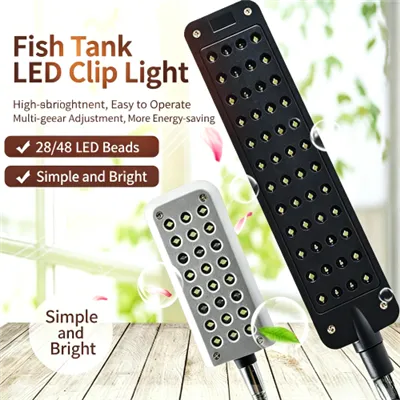
Aquarium Small led clip light
Built with high‑quality SMD2835 LEDs, this low‑voltage safe clip light has a flexible gooseneck and two lighting modes
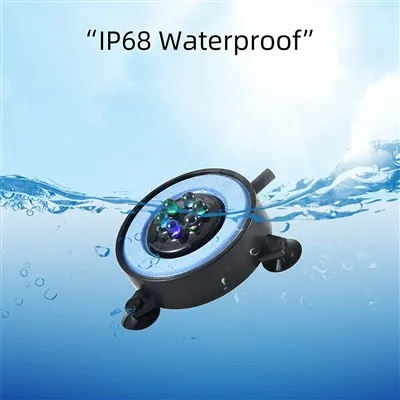
RGB Aquarium Underwater Light with Air Bubbles
IP68 waterproof LED bubble ring adopts low‑voltage safe design with energy‑sufficient LEDs. Equipped with suction cups
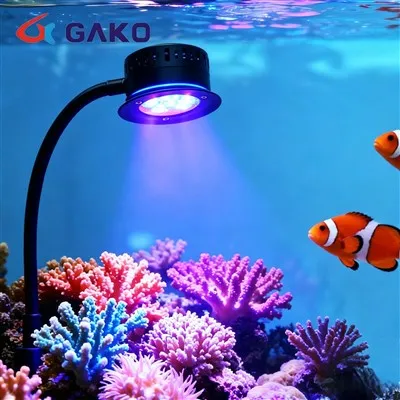
Intelligent Fan-Cooled Reef Light
This timer coral clip on lamp is specially developed for seawater tanks. Adopting high‑quality Cree LEDs, it features

Mini Clip-On LED Aquarium Light
This Mini aquarium clip-on light uses high‑quality SMD5730 LEDs for vivid color display. Low‑voltage, energy‑saving and
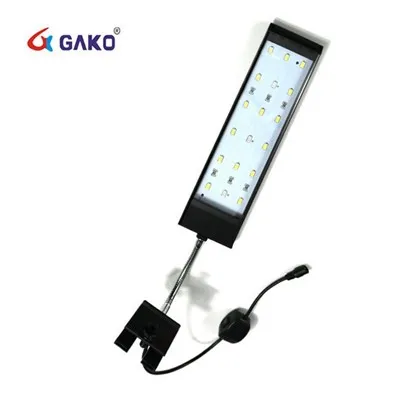
Fish Tank LED Mini Clip Light
This full spectrum high bright aquarium clip light has 2 modes: full LEDs for daylight, blue light for night. With a

Clip-On Aquarium Light for Planted Tanks
This IP68-rated ultra-thin LED aquarium light features low-voltage operation for safety and peace of mind. It uses