

smart aquarium light, RGBW aquarium light, full-spectrum fish tank light, 24/7 aquarium light, aquarium light manufacturer
As the aquarium market becomes more specialized, customers expect more than basic illumination from a fish tank light.
Natural coloration, convenient operation, automatic scheduling, moisture protection, and stable performance are increasingly influencing purchasing decisions. As a result, smart controls, full-spectrum adjustment, and efficient heat dissipation are becoming important directions in aquarium-light development.
1. Aquarium Lighting Is Moving from Manual Control to Automation
Traditional aquarium lights require users to switch them on and off manually every day. Over time, this creates several common problems:
Users forget to turn the light on or off;
Nobody can manage the light while the user is away;
Multiple aquariums must be controlled separately;
Daily lighting duration becomes inconsistent;
Adjusted colors and brightness cannot be saved.
Smart aquarium lights solve these problems through clock settings, lighting-duration controls, automatic programs, and saved configurations.
Depending on the product, users may create a schedule that gradually increases brightness in the morning, maintains normal illumination during the day, reduces brightness in the evening, and switches off automatically at night.
For aquarium stores, display areas, and multi-tank users, automatic operation can also reduce routine management work.
2. RGBW Adjustment Supports More Viewing Scenarios
A fixed-color-temperature light can provide only one general lighting effect. RGBW technology combines red, green, blue, and white channels to create a wider range of colors and brightness levels.
RGBW adjustment provides three main benefits.
First, it improves the visual presentation of fish. Different fish colors and patterns respond differently to different lighting combinations.
Second, it creates greater depth within the aquascape. Aquatic plants, driftwood, rocks, and substrate reflect light differently, so spectrum adjustment can improve the overall atmosphere.
Third, it supports multiple applications. Daily viewing, product photography, retail displays, and evening appreciation may each benefit from different lighting settings.
A touch-sensitive color ring makes color selection more intuitive, while independent RGBW channel control provides more precise customization.
3. DIY Programs Meet Individual Lighting Needs
Every aquarium has a different size, arrangement, fish population, plant selection, and surrounding environment. A single fixed lighting program cannot meet every customer's needs.
DIY programs allow users to configure color, brightness, and operating time according to their own preferences and save the completed settings.
This feature is especially suitable for:
Home users with regular viewing schedules;
Aquarium content creators and product photographers;
Retailers managing multiple display tanks;
Customers who travel frequently;
Aquascaping enthusiasts seeking customized visual effects.
For manufacturers and distributors, programmable lighting also increases the number of applications that one product can serve.
4. LED Combinations Influence Brightness, Color, and Efficiency
Aquarium lights often combine different types of LEDs. White LEDs provide general illumination, while RGB LEDs support color adjustment and atmospheric effects.
A properly designed LED combination should balance:
General brightness;
Lighting coverage;
Color performance;
Energy consumption;
Heat generation;
Long-term operating stability.
Buyers should not evaluate a light solely by its LED model number. Chip source, driver design, LED arrangement, thermal management, and product testing also affect performance.
Even products using similar LEDs can produce different results because of differences in their circuits and structural designs.
5. Heat Dissipation and Moisture Protection Are Essential
Aquarium lights operate above water and are frequently exposed to humidity, water vapor, temperature changes, and long operating periods. They therefore require more specialized protection than ordinary indoor lighting.
An aluminum body can transfer and release heat generated by the LEDs. Epoxy resin, silicone, or similar protective materials can help reduce the effect of moisture on the LED board and internal circuits.
Before placing a bulk order, buyers should ask the supplier about:
Which components receive moisture protection;
Whether the controller and power supply must remain away from water;
Continuous operating-test duration;
Power-supply and circuit safety measures;
Warranty and after-sales procedures.
These factors directly influence customer experience and can help reduce after-sales problems.
6. What Should Buyers Check When Sourcing Smart Aquarium Lights?
Distributors, importers, online sellers, and wholesale buyers should evaluate suppliers in several areas:
Whether the timer, dimming, color adjustment, and program-saving functions operate as described;
Whether the available sizes cover popular aquarium dimensions;
Whether the brackets are stable and sufficiently adjustable;
Whether the LEDs, circuits, housing, and controller have passed stability testing;
Whether the supplier provides specifications, instructions, and marketing materials;
Whether branding, packaging, and bulk customization are available;
Whether lead times, inspection standards, warranties, and after-sales procedures are clearly defined.
Before bulk purchasing, buyers should test samples for illumination uniformity, controller response, operating temperature, mounting stability, and suitability for humid environments.
Conclusion
The development of smart full-spectrum aquarium lights represents a shift from a simple lighting fixture to an integrated system combining hardware, controls, and programmable lighting scenarios.
A 24/7 program reduces daily management, RGBW adjustment improves visual presentation, DIY settings support individual requirements, and aluminum heat dissipation with moisture protection supports stable operation.
For aquarium owners, smart lighting creates a more convenient and attractive viewing experience. For wholesalers and distributors, it provides clearer product differentiation and access to a wider range of sales opportunities.
Why Smart Full-Spectrum Aquarium Lights Are Becoming an Important Industry Trend
Popular Products
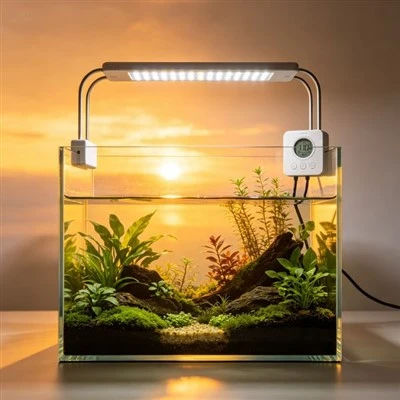
LED Aquarium Light With Sunrise And Sunset Timer
The LED Aquarium Light with Sunrise and Sunset Timer is a 24-hour programmable aquatic lighting fixture equipped with a
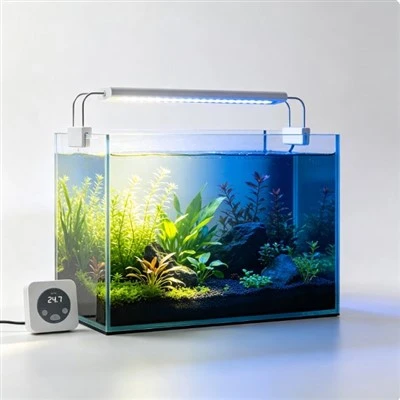
24/7 LED Aquarium Light With Timer
The 24/7 LED Aquarium Light with Integrated Timer provides automated full-spectrum lighting for freshwater
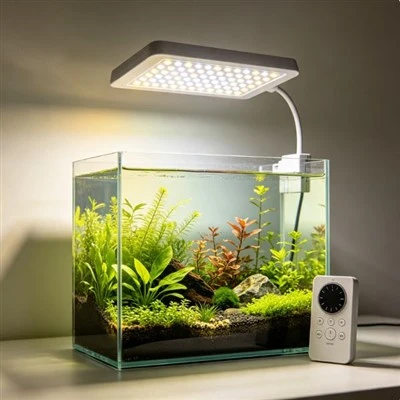
Dimmable LED Aquarium Light With Timer
The Dimmable LED Aquarium Light with Built-in Timer is an engineered freshwater LED fixture that combines full-spectrum
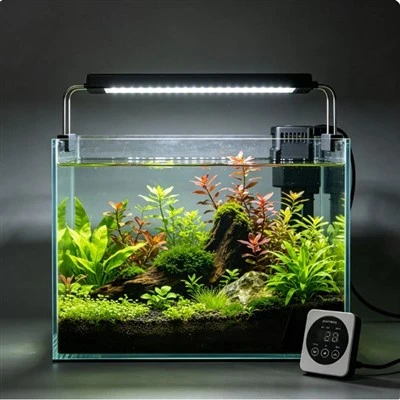
LED Aquarium Light With Memory Timer
This full-spectrum LED fixture provides controlled illumination for freshwater planted systems and fish-only aquariums.
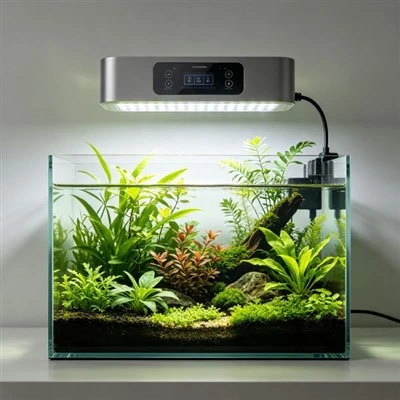
Programmable LED Aquarium Light With Timer
This series provides full-spectrum lighting for freshwater environments, featuring an integrated digital controller for

LED Aquarium Light With Digital Timer
This fresh-water LED aquarium light combines full-spectrum diodes with an integrated digital timer to simplify aquatic