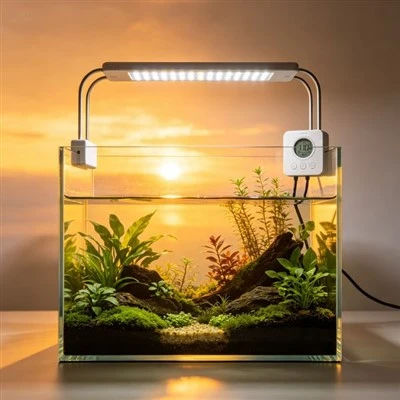
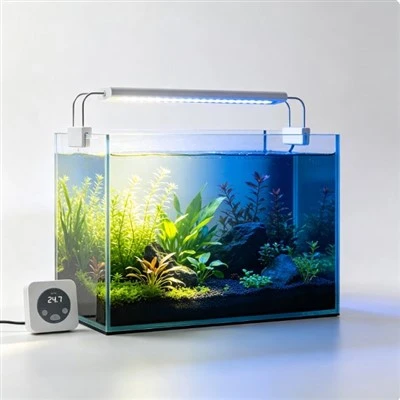
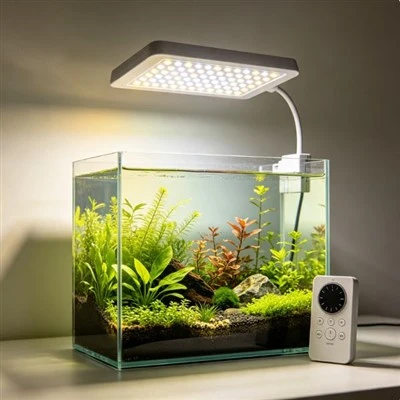
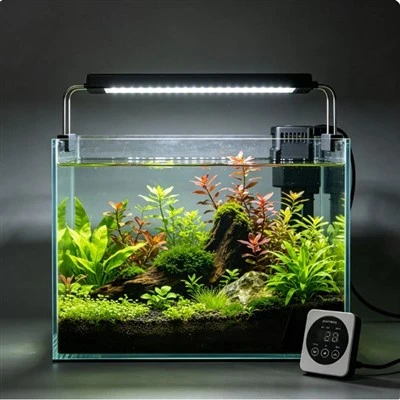
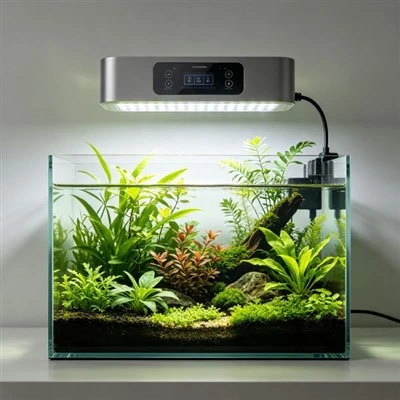
Light is not only vital for seeing effects in the aquarium lighting system, but it is also important for keeping the aquarium's ecological balance. Light directly affects coral photosynthesis, colour expression, fish health, and daily routines, especially in seawater and coral tanks. So, picking the right power and spectrum is something that every aquarium fan and expert curator needs to know how to do.
Principle of power selection
The brightness of dive lights or aquarium lights is directly affected by their power. Different types of water settings need different amounts of power:
Freshwater fish tank: If the major focus is on decorative fish, the power need is not too high. Most of the time, fish need 0.5 to 1 watt of light per litre of water to stay active.
Freshwater grass tanks need a lot of light, about 1 to 2 watts per litre of water, to make sure that aquatic plants can photosynthesise.
Coral, especially SPS (Small Hole Coral), needs strong light with a power of 2 to 5 watts per litre of water. To make sure that the light energy reaches the bottom of the tank, the lamps need to have a lot of penetration.
When picking power, you should think about both the volume of the water body and the depth of the water. This is because the deeper the water, the more light is lost, and you need a stronger light to make up for it.
The Importance of Spectroscopy
The spectrum is a key aspect that affects the health of coral. The symbiotic algae (Chlamydomonas) in coral bodies need certain light wavelengths to do photosynthesis, which gives the coral energy.
Blue light (400–500 nm): This is the most essential range of light since it can help diatoms photosynthesise and make corals glow more brightly.
Purple light (380–420 nm): This light helps coral show off its colours better, but you should only use it in small amounts so it doesn't get too bright.
White light (500–700 nm): makes everything brighter, mimics natural light, helps fish figure out where they are, and keeps their sleep cycles normal.
Red and green light: These colours are normally only a minor part of aquarium lights. Too much red light can encourage algae growth, while a little bit can assist plants thrive in aquariums with plants.
various organisms need various amounts of light
Corals: Hard corals need more blue and purple light than soft corals do.
Marine fish mostly use light to mimic natural circadian rhythms. They don't need a lot of light, but they do need a steady light cycle.
Freshwater fish likewise need a day-night cycle to stay healthy, but too much light can stress them out or trigger algal blooms.
Benefits of LED lights
Many modern aquarium lights use LEDs because they can manage power and spectrum very well:
Adjustable spectrum: Users can change the amount of blue light, white light, and other colours as needed for corals and fish.
Avoid big changes in water temperature by using less energy and getting less heat.
Long life: You won't have to change light fixtures as often, which is a headache.