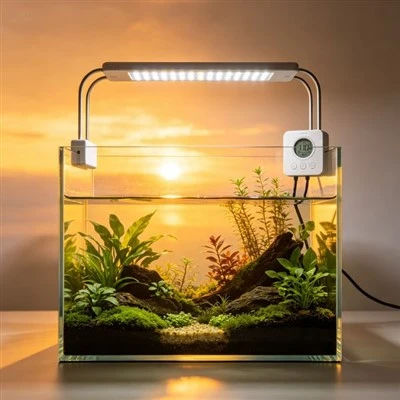
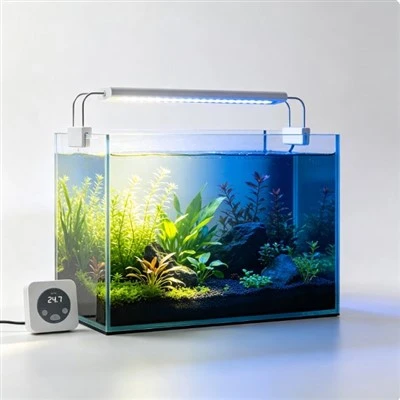
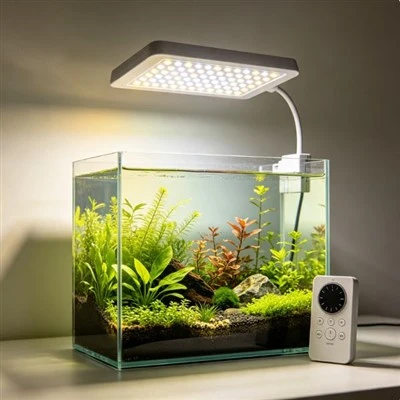
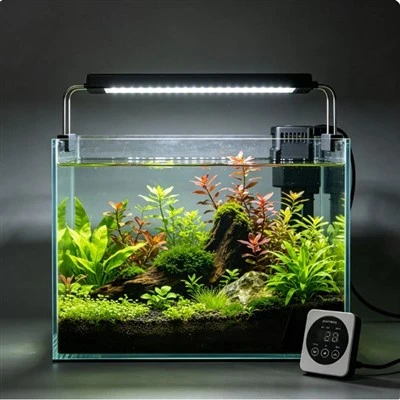
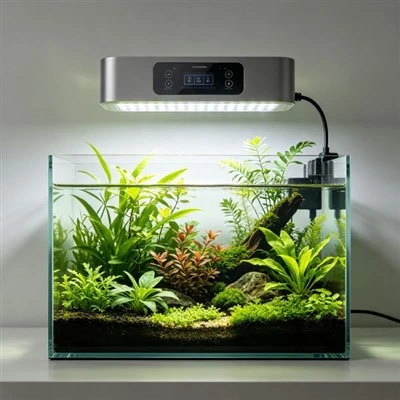
Fine sand can turn an aquarium floor into a moving landscape. A mound appears beside a cave, a hollow opens beneath wood, and a fish that was visible a moment ago disappears with only its eyes or snout exposed. The lamp illuminates this landscape, but it should not be used to erase every shadow created by it. Digging and burying are part of normal habitat use for some species, while other digging can relate to feeding, shelter, spawning, or disturbance. Species knowledge, suitable substrate, stable hardscape, water quality, and safe filtration remain more important than making the bottom uniformly bright.
Substrate choice comes before optics. "Fine sand" can describe grains with different shapes, density, color, and tendency to compact or remain suspended. Research the needs of the exact fish and choose material intended and considered suitable for aquarium use. Sharp or unsuitable particles may create risk for species that sift or bury. Rinse or prepare the substrate according to reliable instructions, and confirm that the depth works with the planned maintenance and planting. A lighting adjustment cannot make an inappropriate material safe.
Pale sand reflects and scatters more visible light toward the viewer than a dark floor under similar conditions. Freshly disturbed grains can also hang in the water and make the beam appear hazy. That visual brightness does not mean every buried surface receives the same intensity. A new ridge can catch direct light while its leeward hollow falls into shadow. Record the fixture position, main viewing angle, sand color, recurring dig zones, cave entrances, and the location of plants or wood. A top-down sketch after weekly maintenance can show how the useful footprint changes.
Watch how the fish uses the area without repeatedly flattening it. Note the time, feeding context, room activity, tankmates, and whether a buried individual emerges normally. Do not assume that concealment proves fear of the lamp, and do not uncover an animal merely to see it unless species-specific welfare guidance calls for intervention. Some fish need access to substrate for ordinary behavior. Persistent abnormal signs, injury, failure to feed, or breathing difficulty require a broader husbandry review and possibly qualified help, not a simple increase in brightness.
Hardscape deserves special attention in a digging aquarium. Rocks or décor resting only on loose sand can shift when material is excavated, depending on the design. Build and support the structure using methods appropriate to the aquarium and species, with stability established before animals are added. Inspect cave entrances and equipment after major digging. Keep suction inlets, heater clearances, and circulation paths operating as intended. Never rest a lamp or cable on an unstable cover to gain a better angle over a new hollow.
Imagine a pale-sand tank in which one fish creates a high mound directly beneath the center of the light. From the sofa, the mound looks glaring white while the adjacent feeding hollow looks almost black. Raising all channels brightens the room reflection and mound more than it reveals the hollow. A small approved shift in fixture position, viewing from the other side during a brief neutral inspection, and directing routine checks toward the hollow provide better information. The habitat remains intact, and the normal daytime program does not become unnecessarily intense.
Suspended sand can be mistaken for cloudy water from another cause. If digging produces a temporary haze, observe whether it settles and whether filtration is designed to handle the particle load without drawing abrasive material where it should not go. Follow the filter manufacturer's setup and maintenance instructions. A beam seen from the side can make every particle conspicuous, especially in a dark room; visibility of particles is not a direct measurement of water quality. Test relevant parameters and investigate persistent cloudiness instead of diagnosing it from the light cone.
Feeding is another reason to inspect shadowed zones. Food may settle in hollows, beneath root structures, or behind a mound where it is difficult to see. Deliver food appropriately for the species and observe where it travels. Brief neutral illumination from an approved fixture position can support a check, but do not hold a bright handheld electrical device over open water unless it is designed and used for that environment. Remove uneaten food according to sound husbandry, and adjust delivery or circulation rather than flooding the entire tank with light.
Routine cleaning should respect the fact that the bottom is no longer flat. A siphon held as if every area had equal depth may remove too much sand from a ridge or miss debris in a depression. Use a technique appropriate to fine substrate and the animals present, and keep a record of zones that repeatedly collect waste. After maintenance, confirm that buried cables, plant roots, and hardscape supports remain as intended. Restoring every mound for visual symmetry can erase useful habitat and guarantees that the lighting map will be obsolete again as soon as digging resumes.
Good lighting equipment offers controllable output, a useful broad field, secure mounting, and glare management. Those features can make a changeable floor easier to view, but specifications should not promise that no shadows will occur. Sand relief, fish-built structures, plant growth, and viewing angle ensure that the field will keep changing. Adjustable positioning is helpful only within the approved mounting range and without sacrificing clearance, cooling, or service access. A stable, safely mounted lamp is more valuable than a perfectly bright photograph of one temporary sand shape.
Treat the moving sand as part of the aquarium rather than a defect in illumination. Choose appropriate substrate, keep hardscape and equipment safe, map recurring changes, and observe digging in the context of species and routine. Use modest, controlled light for inspection while preserving useful shade and the normal day-night cycle. If a dark pocket needs attention, change the viewing angle or address food and flow locally before raising every channel. The goal is not a floor with no shadows; it is an environment that remains safe, maintainable, and readable as its inhabitants reshape it.