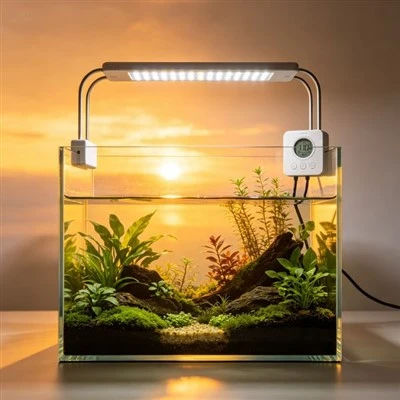
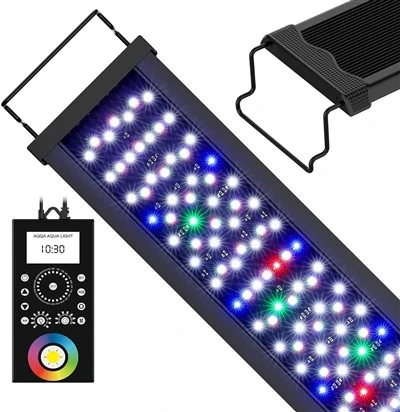
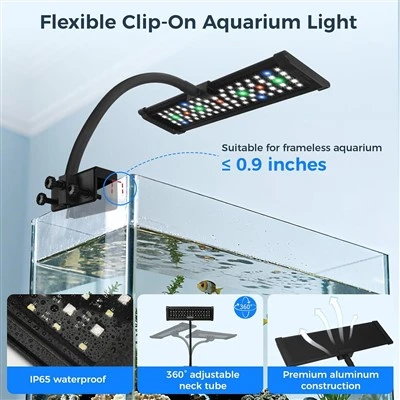
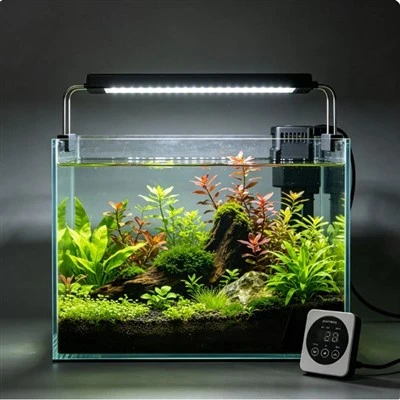
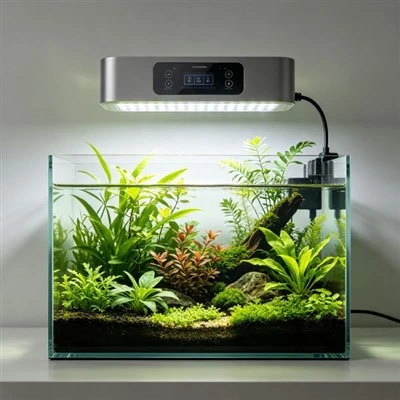
1. Pick the right colour temperature and spectrum
The main benefit of a full-spectrum lamp is that it has a full spectrum;
however, various products still have varied colour temperatures and spectral emphasis. In general:6500K-7500K colour temperature: more like natural sunshine, works for most tanks with water and grass.A range of red and blue light that is not too strong: this helps aquatic plants grow and develop their colours.High Colour Rendering Index (CRI): It can make the colours of aquatic plants look more natural and bright.For landscaping jars with more red grass, you can choose a full-spectrum lamp with a little more red light. This makes it easier to get a brilliant red appearance.
2. Set a fair time for the lights to be on.
Even good full-spectrum bulbs might generate algal problems if they are on for too long. General advice:Newly opened cylinder: gets roughly 6 hours of sunshine every dayStable period: Take pictures for 7 to 9 hours every day.High-demand grass tank (high-gloss tank): can slowly grow to 8–10 hours.You should also use a timer or smart control system to turn the lights on and off automatically and keep the light cycle steady.
3. Change the light level based on the type of water plants.
Different types of aquatic plants need different amounts of light, and most full-spectrum lamps may be lowered. Making reasonable changes is really crucial.Plants that don't need a lot of light include moss, water fig, pepper grass, and others. The light doesn't have to be very bright.Aquatic plants like pearl grass and small dwarf pearls need some light.Red grass and carpet grass are aquatic plants that need a lot of light and stable CO₂.Instead of bringing the light up to the highest level all at once, it is better to slowly raise the intensity. This will help keep algae from exploding
4. Make sure the lights are at the right height and that they all shine evenly.
The height at which you install lighting fixtures will have a direct impact on how evenly and brightly they light up the room:In general, it is best to keep the lights 15 to 30 centimetres away from the water's surface.Low lighting fixtures are more likely to get strong light and algae blooms.Too high of a lamp: light is blocked, and grass growth is slowed down.If the water grass tank is big, you might want to try different combinations of lights to make sure the light covers the whole area.
5. Work with CO₂ and the nutrition systemFull-spectrum lamps create a bright light environment, and water plants may not do well or even produce algae if they don't get enough nutrients.Suggest making both happen:Steady supply of CO₂Add liquid fertiliser or foundation fertiliser in a reasonable amount.Changing the water regularly (once a week is more frequent)The water grass tank will only work if you keep the right amount of light, CO₂, and food.
6. Use the slowly brightening and dimming feature to make the light look like natural light.
Many high-end full-spectrum aquarium lights have settings for sunrise and sunset. There are a number of benefits to this gradient lighting:Make fish less afraid of sudden bright light.Closer to the natural environment of the ecosystemA better viewing experienceYou can usually set:Get brighter throughout the course of 30 minutes.30 minutes of slowly getting darker
7. Don't believe common misconceptionsSome typical mistakes that need to be remembered when using it are:
Going after ultra-high brightness without thinkingToo much sunshine causes algae blooms.There is a lot of light, but no CO₂ system.Lighting fixtures don't cover enough ground.The new cylinder works directly with high gloss.