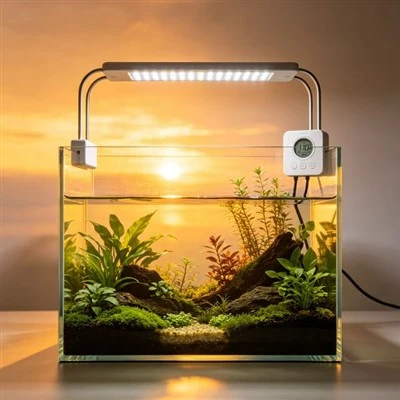
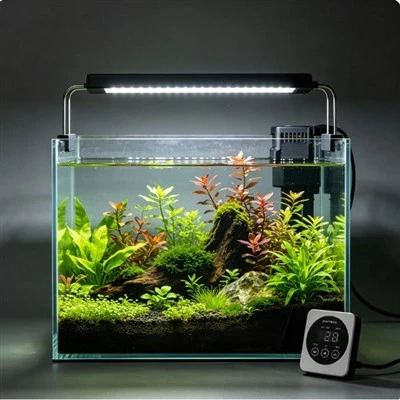
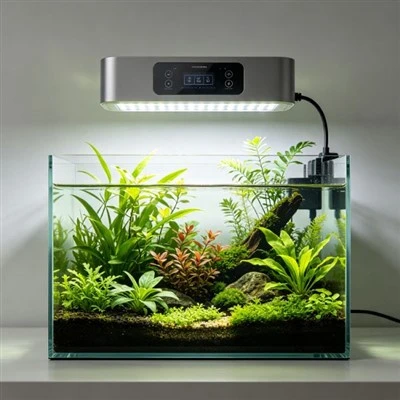
1. Different spectrum needs: Regular light bulbs don't work well for photosynthesis.
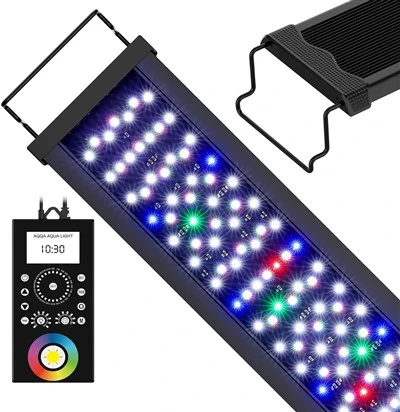
Aquatic plants typically use certain wavelengths of light for photosynthesis, such as blue light (approximately 430–450 nm) and red light (about 660 nm). Chlorophyll can easily absorb these wavelengths, which helps plants release oxygen and take up nutrients. Specialised aquarium lights commonly use full spectrum design or focused optimisation (with the right amount of red and blue light), which can make it look like natural sunlight is coming through the water.
Most LED lights for homes are white or warm white, have a low colour temperature (about 2700–4000K), and don't have enough red and blue light or don't spread it evenly. As a result, aquatic plants develop slowly, with stems that are too long and leaves that are too yellow. They also don't photosynthesise well, which means that the tank doesn't get enough oxygen and carbon dioxide, and the water quality tends to get worse.
2. Colour temperature and colour rendering effect: these affect the health of the fish and the value of the ornament.
Colour temperature (Kelvin, K): Most aquarium lights make neutral white light that is close to natural sunshine and has a colour temperature of about 6500K. This makes fish colours vivid, water bodies clear, and aquatic plants green, giving them a natural and lovely look. You can also use RGB to change the brightness in the fish tank to make the red fish look more red and the blue fish look more blue. This will make the whole viewing experience better.
A lot of regular lights have a low colour rendering index (CRI) or the wrong colour temperature, which makes fish look "grey" and water look yellow, which makes it hard to see. Fish's circadian rhythms can be thrown off by long-term artificial lighting, which can cause stress, a loss of appetite,
3. Design that keeps heat in and water out: keeps water temperature stable and safe
Normal lighting, especially incandescent lamps and high-power LEDs, make a lot of heat. If they are left on for a long time near fish tanks, the water temperature can rise, which can make the water temperature uneven and lower the amount of oxygen that can dissolve in it. This can make fish sick or hypoxic. The aquarium LED light is made just for aquariums and doesn't get very hot, so it can keep the water temperature consistent.
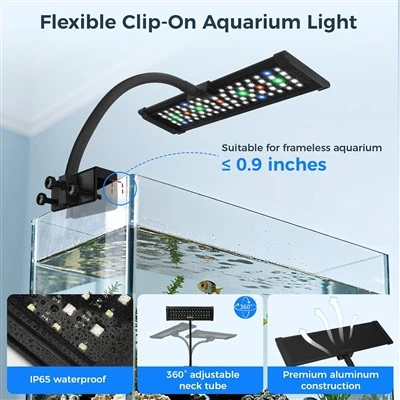
Also, most aquarium lights are rated IP65 or higher for waterproofing, have a splash-proof construction, and have special coating on the lamp body and cables to keep them from shorting out or leaking in damp places. Putting regular lights directly above the fish tank is quite dangerous because they don't have these precautions.
4. The amount of light and how well it gets through (PAR value)
Light doesn't travel well underwater, especially in fish tanks that are deeper than 30 cm. To make sure that light energy reaches the bottom of the tank equally, specific aquarium lights will take into account PAR (photosynthetically active radiation) and PUR (plant useable radiation). The brightness index (lumen) of regular lamps is high, but they don't do a good job of getting through water, which means that the plants at the bottom of the water often don't get enough light.
Dedicated lights can also give gentle, even light to pure fish tanks (without aquatic plants), so that intense light doesn't shine directly on the fish's eyes or make shadow blind spots.
5. The bad things that can happen if you don't use dedicated lights correctly against the good things that can happen if you do.
Some common concerns with utilising regular lamps are algae blooms, melting aquatic plants and yellow foliage, dull fish colour, murky water quality, excessive fish pressure, and even mortality.
Dedicated lights provide many benefits, such as helping aquatic plants grow healthily (which naturally improves water quality), keeping the ecosystem in balance, making fish more vibrant and colourful, and making the watching experience more enjoyable. LED aquarium lights are also energy-efficient (they use 30–50% less electricity than standard fluorescent lights), last a long time (up to 30,000 hours), and can be controlled by smart devices (such dimming and timing).
useful tips
When choosing a light, pick one that matches the type of fish tank you have. For example, pure fish tanks should have around 6500K white light. The water grass tank has its own light with a red-blue spectrum and adjustable PAR. Check the power (it should be between 0.3 and 0.5 watts per litre of water), the waterproof rating, and the timer function.
When in use: The daily light exposure period should be between 6 and 10 hours (a little longer for water grass tanks and a little shorter for pure fish tanks), and a timer should be used to mimic the natural cycle. At first, the light in the new tank shouldn't be too bright so that algae don't grow too quickly.