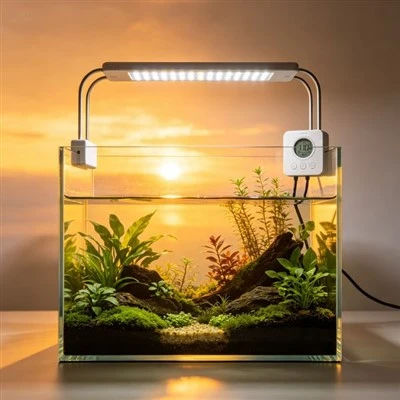
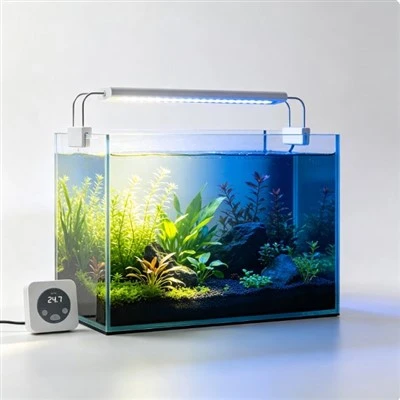
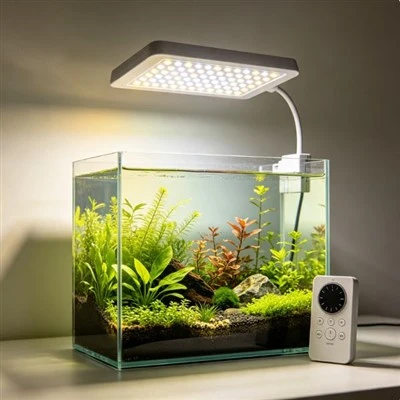
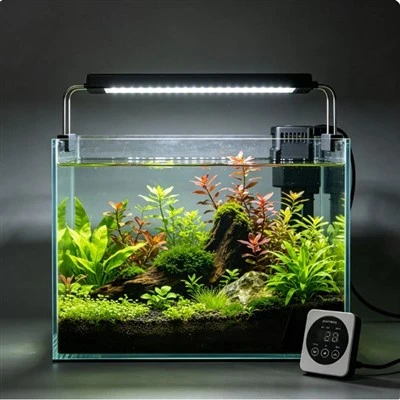
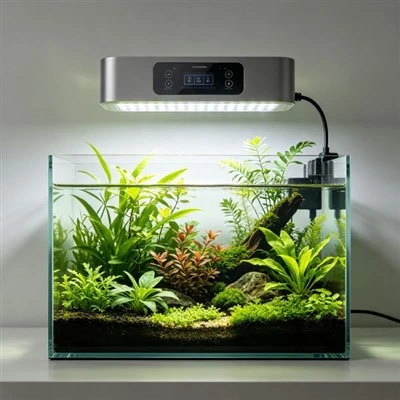
When two aquariums face each other across a room, each fixture can become part of the other tank's environment. One timer may switch off while the opposite display continues for another hour, sending light through both front panels. Reflections can make the effect look small from the sofa but noticeable at the aquarium's waterline. The solution begins by treating the tanks as two independent schedules and then measuring their interaction. It does not require covering fixtures with fabric or assuming that dim spill has no biological relevance.
Draw a room plan with the tanks, fixture heights, distance, windows, ceiling lamps, walls, and normal shutoff times. Record the livestock and dependable scheduling guidance for each aquarium. "Reef" and "freshwater" do not by themselves determine a universal response to spill. What can be established is whether visible light from one remains in the other's intended dark period. That is an installation and timing question that can be tested before making claims about biological effects.
Switch off one aquarium and leave every other source in its normal state. View the dark tank from the front, side, and a safe position near animal level. Note bright bands, reflected source images, and illuminated décor. Then reverse the test. A phone camera may brighten darkness automatically, so fixed exposure is needed if images are used. Human eyes also adapt, making the room seem brighter after several minutes. State the observation method rather than turning it into an absolute light measurement.
Timing can solve more than hardware. If the two aquariums can share a suitable shutoff window without disrupting care, align their schedules gradually and then keep them stable. Include room lamps and windows in the final plan. Do not shift a photoperiod suddenly only to match a neighbour; consider feeding, maintenance, plants, animals, and household routine. The owner should be able to explain the whole day for each tank, not just the setting of its own timer.
Beam direction and cutoff offer another route. A compatible shade may stop the far fixture from being visible across the room while preserving coverage inside its aquarium. Approved aiming or height adjustment can move spill away from the opposite front panel. Test one change at a time under matched room conditions. Never drape cloth, cardboard, or plastic over an operating fixture, since it can block ventilation, retain moisture, and fall. A dark aquarium is not worth an overheated lamp.
Reflections sometimes travel indirectly. A light may hit a white wall, glass cabinet, television, or glossy floor before reaching the other tank. Turn off or screen one room source at a time to identify the path. A matte room finish or changed furniture angle may help without touching either aquarium. Do not place an unapproved film on the tank or fixture as a quick fix. Any material near water and heat needs compatibility, cleaning, and installation guidance.
Consider a late-running marine display facing a freshwater aquarium whose timer ends at nine. At ten, the reef fixture appears as a pale rectangle in the freshwater front glass and illuminates the upper décor. The owner tests an approved shade on the marine light, then repeats the view with fixed room lamps. The rectangle disappears while both tank interiors remain usable. This result shows successful control of a specific spill path; it does not prove a health outcome in either aquarium.
Independent control should remain independent. A shared smart plug may seem convenient but can create unwanted simultaneous failures or prevent separate service. Use the topology intended by each product and label the controls clearly. After a power interruption, verify both clocks and schedules because one may restore differently. Keep a local way to turn each fixture off safely. Wireless convenience should not be the only method for ending unintended light.
Inspect the physical installation after changing height or adding a compatible shade. Mounts must remain stable, vents clear, and cables free from tension. Keep connectors and supplies away from splash paths. Should a new shade loosen the support, trap enough heat to cause concern, or accompany smoke, odour, or prohibited wetting, isolate the fixture and seek competent help. Do not place temporary partitions where they can fall into either aquarium or block room exits.
Repeat the spill check after seasonal daylight changes, furniture moves, a new fixture, or a schedule revision. Write down the final shutoff time and shielding for both tanks. If a household member changes a show mode for guests, the control should still return automatically to the intended cycle. A visible status indicator can help, but darkness is confirmed at the tank, not by an app screen alone.
Facing aquariums can coexist without one borrowing the other's evening. Controlled beam edges, compatible shades, independent reliable schedules, and a simple room map make the interaction understandable. The goal is not total optical isolation under every conceivable condition. It is to ensure that each planned dark period is not routinely extended by the neighbouring display. Once that boundary is recorded, both aquariums can remain attractive parts of the same living space.
If one aquarium belongs to a different family member, agree on a change process. A new weekend show mode, holiday timer, or late feeding session should trigger a quick spill check for the opposite tank. Write both normal schedules in one shared place while keeping the controllers independent. This prevents a well-meant adjustment in one system from becoming an invisible change in the other. The household can then resolve conflicts with timing or beam control before anyone begins moving animals or covering equipment. Guests should use a named temporary preset that expires or is manually restored at a stated time. The next morning, confirm both programs locally. A social evening should not quietly rewrite either aquarium's routine.