Light Isn't Just About Seeing the Fish, It's a Biological Signal
For a lot of species, light isn't just ambient illumination, it's an environmental cue that helps trigger spawning behavior in the first place. Photoperiod, the length and pattern of light exposure over a day, mimics seasonal changes in the wild, and gradually extending daylight hours is a technique many breeders use to help trigger spawning as days lengthen heading into warmer months.
This isn't the same across every species, though. Light sensitivity and photoperiod preferences vary enormously between fish types, and treating every breeding tank identically, regardless of species, is one of the more common oversights new breeders make.
Where a 150W High Power Coral Reef Aquarium Light Actually Fits In
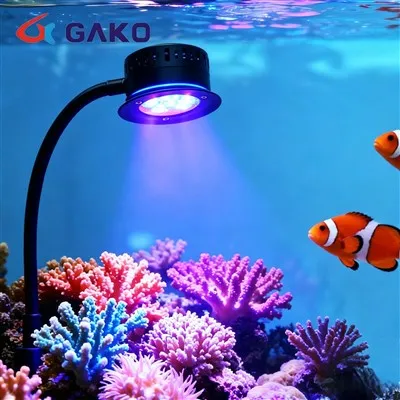
This is where a lot of confusion starts, and it's worth being direct about it. A 150W High Power Coral Reef Aquarium Light is a genuinely strong light source, built for driving coral photosynthesis or supporting dense planted growth, not for illuminating a tank of newly hatched fry.
Where this level of intensity actually earns its place is in supporting side setups: live food culture tanks growing algae or rotifers to feed fry, or planted breeding tanks where healthy plant growth supports water quality and cover for fry. Both applications genuinely need strong light output, since algae and plant growth depend on adequate light intensity to sustain the biological processes involved. Light intensity for these purposes is often measured in PAR (photosynthetically active radiation), reflecting how much usable light actually reaches a given point in the water. A live food culture tank benefits from consistently high PAR, while a standard fry tank doesn't need anywhere near that, since the fish aren't photosynthesizing anything, they're simply trying to feed and grow without added stress.
Clip-On Aquarium Light, Why Simplicity Often Wins in Breeding Setups
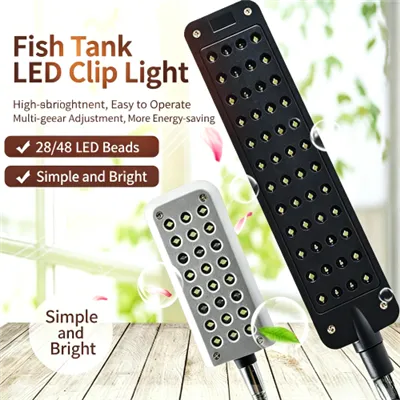
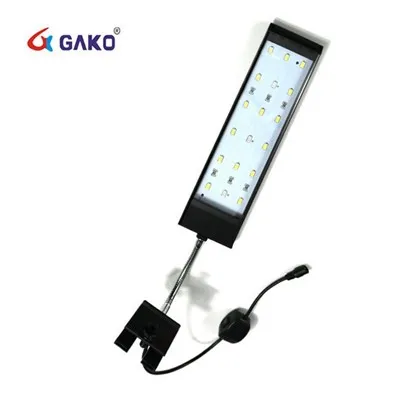
A Clip-On Aquarium Light solves a very practical problem high-power fixtures don't: most serious breeders run several small breeding tanks side by side, not one large display tank, and a bulky fixture built for a single tank doesn't translate well to a row of smaller setups.
Clip-on fixtures mount directly to the tank rim, take up minimal space, and let a breeder adjust lighting independently across multiple tanks without a dedicated overhead mount for each one. Their more modest output also happens to line up with what most fry-rearing tanks actually need, gentle, adequate light rather than reef-tank-level intensity.
Photoperiod, The Setting That Matters More Than Wattage
For breeding purposes, consistency and duration of light exposure generally matters more than raw brightness. A regular, timer-controlled photoperiod keeps light exposure stable and helps avoid stressing fish or encouraging algae blooms from irregular lighting.
General reference ranges commonly cited by breeders run somewhere around 8-12 hours of light per day for many common species, though this varies by species and by whether a breeder is intentionally adjusting photoperiod to help trigger spawning.
| Setup Purpose | Recommended Light Type | Intensity Direction |
|---|---|---|
| Standard fry-rearing tank | Soft, low-intensity light | Low |
| Live food culture (algae, rotifers) | High-intensity light such as a 150W coral reef light | High |
| Planted breeding tank | Moderate to high-intensity plant-capable light | Moderate to high |
When Fry Actually Need Less Light, Not More
This is probably the most overlooked point in this entire topic. Newly hatched fry are often more sensitive to direct, intense light than adult fish of the same species, and many breeders intentionally use softer, indirect lighting during the earliest life stages specifically to reduce stress and support better survival rates. This is exactly why experienced breeders often gravitate toward adjustable or lower-power lighting rather than simply running their main tank's high-intensity setup over a fry tank.
A practical way to think about this is as a gradual transition rather than one fixed setting. Immediately after hatching, many fry do better under very dim, indirect light, since they're still adjusting to free-swimming life. As they grow, become stronger swimmers, and start actively hunting food, light levels can typically increase toward standard low-to-moderate tank lighting appropriate for the species. Jumping straight from darkness to a strong fixture the moment fry become free-swimming skips this adjustment period, and it's a common reason breeders report unexplained stress behavior in an otherwise healthy batch.
Does Light Spectrum Matter, or Just Intensity and Duration
Most of the conversation around breeding tank lighting focuses on intensity and timing, but spectrum, the actual color composition of the light, plays a supporting role too, particularly for planted breeding setups and live food culture tanks. Algae and aquatic plants respond most strongly to light in the blue and red wavelength ranges, which is why plant-capable and coral reef fixtures are typically engineered with a spectrum weighted toward those wavelengths rather than flat, uniform white light.
For fry themselves, spectrum tends to matter less directly than intensity and consistency, though very bright, harsh white light can appear more jarring to sensitive young fish than a softer, warmer-toned light at the same general brightness. This is another reason a Clip-On Aquarium Light with a gentler output often suits a dedicated fry tank better than repurposing a fixture built for driving coral or plant photosynthesis.
Common Mistakes When Lighting a Breeding Tank
Copying the main display tank's lighting without adjustment. A high-intensity fixture built for reef or heavily planted display often isn't appropriate for a dedicated fry-rearing tank.
Focusing on wattage while ignoring photoperiod consistency. A regular, timer-controlled schedule generally matters more for breeding success than raw intensity.
Using direct, intense light on very young fry. Many species do better with softer, indirect lighting during early development.
Treating a live food culture tank and a fry tank as needing identical lighting. These serve genuinely different biological purposes, one supports algae or rotifer growth, the other houses light-sensitive young fish.
What to Consider Before Choosing a Breeding Tank Light
Before selecting lighting for a breeding setup, it helps to work through a few questions:
What is this specific tank actually for, fry rearing, live food culture, or planted support?
What does the species being bred actually prefer for light intensity and photoperiod, rather than a generic default?
Does the fixture include or support a timer, to maintain a consistent daily schedule without manual intervention?
For the fry stage specifically, is the light adjustable or gentle enough to avoid unnecessary stress?
F AQ
Q: Do fish fry need light to grow properly?
A: Most fry benefit from a regular light cycle, but they generally don't need intense light, and many species do better with softer, indirect illumination during early stages.
Q: Is a 150W coral reef light too strong for a breeding tank?
A: For a standard fry-rearing tank, generally yes. This intensity level suits live food culture or planted breeding setups that genuinely need strong light for algae or plant growth.
Q: What's the benefit of a clip-on light for small breeding setups?
A: Clip-on fixtures are compact, mount directly to the tank rim, and allow flexible, independent lighting across multiple small breeding tanks without a dedicated overhead mount for each one.
Q: How long should breeding tank lights stay on each day?
A: Many breeders use roughly 8-12 hours per day as a starting point, though the ideal photoperiod varies by species and breeding goals.
Q: Can too much light stress out fish fry?
A: Yes. Many fry are more sensitive to direct, intense light than adult fish, and excessive or poorly matched lighting is a common contributor to stress and reduced survival during early development.
Final Thoughts, Match the Light to the Life Stage, Not Just the Tank
The real question was never "strong light or weak light." It's about matching intensity and photoperiod to each tank's actual purpose, live food culture, fry rearing, or planted support, and to the species involved. For fry especially, less is often actually more.
If you're setting up or expanding a breeding operation and aren't sure which approach fits your species and tank setup, it's worth reaching out to an Aquarium Lights supplier directly and describing your actual breeding goals, rather than defaulting to whatever fixture is already on hand from your main display tank