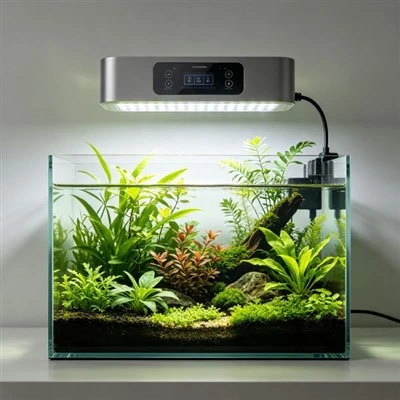
Why Breeding Tanks Need a Completely Different Lighting Approach
Display tanks are optimized for viewing and general fish health. Breeding tanks have a much more specific job: creating the right conditions to trigger reproductive behavior and then keeping fry alive through their most vulnerable stage. Lighting that's perfectly fine for one purpose can genuinely work against the other.
A Real Scenario - When the Wrong Light Stops Fish From Spawning
Picture a breeder trying to spawn a pair of angelfish in a tank lit the same way as their main display - bright, long-duration lighting running most of the day. Weeks go by with no spawning activity, despite the pair showing normal pairing behavior otherwise. After adjusting the tank to a shorter, dimmer photoperiod that more closely resembled natural seasonal light changes, spawning activity started within about two weeks. Nothing else in the setup changed. The lighting itself was quietly working against the behavior the breeder was trying to encourage.
How Light Cycles Influence Fish Spawning Behavior
Photoperiod and Its Role in Triggering Reproductive Activity
Many fish species use changes in day length, known as photoperiod, as an environmental cue tied to natural breeding seasons. In the wild, seasonal shifts in light duration often signal favorable breeding conditions, and replicating that shift in a home tank can help trigger spawning behavior in species that respond to this cue.
|
Breeding Stage |
Typical Light Duration |
Purpose |
|
Conditioning phase (pre-spawn) |
10-12 hours |
Mimics stable seasonal daylight to build condition |
|
Spawn-triggering phase |
Gradual reduction to 8-10 hours |
Simulates seasonal shift that cues reproductive behavior in many species |
|
Post-spawn/egg incubation |
Consistent 8-10 hours, dim |
Reduces stress on eggs and parent fish |
|
Fry-rearing phase |
10-12 hours, low intensity |
Supports feeding activity without overstressing fry |
Not every species responds strongly to photoperiod changes, but for many common breeding fish, adjusting the light duration is a genuinely useful and low-cost tool alongside temperature and water changes.
Light Intensity Considerations for Breeding Tanks vs Display Tanks
Why Dimmer, More Controlled Lighting Often Works Better Here
Display tanks are often lit brightly to show off color and detail, but that same intensity can increase stress in a breeding setup, particularly for species that naturally spawn in shaded or covered areas like dense vegetation or cave-like structures. Lower intensity lighting tends to encourage more natural spawning behavior for these species, since it more closely mimics the shaded conditions they'd seek out in the wild. This doesn't mean total darkness works either - most breeding setups still benefit from a clear light-dark cycle, just at a gentler intensity than a typical display tank.
Lighting Needs for Fry - What Changes Once Eggs Hatch
Stress Sensitivity and Why Fry Need Gentler Light Conditions
Fry are considerably more sensitive to environmental stress than adult fish, and lighting that's too bright or inconsistent can affect feeding behavior and overall survival rates in the first few weeks. Sudden light changes, like an abrupt switch from darkness to bright light, can startle fry and disrupt normal feeding patterns during a stage where consistent feeding is critical for growth. A gentler, gradually transitioning light source, or simply a lower-intensity fixture during this stage, tends to support better feeding activity and reduces unnecessary stress during a period when fry mortality is already naturally higher than at any later life stage.
Species-Specific Lighting Differences in Breeding Setups
Egg-Layers vs Livebearers - Do Their Light Needs Differ
|
Fish Type |
Photoperiod Sensitivity |
Typical Light Preference |
Examples |
|
Egg-layers (cave/plant spawners) |
High |
Dim, shaded conditions during spawning |
Angelfish, discus, many cichlids |
|
Egg-scatterers |
Moderate |
Standard cycle, moderate intensity |
Tetras, danios |
|
Livebearers |
Low |
Less sensitive, standard lighting usually fine |
Guppies, mollies, platies |
Livebearers generally don't require the same careful photoperiod manipulation that many egg-laying species benefit from, since their reproductive cycle isn't as tightly tied to environmental light cues. This is useful to know before assuming every breeding project needs an elaborate lighting adjustment - for some species, standard lighting with a consistent schedule is genuinely enough.
Setting a Reliable Photoperiod With an Aquarium Light Timer
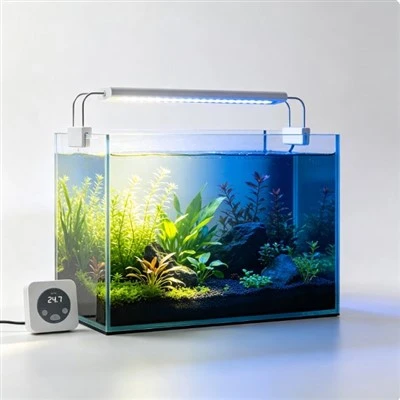
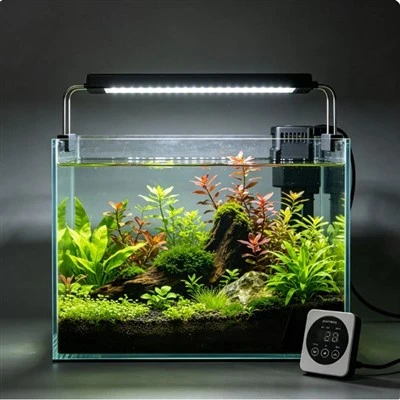
Manually adjusting light duration day by day to simulate a gradual seasonal shift is realistically not something most people keep up with consistently, which is exactly where an Aquarium Light Timer earns its place in a breeding setup. A programmable timer lets you set a precise, repeatable schedule and gradually adjust duration over days or weeks without relying on remembering to make small manual changes every single day. For breeders working with multiple tanks at different stages of the breeding cycle simultaneously, a timer per tank also makes it much easier to keep each setup on its own appropriate schedule without mixing them up.
Space and Mounting Considerations in Compact Breeding Setups
Why an Aquarium Bracket Light Suits Small, Multiple-Tank Breeding Racks
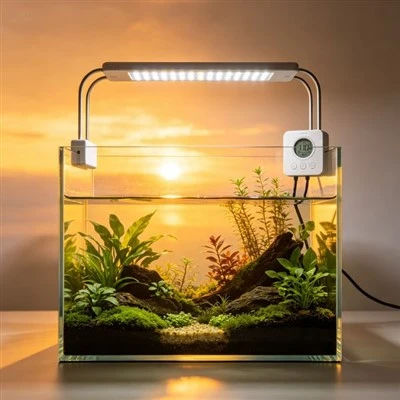
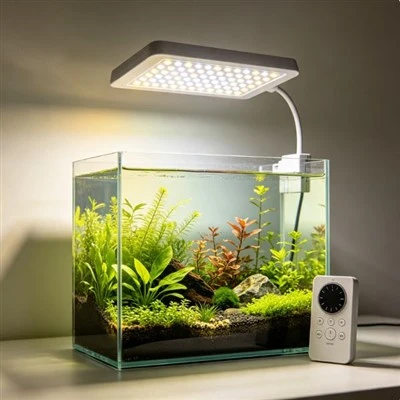
Serious breeders often run multiple smaller tanks on a rack system rather than one large display tank, and standard hood-style lighting doesn't always fit well in these compact, space-efficient setups. An Aquarium Bracket Light works well here specifically because it clamps onto the tank edge without requiring a full-size hood, which matters when you're trying to fit several tanks into a limited footprint. It also makes it easier to quickly adjust or remove the light during tank maintenance, which happens more frequently in active breeding setups than in a typical display tank.
Does Decorative Lighting Like an Aquarium Bubble Light Have Any Place in a Breeding Tank
Generally, no, at least not during the active spawning or fry-rearing stages. An Aquarium Bubble Light adds visual movement and ambient glow, which is great for a display tank but isn't something most breeding setups prioritize, since the added light and movement can introduce unnecessary visual stimulation during a period where minimizing stress matters more than aesthetics. Some breeders do add decorative lighting back into a tank once fry have grown past their most vulnerable early weeks and the tank transitions back toward general display use.
Breeding Tank Lighting vs Display Tank Lighting - A Direct Comparison
|
Factor |
Display Tank Lighting |
Breeding Tank Lighting |
|
Intensity |
Bright, showcases color |
Lower, reduces stress |
|
Duration |
Consistent, often 10-12 hours |
Adjustable, sometimes shortened to trigger spawning |
|
Spectrum Focus |
Aesthetic, full-spectrum |
Functional, less emphasis on color enhancement |
|
Decorative Elements |
Common (bubble lights, color effects) |
Minimal during active breeding phases |
|
Consistency Requirement |
Moderate |
High - timer-based scheduling strongly recommended |
Industry Trends - Growing Interest in Controlled Breeding Environments
Home fish breeding has grown steadily as a hobby segment, partly driven by rising interest in rare and specialty fish varieties that command higher prices when successfully bred at home rather than purchased. This has pushed more hobbyists toward genuinely controlled environments, including programmable lighting, rather than the more casual, less monitored setups typical of basic fishkeeping. There's also been increasing crossover interest from aquaponics and small-scale aquaculture communities, where photoperiod control is treated as a standard, expected part of a serious breeding setup rather than an optional extra, which has gradually shifted consumer expectations toward wanting programmable, precise lighting tools even for hobbyist-scale breeding projects.
Water Quality and Safety Standards Relevant to Breeding Tank Lighting
Heat Output and Waterproof Ratings in Small, Sensitive Setups
Breeding tanks are often smaller than display tanks, which means they're more sensitive to temperature swings, including heat generated by lighting fixtures positioned close to the water surface. LED fixtures generally run cooler than older lighting technologies, which makes them a safer choice for smaller breeding tanks where even small temperature fluctuations can stress eggs or fry. Waterproof rating still matters just as much here as in any other tank setup, and given how frequently breeders are reaching into these tanks for maintenance and fry transfers, a fixture with at least an IP67 rating is worth prioritizing to reduce any risk around splashing during routine tank work.
How to Set Up Lighting for Your Breeding Tank - A Practical Checklist
Research your specific species' sensitivity to photoperiod before assuming lighting adjustments are necessary
Use lower intensity lighting during active spawning for cave or plant-spawning species that prefer shaded conditions
Set a consistent, gradually adjustable schedule using an Aquarium Light Timer rather than manual daily changes
Keep lighting gentle and consistent during the fry-rearing stage to minimize stress and support feeding activity
Choose a compact, easily adjustable fixture like an Aquarium Bracket Light for multi-tank rack setups
Hold off on decorative lighting like bubble lights until fry have grown past their most vulnerable early weeks
Sourcing Aquarium Lighting for Breeding Setups - Retail and Bulk Orders
What to Ask a Manufacturer Before a Wholesale Order
Retailers serving the breeding and hobbyist-aquaculture market should look for an aquarium light manufacturer that offers genuinely programmable, low-intensity-capable fixtures, since this customer segment cares more about functional control than aesthetic features. A good aquarium light factory should be able to confirm dimming capability, timer compatibility, and heat output specifications, all of which matter more to breeding-focused buyers than general display-tank customers.
When placing a wholesale aquarium lights order aimed at the breeding and rack-setup market specifically, it's worth prioritizing compact, bracket-mountable designs with reliable low-heat operation, since this is a more specialized buyer segment that tends to research specs carefully before purchasing rather than buying on appearance alone.
FA Q
Q: Does lighting actually affect whether fish will spawn?
A: For many species, yes. Photoperiod changes mimic natural seasonal cues that trigger reproductive behavior, though sensitivity to this varies significantly by species.
Q: How much light do fish fry need after hatching?
A: Fry generally do best with a consistent, gentler light cycle, often around 10-12 hours at lower intensity, to support feeding activity without adding unnecessary stress during their most vulnerable stage.
Q: Do livebearers need special breeding tank lighting?
A: Not usually. Livebearers like guppies and mollies are generally less sensitive to photoperiod manipulation compared to many egg-laying species, so standard consistent lighting is often sufficient.
Q: Does darkness help fish spawn?
A: Not darkness specifically, but many cave and plant-spawning species respond better to dimmer, shaded lighting conditions during the spawning period compared to bright display-tank lighting.
Q: Should I use a timer for my breeding tank lighting?
A: Yes, a timer is strongly recommended since consistent, precisely adjustable scheduling is much harder to maintain manually, especially if you're gradually adjusting photoperiod to encourage spawning.
Q: Is bright lighting bad for a breeding tank?
A: It can be, particularly for cave and plant-spawning species that naturally seek shaded conditions. Lower intensity lighting during active breeding phases often supports more natural spawning behavior.
Q: What kind of light fixture works best for a multi-tank breeding rack?
A: A compact, bracket-mounted fixture tends to work well for rack setups, since it doesn't require a full hood and allows easier access for the frequent maintenance breeding tanks typically need.
Q: Can I use decorative lighting like a bubble light in a breeding tank?
A: It's generally best to avoid decorative lighting during active spawning and fry-rearing stages, since the added stimulation isn't necessary and