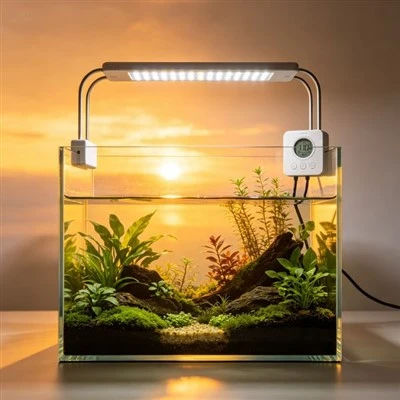
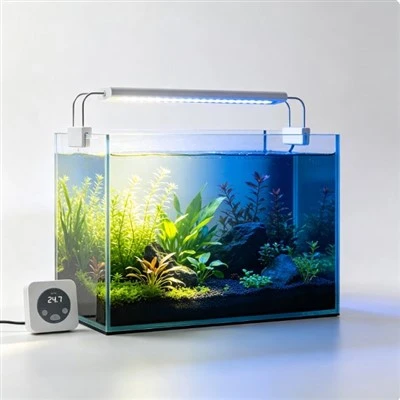
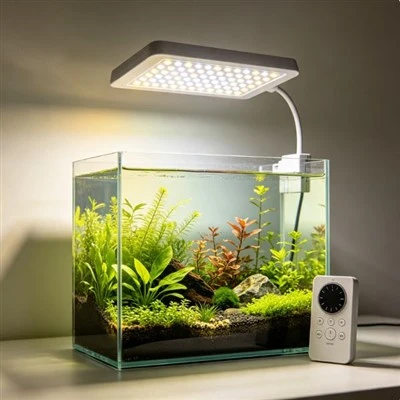
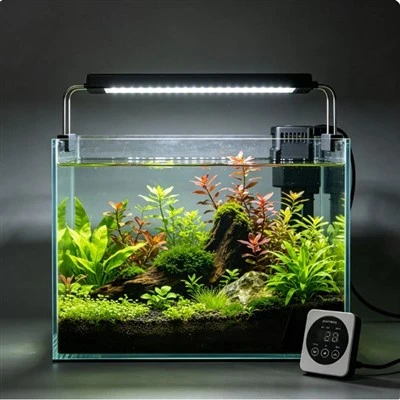
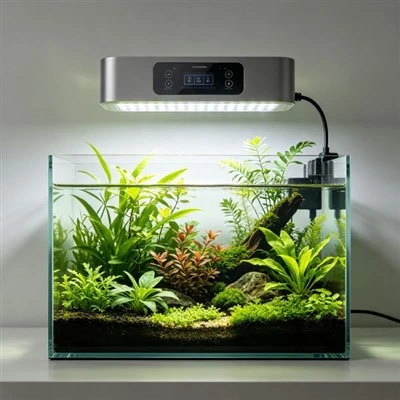
An air stone may sit well below an aquarium light, yet the bubbles it produces do not end quietly at the waterline. Each bubble bursts at the surface and can release tiny droplets. With enough bubble rate, airflow, and time, those droplets may leave a narrow band of mineral or salt residue on a fixture, bracket, or nearby connector. The lamp can remain visibly above the tank and still be exposed. Understanding this splash path is more useful than assuming that vertical distance alone makes the installation dry.
Map the evidence before moving equipment. Disconnect the light according to its instructions and inspect the shield, underside, mount, cable, controller, and surrounding wall. Note where deposits are thickest and align that area with the bubble column, return flow, and prevailing room airflow. Photograph a wide view and record the air-pump setting and water level. A concentrated line directly over the stone supports a repeated spray path; random dust elsewhere may have another source. Clean only after the original pattern has been documented.
Bubble size and bursting behaviour depend on the stone, depth, flow, cleanliness, and air delivery. Fine bubbles can create a broad mist that is difficult to see. Large bubbles may throw fewer but more noticeable droplets. This does not mean one type is universally safer for livestock or lighting. Aeration is chosen for the aquarium's needs. Do not reduce an essential air supply simply to protect a poorly located electrical component. First investigate approved relocation, greater permitted clearance, or a fixture whose environmental limits suit the site.
Air movement above the tank can bend the path. A room fan, heating vent, or open window may carry droplets sideways so the residue appears away from the stone. Repeat the observation with the room in its normal condition, not with every fan switched off for a convenient test. A piece of clean dry indicator material may be placed only in a safe, manufacturer-acceptable dry location during commissioning; never cover the lamp or insert material where it can fall into water. The goal is to understand exposure without creating a new hazard.
Suppose a vigorous column operates near the rear corner. After a week, a white strip develops on the mount directly above it while the rest of the housing stays clean. The owner disconnects power, documents the strip, follows the approved cleaning procedure, and moves the air stone slightly within the aquarium's safe husbandry plan. The fixture remains at its approved height. Follow-up inspections show whether the path changed. This is a controlled installation adjustment, not proof that the lamp is waterproof or that aeration can be reduced without consequence.
Clearance should be measured from the highest normal waterline and include wave, filling, and maintenance conditions. Record evaporation top-off level and what happens when a hand, net, or decoration disturbs the surface. The minimum distance printed for a fixture is a limit to follow, not a promise that all splashing below it is harmless. If the product does not state the necessary environmental boundary, ask the supplier. A clean product image cannot substitute for installation instructions.
Do not build an untested splash roof around the lamp. A plastic sheet, acrylic tray, or film can block ventilation, collect condensation, distort, or fall into the aquarium. A compatible manufacturer-approved shield may be appropriate when its cleaning and thermal effect are documented. Even then, inspect edges and fasteners because spray may travel around the barrier. Optical clarity and temperature should be checked under normal operation; a shield that becomes opaque with deposits needs a maintenance schedule.
Cable routing can either reveal or hide the problem. Droplets may run along a cable toward a controller if it lacks suitable slack and placement. Provide drip loops where applicable, keep connectors in approved dry locations, and prevent tension from changing the mount angle. Do not tape a wet connector closed or suspend a power supply by its lead. New fixed electrical work and protective devices should follow local requirements and be handled by a qualified person.
Establish an inspection interval based on the real deposit rate. Check sooner after installation, after changing the air stone, and after raising the water level. Record clean, light residue, or wet exposure rather than waiting for corrosion. Use the manufacturer's cleaning material and never spray cleaner directly onto controls or vents. If liquid may have entered an area that must stay dry, or equipment is damaged, smoking, unusually hot, or emitting a burning smell, stop using it and obtain qualified support.
The aquarium should also be observed. A change in aeration, surface movement, or equipment position can affect animals and filtration. Confirm that the revised arrangement still provides the intended function, and seek experienced husbandry advice when necessary. Lighting concerns do not override life-support priorities. Likewise, visible sparkle from the bubbles is an optical effect, not a reason to add a stronger colour mode or diagnose water quality from appearance alone.
Useful products make this installation easy to reason about. They state the permitted splash boundary, show connector locations, provide cleanable surfaces, define mounting range, and offer compatible accessories where needed. The final aim is not an aquarium with no droplets anywhere; it is a known, managed path that keeps electrical parts within their allowed environment while aeration continues to do its job. A small band of residue noticed early can prevent a much larger maintenance and safety problem later.
Seasonal room conditions can change the path. Cooler air may increase condensation on nearby surfaces, while a fan used in summer can carry mist sideways. Repeat the deposit check after these changes and after replacing an air pump or stone. A stable inspection schedule costs little and avoids relying on memory about whether a mark is new. Date photographs and clean only after the comparison is complete.