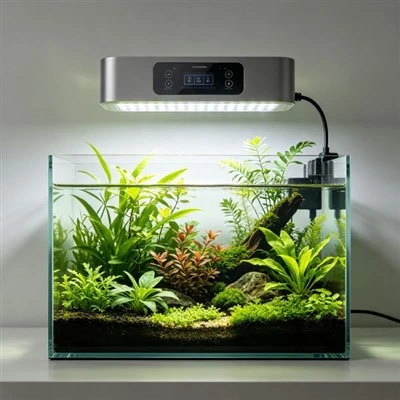
A suction cup can hold a small aquarium light neatly against a smooth surface, but its grip is not permanent. The elastomer changes with age, deposits collect at the sealing edge, temperature varies, and cable tension can slowly peel one side away. A mount that felt secure on installation may begin to tilt months later without an obvious dramatic failure. The right response is planned inspection and replacement, not another push against a cracked or hardened cup. Anything supporting electrical equipment above water deserves more than casual trust.
Understand what creates the hold. Pressing a flexible cup against a smooth clean surface removes much of the air beneath it, and the pressure difference helps keep it attached. The seal depends on the cup remaining flexible and the contact surface remaining smooth. Scratches, algae, mineral film, trapped grit, a deformed rim, or a cold stiff cup can weaken it. This explanation also shows why adhesive, lubricant, or household cleaner should not be added unless the product instructions specifically permit it.
Inspect every component with the light safely disconnected. Look for cracks, whitening, hard edges, permanent flattening, sticky degradation, or a shape that no longer returns after release. Examine the stem and attachment point, not only the round face. Clean the aquarium surface and cup by the approved methods, avoiding abrasive pads or chemical residues. If the material is aged or damaged, replace it with the specified part. Reinstalling a failing cup more firmly does not restore its original properties.
Cable pull is a common hidden load. A lead routed tightly behind the stand can tug downward or sideways whenever the tank or controller moves. Over time, that force may lift one edge of the cup and allow air beneath it. Provide enough safe slack and a drip loop where applicable, then secure the cable through an approved route that does not load the mount. Do not hang an adapter from the lead or let a heavy connector swing below the fixture.
Fixture weight and leverage matter as much as the cup diameter. A small lamp projecting away from the panel can create a turning force at the seal. Adding a homemade shade, controller, or cable clip increases the load and may move its centre farther outward. Use only the configuration stated by the manufacturer. "The cup still sticks" is not evidence that it can support an altered assembly. Product information should state the intended fixture and surface, not merely a general maximum weight without geometry.
Imagine a nano light that begins leaning after the aquarium is moved for cleaning. One cup remains flat, while the other is being pulled by a newly tightened cable. The owner disconnects the unit, supports it away from water, cleans the approved surfaces, replaces both aged cups, and reroutes the cable with slack. Follow-up marks show whether the angle changes. This method addresses the observed cause and renews the wear parts instead of pushing the old mount back each morning.
Set an inspection interval rather than waiting for movement. Check after initial installation, during routine maintenance, after major temperature changes, and whenever the cable or tank position changes. A small removable alignment mark outside the wet area can reveal gradual tilt, provided it is safe for the tank material. Record the installation and replacement dates. Cups exposed to different cleaners, ultraviolet light, heat, or mineral deposits may not age at the same rate, so a universal service life should not be invented.
Waterline placement deserves special caution. A cup that cycles between wet and dry conditions may collect deposits along its edge, while a submerged product may have entirely different material and electrical requirements. Follow the stated mounting zone; do not move an external cup under water because it seems to grip better. Keep connectors, controls, and supplies in their approved dry positions. Never operate or adjust mains connections with wet hands.
A secondary retention method can reduce consequence only when it is provided or approved for the product and attached to a suitable structure. Random wire, string, or adhesive may fail, scratch the tank, obstruct a lid, or drop material into the water. Ask whether a replacement cup kit or engineered tether exists. The secondary support does not excuse a worn primary mount; it is not permission to continue using cracked elastomer. Both elements need inspection.
If a mount slips, first protect livestock and isolate power safely. Do not reach into water for an energized fixture. Examine the light for impact, wet exposure, cracked housing, cable damage, and abnormal operation before reuse. Do not reconnect a fallen unit after dry-only parts get wet or the housing cracks; heat, smoke, or electrical odour also requires a competent service decision. Inspect the aquarium panel as well, since a falling bracket can leave a scratch or chip.
A well-specified suction mount makes maintenance predictable. It identifies compatible surfaces, fixture load, installation method, replacement part, inspection guidance, environmental limits, and any approved retention option. Owners can then treat cups as replaceable components rather than invisible lifetime fasteners. The finished installation should stay level without cable tension, permit easy checks, and fail no test of common sense when placed above animals and water. Convenience is real only when the grip is monitored over time.
Keep at least one correct replacement set when the lamp is important to routine care, but store it according to the material instructions rather than in heat or direct sun. Verify that the part number matches; cups that look alike may differ in diameter, stem, hardness, or load. Replacing all cups in a matched mount can be more predictable than mixing an aged one with a new one, when the supplier recommends that method. Record what was changed so later movement is not attributed to the fixture electronics.