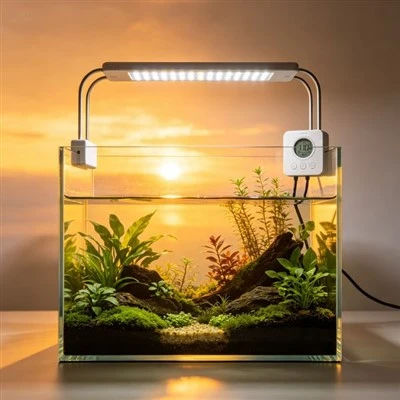
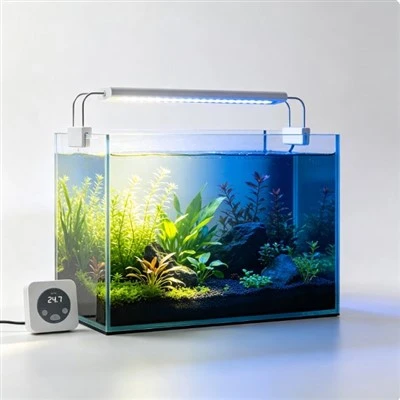
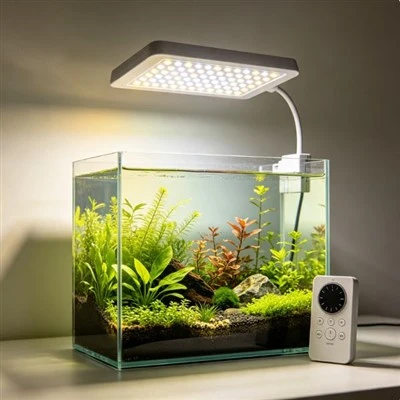
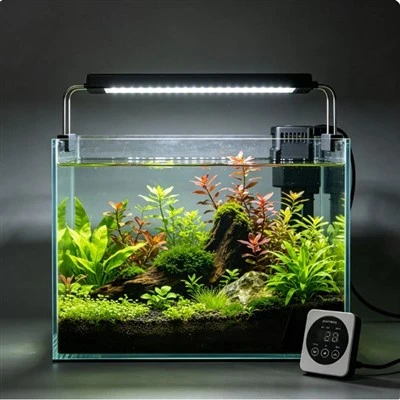
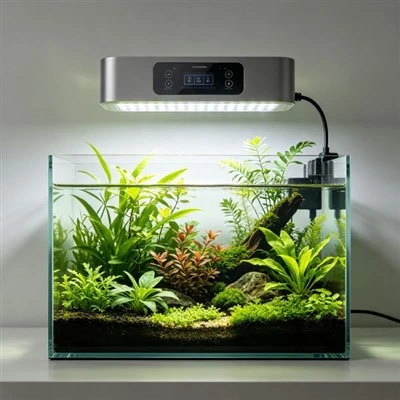
Tank dimensions are often the first numbers used to choose an aquarium light, yet an internal overflow can occupy a meaningful part of the top and back wall. Water may pass through it, but the box, weir, plumbing, and cover interrupt the optical path. A fixture centered over the outside glass can spend part of its field lighting dark plastic, reflecting from a glossy lid, or casting a vertical shadow beside the box. The useful display footprint is therefore smaller and less symmetrical than the tank's advertised length and width suggest.
Measure the obstruction before planning the mount. Record the overflow's width, depth, height, corner or central position, top cover, and clearance needed to remove that cover. Add braces, lids, feeding openings, return nozzles, and any screen top to the sketch. Then mark the planted or inhabited display area separately. This drawing clarifies whether centering over the whole aquarium also centers over useful water. It prevents a later discovery that a mounting foot blocks access to the weir or that the light must be removed for routine plumbing service.
Look down from above with the fixture disconnected or before installation. Trace the lines from the proposed light position to the bottom beside the overflow. An opaque box creates a predictable shadow, while water movement and a glossy surface may create shifting reflections. A narrow gap behind décor can remain dark regardless of a higher controller setting because the obstruction blocks the path. Do not stare into illuminated LEDs or lean unsafely over the tank. A cardboard outline and room light can help plan geometry before electrical equipment is placed near water.
The aquascape can keep the obstruction from becoming a constant conflict. Plants that suit lower light may be placed in the box's shadow, while higher-demand plants can occupy the unobstructed field, provided all other care needs are met. Hardscape can hide part of the overflow from the main view without touching or restricting it. Maintain access for cleaning teeth, removing covers, checking drains, and servicing returns. A branch that creates a beautiful silhouette but prevents emergency access is a poor trade, regardless of how evenly the lamp illuminates it.
Imagine a 120-centimeter aquarium with a wide overflow in the left rear corner. The light is centered at 60 centimeters because that matches the outer glass. From the front, the useful planted area begins well to the right of the overflow, so the brightest central zone falls partly over the box while the far-right stems sit near the beam edge. Sliding the fixture a small approved distance toward the display may balance the useful area. The owner must then recheck mount security, cable slack, lid clearance, glare, and coverage rather than treating the shift as purely optical.
A single dark corner does not justify raising all output. More power can increase brightness and glare across the unobstructed aquarium while the blocked line remains a shadow. First clean any permitted lens and lid surfaces, verify the intended program, and determine whether the darkness comes from the overflow, hardscape, plant growth, or a failed channel. Compare both sides under a neutral inspection setting. If the obstruction is the cause, local layout or approved positional adjustment is a more direct response than changing every channel.
Service work changes the picture temporarily. Removing an overflow cover, lowering the water level, redirecting a return, or opening a lid can alter reflections and apparent intensity. Restore the system completely before comparing normal photographs. Keep a dated top-view image showing the fixture, box, and cable route, and mark the installed position if the manufacturer permits. After maintenance, confirm that the mount has not shifted and no cable rests on wet plumbing. Electrical components intended to stay dry need separation even when the nearby box is part of the aquarium.
Surface deposits can make the box more optically noticeable over time. Salt creep in a marine system, mineral residue, algae, and dust on a cover may scatter the beam or create a bright edge. Clean the overflow and light only by their respective instructions, preventing cleaner from entering the water and keeping power disconnected where required. A black surface that looks matte when clean may reflect differently when wet or coated. Documenting this maintenance helps distinguish a changed optical path from a change in the fixture itself.
Product specifications are most helpful when they describe the beam or coverage at a stated mounting height and show the physical dimensions of mounts and housings. An adjustable rail or arm may make alignment easier, but it must stay within load, span, glass-thickness, and clearance limits. Two fixtures can offer flexible zoning in some tanks, yet they add cables, mounts, and control complexity. No arrangement should rest on the overflow cover or plumbing unless the system was explicitly designed and rated for that load.
The overflow itself remains life-support infrastructure. Never block weir teeth, cover ventilation or emergency paths, or reduce service access for the sake of hiding a shadow. Verify that return flow and drainage operate as designed after any nearby mounting work. If noise, water level, or flow changes, investigate the hydraulic system according to its documentation rather than assuming the lamp position caused it. Light can reveal water movement, but it cannot establish that drains have adequate capacity or that plumbing is safe.
Planning around an internal overflow means lighting the usable aquarium rather than the box drawn by the outer glass. Measure the obstruction, map the true display footprint, preserve plumbing access, and make small approved positional changes while checking glare and security. Accept that an opaque structure will create some shadow, then place plants and viewing priorities accordingly. This approach uses the fixture's field where it is useful without promising perfect uniformity. More importantly, it keeps an aesthetic decision from interfering with the equipment that moves water through the system every day.