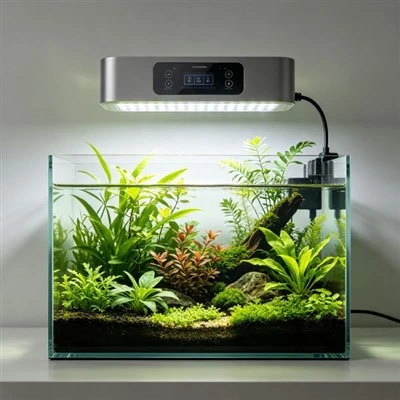
A hole in an aquarium leaf looks dramatic because it has a clear edge and an empty center. The lamp is an easy suspect: perhaps the leaf was "burned," shaded, or exposed to the wrong color. Yet holes can follow normal aging, physical damage, grazing, handling, unsuitable conditions, disease, or nutritional problems, and several processes may occur together. Light can influence plant growth and demand, but the shape of one damaged leaf does not identify a cause. A useful investigation begins by locating the damage in time, species, and plant tissue.
Take photographs before removing anything. Record the plant name if known, the date, and whether holes occur on old outer leaves, new leaves, or both. Note pinholes, translucent patches, tears along veins, ragged edges, and discoloration around the opening without assigning a diagnosis yet. Check whether only one species is affected and whether another specimen of the same species elsewhere in the aquarium looks different. New healthy leaves emerging while old transported leaves deteriorate presents a different pattern from damage that repeatedly appears on every fresh leaf.
Physical causes often leave clues in the surroundings. A leaf trapped beneath wood, rubbed by a wavemaker, pinched during planting, or struck by cleaning tools can split after the event is forgotten. Fish, snails, and other inhabitants vary in their interaction with plants; identify the species and look for direct evidence rather than assuming every animal grazes healthy tissue. Loose hardscape must be corrected for safety, but do not rearrange the entire aquarium simply to test a theory. One careful inspection is less disruptive than repeated uprooting.
Nutritional explanations require equal caution. Online charts often assign a particular hole or color to one nutrient, but visual symptoms can overlap, and availability depends on water chemistry, substrate, fertilization method, plant species, and growth rate. Increasing a single fertilizer from a photograph can create imbalance or expose livestock to unsuitable dosing. Review the complete routine, actual product instructions, water-change pattern, and any available measurements. If a coherent plant-care program is already in use, change it with informed guidance rather than adding unrelated supplements one after another.
Light enters the analysis through location and resource demand. A leaf close to the surface may receive more usable light than one below a dense canopy, while hardscape can create sharp shadows. Excessive light relative to other resources may contribute to poor results indirectly, yet a hole is not a light meter. Record fixture model, mounting height, photoperiod, intensity setting, recent program changes, daylight, and the plant's exact position. If possible, use a known measurement method at the leaf plane; controller percentages from different fixtures are not comparable units.
In one living-room tank, an owner finds holes in the oldest leaves of a sword plant and reduces the lamp by half. Two weeks later, the holes remain because damaged tissue does not refill. Close inspection of dated photographs shows that all newly formed leaves are intact under both settings. The history points away from an ongoing simple "burn" explanation and toward an earlier event or old-leaf decline. It does not reveal the exact past cause, but it prevents further random changes based on damage that was already permanent.
Water and maintenance records complete the picture. Note temperature, relevant test results, carbon approach if used, substrate disturbance, filter service, pruning, new animals, and changes in fertilizer. Look for debris or algae occupying an existing hole; their presence does not necessarily mean they created it. Compare plant growth across several weeks because leaves can preserve damage long after conditions improve. Remove badly deteriorating tissue only according to sound care practice, using clean tools, and never strip so much foliage that the plant loses most of its functioning area without expert reason.
A repeatable light program is valuable precisely because it removes one moving variable. Keep the timer steady while examining newer growth, unless the current setting is clearly outside reliable guidance or creates another urgent issue. Smooth control and documented coverage make later adjustments easier, but no lamp can diagnose a deficiency from leaf appearance or guarantee recovery. Sellers should describe measurable controls, dimensions, and test conditions rather than claim that a spectrum prevents holes. The owner still has to integrate light with the plant and aquarium environment.
The tank's viewing color can also distort an informal diagnosis. Deep blue or strongly colored channels may hide yellowing, exaggerate red tissue, or make a translucent edge difficult to see. Briefly use a balanced inspection setting, if the fixture provides one, and compare the plant under the same room light each time. Camera software may alter exposure and color automatically, so photographs are most useful for the location and progression of damage, not for exact color measurement. Never leave an unsuitable inspection setting running simply because it makes a symptom more visible; restore the normal documented program afterward.
Escalate the question when damage spreads rapidly, affects many species, accompanies widespread decay, or persists despite a reviewed routine. A knowledgeable aquatic-plant specialist can work from clear photographs, plant identification, water information, dosing records, and lighting details. Those records are much more useful than saying that the leaves look burned. If chemicals or pests are suspected, avoid treatments that could harm aquarium inhabitants or disrupt filtration without informed guidance. Diagnosis by elimination should remain controlled, not become a sequence of risky trials.
Holes are evidence that tissue was lost, not a label explaining why. Separate old from new growth, map affected species and locations, inspect for mechanical and animal contact, review the entire nutrition plan, and document the actual light exposure. Then change one justified factor and watch the leaves produced afterward. This patient approach may feel slower than moving a slider, but it respects how many processes can create a similar mark. Light stays on the suspect list without being convicted by appearance alone.