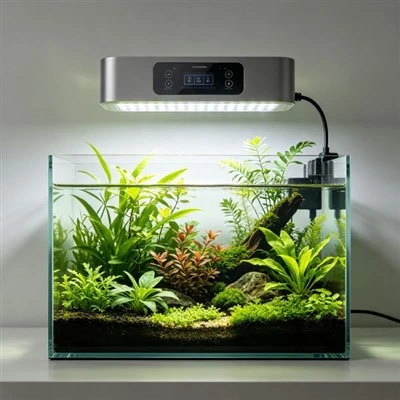
After a filter is cleaned or a return is adjusted, an aquarium may suddenly fill with bright moving points. Under an LED fixture, tiny bubbles can scatter and reflect light so efficiently that the tank appears to sparkle. The visual change does not mean the lamp is producing more output. It means many new moving surfaces are redirecting the existing light toward the viewer. The right response is to find the bubble source and confirm equipment operation, not to chase brightness or blame the LEDs before the hydraulic system has been checked.
Keep the lighting unchanged during the first inspection. Record the active program, pump settings, return position, and the maintenance completed immediately before the bubbles appeared. Observe whether they emerge from a return, skimmer outlet, air stone, loose connection, or another device. Note where they travel and whether they diminish with distance. This map helps distinguish a continuous source from bubbles temporarily trapped after work. Follow the equipment manufacturer's troubleshooting steps and do not open powered devices or loosen plumbing over live electrical components.
Viewing angle changes the sparkle. From the side, a bubble may send a bright point directly toward the eye; from the front it can look faint. Surface ripples and a dark background can strengthen the contrast. Walk around the aquarium and compare at the same output. A stable pattern tied to one return supports a source investigation there, while random suspended particles may move differently. Do not identify every bright point as air solely from a photograph. Close visual observation and the equipment context matter.
Phone cameras often exaggerate the effect. Automatic exposure raises the darker portions of the scene, sharpening bright points, while video processing can turn moving highlights into flickering noise. Lock exposure and focus if possible and include a short wide shot that shows the source area. A fixed camera record taken before and after an equipment correction can be useful, but it should not become a measurement of fixture output. The same lamp may look calmer simply because fewer bubbles reach the lens's preferred angle.
A common household example follows maintenance. The owner restarts a canister filter and sees a stream of fine bubbles from the return. Instead of reducing light or stopping all circulation, the owner checks the filter's approved priming procedure, hose connections, and trapped-air guidance. The stream gradually decreases as expected, and the aquarium loses its glittering appearance. The evidence connects the change to air in the water path. It says nothing about the LEDs becoming weaker or stronger.
Not every bubble source is harmless, and livestock condition must be observed without making a diagnosis from the light. Check for unusual breathing, behaviour, or equipment performance and review appropriate water parameters. If there is concern, seek experienced help promptly. Do not restrict essential circulation or aeration simply because the sparkle is visually distracting. The circulation system has husbandry functions that outweigh a cosmetic preference. Any adjustment should follow the equipment instructions and the needs of the animals.
Distinguish microbubbles from debris by comparing movement and origin. Bubbles often rise or expand, while particles may settle, remain suspended, or follow flow differently. Side lighting can reveal both, but it does not identify composition. A clean transparent container sample, used only when safe and appropriate, may help observation away from reflections; it is not a substitute for water analysis. Record what can actually be seen rather than writing "air problem" as a conclusion before the source is confirmed.
Salt or mineral deposits near the return can show where repeated spray reaches the fixture. Inspect the shield, mount, and cables with power disconnected. Clean only through the approved method and keep vents open. Do not attach a homemade cover to stop glitter or spray if it blocks cooling. If connectors or power components have become wet outside their permitted exposure, or if equipment is damaged, smoking, unusually hot, or emitting a burning smell, stop using it and consult qualified support.
For a controlled comparison, choose three viewing positions and take short observations at fixed times. Record bubble source, pump state, surface movement, fixture setting, and camera controls. Correct one verified cause, restore normal operation, and repeat. This method can show whether the sparkling field changed without confusing it with a new colour program or altered exposure. If the bubbles persist, pass the complete record to the relevant equipment supplier rather than changing unrelated lighting variables.
Stable output and repeatable controls are useful because they provide a fixed visual background during diagnosis. Broad colour mixing may make the scene easier to inspect than a saturated effect, but it does not remove air. Product literature should explain that shimmer and bright points can arise from water movement and suspended bubbles. The practical finish is a correctly operating system, appropriate circulation, and a known source-not an aquarium made less sparkly by dimming the evidence.
Escalate the record to the device most closely linked to the bubbles. A filter supplier needs the priming sequence, connection layout, noise, and return video; an air-pump supplier needs the stone, depth, tubing, valves, and airflow arrangement. Sending only a photograph of sparkling water invites an optical answer to a mechanical question. If multiple devices could be responsible, isolate them only through safe, manufacturer-approved steps and never leave essential equipment off. Once the source is confirmed, document the correction and the time required for remaining bubbles to clear. That final observation makes the case useful if the same symptom returns after future maintenance.
If no source is confirmed, preserve the evidence and seek experienced help rather than repeatedly moving unrelated equipment. A stable lighting program keeps the visible symptom comparable while the hydraulic and husbandry investigation continues. Repeat the same check after each comparable maintenance event.