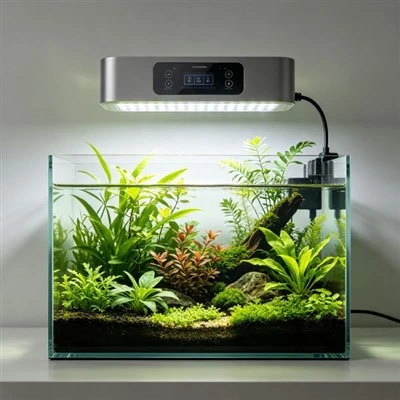
A thin layer at the aquarium surface can look like oil when it catches the lamp. From one chair it may display rainbow colours; from another it nearly disappears. This changing view occurs because a surface layer modifies reflection and because the light, water, and viewer form a particular angle. The appearance deserves investigation, but it should not be diagnosed from colour alone. Food residues, airborne dust, organic material, maintenance products, circulation, and other sources can produce different films. Turning the light up or down may hide the symptom without addressing what is on the water.
Observe before making changes. Look safely from above and from two side positions while the fixture program, room lights, and pumps remain unchanged. Note whether the layer is continuous, broken into patches, concentrated in a low-flow corner, or disturbed near the return. Record when it first appeared and what happened beforehand: feeding, hands in the water, new décor, maintenance, cooking nearby, or changes in filtration. These details are more useful for finding a source than a close-up photograph of rainbow reflection by itself.
Angle explains why two people can disagree about severity. A smooth surface can reflect the bright fixture or a pale wall directly toward one viewer. Moving a few steps changes that path. Small differences in layer thickness may also create changing colours, much as very thin films do on other surfaces. This optical behaviour does not identify the substance or its risk. The same dramatic sheen can arise from different causes, so label it as an observed surface film until the maintenance and water context supports a more specific conclusion.
Surface movement affects both the layer and its visibility. A return that disturbs one side may break the film into moving patches, while a quiet corner collects it. Review whether the existing circulation and surface agitation are working as intended for the aquarium, but do not redirect essential flow blindly just to remove a reflection. Equipment changes can affect oxygenation, noise, feeding, and animal comfort. Follow the system's approved setup and, when necessary, ask an experienced adviser to evaluate the whole circulation plan.
Suppose the sheen appears the morning after a rich frozen food was introduced. The owner records the food and amount, observes that patches gather away from the return, and checks the filtration and skimming arrangement. Under the same light later, the layer changes after the appropriate maintenance action. This sequence is informative because the lighting stayed constant. If the owner had switched to a blue mode immediately, the rainbow might have looked different, but nothing about the source would have been learned.
Cleaning must be specific and safe. Do not add household detergents, solvents, or surface treatments to an aquarium. Use only methods appropriate to the system and its livestock, and follow equipment instructions. Review feeding quantity, mechanical filtration, surface collection, and maintenance frequency rather than wiping the evidence away without a plan. If an unknown chemical may have entered the water, prioritize animal safety and qualified advice. A lighting adjustment is not a response to suspected contamination.
Water-quality checks provide context, although no single routine reading identifies every surface substance. Record the parameters appropriate to the aquarium, livestock behaviour, breathing, feeding, and any odour or visible change. If animals show distress, act according to established emergency guidance rather than spending time refining photographs. If they appear normal, the source still deserves a methodical review. The light helps the owner see the layer and compare its distribution; it does not determine toxicity.
Keep images honest when documenting the problem. Fix camera exposure and white balance, take a wide view that shows the return and quiet areas, and state the viewing angle. A phone may intensify rainbow colours, sharpen reflections, or suppress them through automatic processing. Photographing at the same hour reduces changes from windows and ceiling lamps. If a seller or technician reviews the case, provide the fixture setting and pump state so that appearance is not interpreted without its optical conditions.
Check the fixture and mount separately for residue. A surface film on the aquarium does not automatically mean the light is contaminated, but splash and aerosol can leave deposits on a shield. Disconnect the fixture and use only its approved cleaning method. Preserve vents and environmental clearances. If liquid has entered an area that must remain dry, or equipment is damaged, smoking, unusually hot, or emitting a burning smell, take it out of service and seek qualified support. Never lean over open water while handling an energized connection.
Once the source is addressed, repeat the original views with the same program and room lights. Note whether the film is absent, reduced, or merely redistributed. Avoid changing intensity at the same time, because that weakens the comparison. If the layer returns, review the timing and recent activities again. A simple log can expose patterns such as appearance after a particular feeding or after dusty work in the room. Repetition turns an eye-catching sheen into a manageable maintenance question.
Good lighting design can make the distinction clearer without claiming to solve the film. Low-glare placement, controlled beam edges, and a neutral inspection mode help users separate direct lamp spill from a reflection at the surface. The most valuable response remains an evidence-based search for the layer's source. When the lamp setting stays stable, the owner can see what changes in the aquarium itself-and avoid mistaking a viewing-angle effect for an output fault or a colour mode for water treatment.
Product demonstrations can teach this distinction with an empty clean vessel and a controlled viewing-angle change, without suggesting that all films are equivalent. Show the lamp, surface, and observer positions together rather than presenting only a rainbow close-up. For customer support, ask what changed before recommending more output. That one question can redirect attention toward food, dust, flow, maintenance, or possible contamination where it belongs.