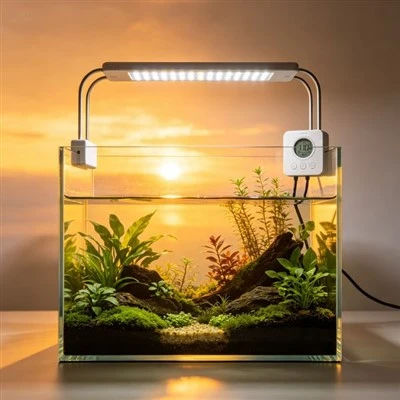
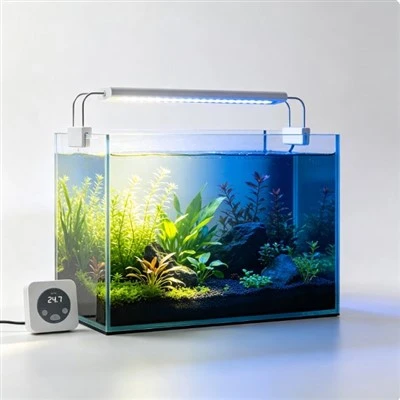
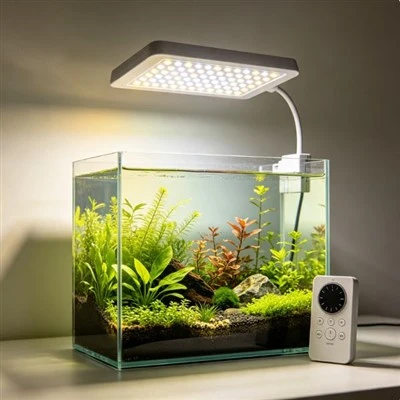
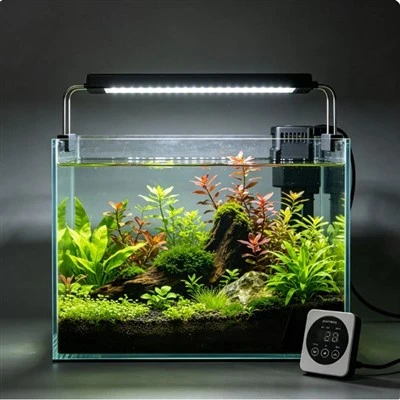
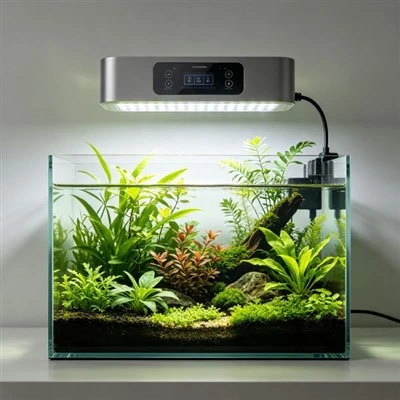
A fishless cycle is a way to establish biological filtration before an aquarium is stocked. Because the tank is new, owners often switch on every piece of equipment and assume the display light must run for a full daily schedule. The light, however, is not the clock that proves a cycle is complete. The cycling method, ammonia source, filtration, temperature, oxygen exchange, and water-test results are the relevant evidence. Lighting should be chosen for any plants that are already present, for brief inspection, and for managing an understandable routine rather than used as a substitute for those measurements.
The organisms responsible for aquarium nitrification grow on wet surfaces, especially filter media, and obtain energy from chemical compounds rather than from the display lamp. That basic fact means a conventional aquarium light is not required simply to make the nitrogen cycle happen. The filter and other life-support equipment may still need to operate according to the selected cycling method. A lamp timer can be left off, run briefly, or follow a plant-oriented schedule without turning elapsed lighting hours into a cycling test. Method-specific directions remain important because ammonia dosing and test interpretation vary.
An unplanted aquarium usually needs very little display lighting while cycling. A few minutes of neutral light can help someone read equipment markings, find a leak, view water movement, or inspect the substrate. There is rarely a practical reason to illuminate an empty display for twelve or sixteen hours merely because that resembles a future schedule. Room daylight and direct sun should be considered too. A tank beside a bright window already receives light even when its fixture is off, and long combined exposure may make algae more noticeable during a period when nutrients are available.
A planted fishless setup presents a different decision. Living plants need an appropriate light period, but newly planted material does not automatically benefit from maximum intensity or an exceptionally long day. Plant species, planting density, carbon availability, nutrients, water depth, and fixture position all influence the useful setting. A stable, moderate schedule based on credible plant-care guidance is easier to evaluate than daily changes. If tissue-culture plants or recently converted submerged plants are included, allow for transition rather than treating every old leaf that declines as evidence that the lamp is too weak.
It helps to keep a small cycling log. Record the chosen method, the source and amount of ammonia used, test dates and results, water changes, filter operation, temperature, and any plant observations. On a separate line, record fixture hours, intensity setting, daylight from nearby windows, and visible algae. This separation prevents two unrelated events from being confused. If algae appears after the lamp schedule was lengthened, the log offers a useful lead. It does not prove that light alone caused the change, because available nutrients, contaminated tools, plant mass, and maintenance also matter.
Imagine a new, unplanted 90-liter aquarium in a home office. Its owner leaves the display light on from breakfast until bedtime because the water looks attractive. Two weeks later, the glass has a green film, but the nitrogen test record is incomplete. Reducing the unnecessary display period may make cleaning easier, yet it says nothing by itself about whether the filter can process the ammonia used in the chosen protocol. The sensible next step is to resume consistent testing and dosing according to that protocol, using the light briefly when a clear view is needed.
Water clarity is especially poor evidence of readiness. Dissolved ammonia and nitrite are not judged reliably by looking through the glass, and a clear tank can still be chemically unsuitable for stocking. Likewise, a lamp running for a certain number of days does not establish that the biological filter has reached the required capacity. Completion should be determined using the endpoints of a dependable fishless-cycling method and test equipment used correctly. If results are confusing or contradictory, check expiration dates, sampling technique, and the test instructions, then seek experienced help before proceeding.
Lighting changes are best made one at a time and for a stated reason. For example, a planted tank might begin with a consistent six-hour period, then be reviewed based on plant development and unwanted algae rather than changed every evening. That number is an example, not a universal prescription. An unplanted tank might remain dark except for maintenance checks. A timer reduces accidental all-night operation and makes the record meaningful. The setting for the completed aquarium can later be adjusted gradually when the intended planting and room routine are known.
Avoid using darkness as a cure-all as well. Turning off the lamp does not correct an inactive filter, a missing ammonia source, an unsuitable temperature, or an error in testing. It also does not replace cleaning when algae or residue obscures inspection. Conversely, adding more light cannot speed a poorly managed cycle in a predictable way. The useful question is not "Is light good or bad during cycling?" but "What job is the light doing in this particular tank?" Plant support and short visual checks are legitimate jobs; certifying filtration is not.
By the end of a fishless cycle, the owner should have a repeatable set of measurements rather than a photograph of clear water or a calendar of lamp hours. Keep the filtration process stable, document the water tests required by the method, and select a lighting routine that matches the presence or absence of plants. Preserve that record when changing water or adjusting the ammonia input, since an unexplained break in the sequence makes the endpoint harder to interpret. Once the cycling endpoint has been verified, stocking decisions should follow appropriate guidance for the planned aquarium, not the appearance of the display. The lamp can make a new tank easier to view, but the evidence for biological readiness comes from the cycle itself.